united states air force
The United States Air Force stands as one of the most advanced and influential military branches in the world. Since its establishment in 1947, it has evolved from a fledgling aerial support unit into a global powerhouse capable of projecting dominance across every domain—air, space, and cyberspace. Its reach extends far beyond traditional combat operations, shaping geopolitical outcomes and technological innovation on a planetary scale.
A Legacy of Innovation and Strategic Evolution
The Air Force’s origins trace back to the early 20th century, when military aviation was still in its infancy. The Wright brothers’ first powered flight in 1903 sparked a revolution, and by World War I, the U.S. Army had established an aviation section. However, it wasn’t until 1947—amid the dawn of the Cold War and the dawn of the jet age—that President Harry Truman signed the National Security Act, creating the U.S. Air Force as an independent branch of the armed forces.
This independence was more than bureaucratic reshuffling. It reflected a fundamental shift in military strategy, recognizing that air power had become decisive in modern warfare. The Air Force’s early years were defined by rapid technological advancement, from the development of strategic bombers like the B-29 Superfortress in World War II to the deployment of intercontinental ballistic missiles during the Cold War. These innovations weren’t just about winning battles—they redefined the nature of global conflict itself.
Key Milestones in Air Force History
- 1947: Official establishment as an independent branch under the National Security Act.
- 1950s: Introduction of the B-52 Stratofortress, a long-range bomber that remains in service today.
- 1960s: Deployment of the SR-71 Blackbird, the fastest manned aircraft ever built, for reconnaissance missions.
- 1991: Operation Desert Storm showcased precision airstrikes and air superiority in modern warfare.
- 2000s: Integration of unmanned aerial vehicles (UAVs) like the MQ-1 Predator and MQ-9 Reaper into combat operations.
The Modern Air Force: Structure, Technology, and Global Reach
Today, the U.S. Air Force is organized into major commands that reflect its diverse operational capabilities. The Air Combat Command oversees fighter and bomber fleets, the Air Mobility Command ensures rapid global transport, and the Space Force—established in 2019—handles operations beyond Earth’s atmosphere. This structure allows the Air Force to maintain a continuous presence in all warfighting domains.
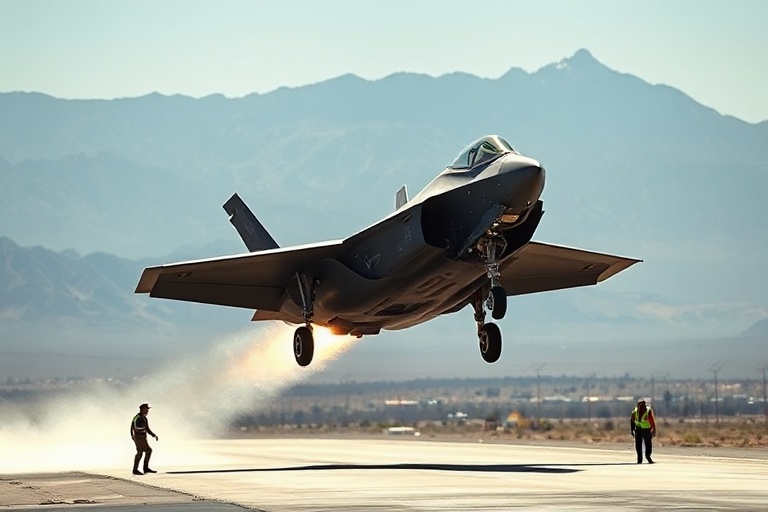
Technological superiority remains the cornerstone of the Air Force’s strength. The F-35 Lightning II, the most advanced fifth-generation fighter in the world, combines stealth, sensor fusion, and networked warfare capabilities. Meanwhile, the B-21 Raider, currently in development, promises to be the next evolution in long-range strike platforms, leveraging artificial intelligence and low-observable technology to penetrate advanced air defense systems.
But the Air Force’s influence extends beyond aircraft. Space-based assets like GPS satellites and missile warning systems are operated by Air Force personnel, ensuring not just military advantage but also civilian infrastructure resilience. Cyber operations, conducted by units like the 67th Cyberspace Wing, protect networks and disrupt adversarial capabilities, reflecting the blurred lines between traditional warfare and digital conflict.
Beyond Combat: Humanitarian, Diplomatic, and Economic Impact
The Air Force’s role transcends combat operations. In times of crisis, it serves as the nation’s rapid-response force for humanitarian aid. After Hurricane Katrina in 2005, Air Force cargo planes delivered food, water, and medical supplies to affected areas. During the COVID-19 pandemic, Air Mobility Command transported critical medical equipment and vaccines across continents in record time.
Diplomatically, the Air Force fosters international partnerships through joint exercises and training programs. The Red Flag and Blue Flag exercises bring together allied nations to simulate high-intensity combat scenarios, reinforcing interoperability and mutual trust. These engagements are not just military drills—they are strategic investments in global stability.
Economically, the Air Force is a major driver of innovation. The technologies developed for military aviation often trickle down into civilian sectors. The jet engine, originally designed for combat aircraft, revolutionized commercial aviation. Today, advancements in hypersonics and AI-driven systems could redefine both military and civilian transportation in the coming decades. The Air Force’s research and development budget fuels entire industries, from aerospace engineering to cybersecurity.
Challenges and the Path Forward
Despite its strengths, the Air Force faces significant challenges. Aging aircraft fleets, such as the F-15 and F-16, require costly modernization programs to maintain combat readiness. The rapid rise of near-peer competitors like China and Russia has intensified pressure to accelerate the development of next-generation systems. Meanwhile, the increasing sophistication of anti-access/area-denial (A2/AD) systems threatens to complicate power projection in contested regions.
Budget constraints and bureaucratic inertia also pose hurdles. The Air Force’s 2023 budget proposal emphasized modernization, but balancing near-term readiness with long-term investment remains a delicate act. The service is also grappling with recruitment and retention challenges, particularly in technical fields like cyber and space operations.
Looking ahead, the Air Force must embrace several strategic imperatives. First, it must fully integrate space and cyberspace operations into its core doctrine, ensuring seamless coordination across all domains. Second, it must prioritize the development of autonomous systems and AI-driven decision-making tools to enhance operational tempo and reduce risk to personnel. Finally, it must strengthen alliances with allied nations, particularly in the Indo-Pacific and European theaters, to counterbalance rising authoritarian powers.
The Air Force’s future will be shaped by its ability to adapt to an increasingly complex and interconnected world. As geopolitical tensions rise and technological disruption accelerates, the service must remain agile, innovative, and forward-thinking. Its legacy is not just written in the skies—it is inscribed in the very fabric of global security and technological progress.
Conclusion
The United States Air Force is more than a military branch; it is a pillar of national power and a catalyst for global stability. From its origins in the early days of flight to its current role as a multi-domain force, the Air Force has consistently demonstrated the ability to evolve in response to emerging threats. Its impact is felt not only in combat operations but also in humanitarian missions, technological innovation, and international partnerships.
As the world enters an era of great-power competition, the Air Force’s mission remains as vital as ever. It must continue to push the boundaries of what is possible, ensuring that the United States maintains its edge in air, space, and cyberspace. For those who serve, the Air Force represents a calling to excellence and service. For the nation, it stands as a symbol of strength, resilience, and unyielding commitment to security and freedom.
In an era where conflict is increasingly defined by speed, precision, and technological superiority, the U.S. Air Force remains the vanguard of American power—and the skies are its domain.
Explore more on military aviation and defense innovation at Dave’s Locker Technology and Dave’s Locker Entertainment.