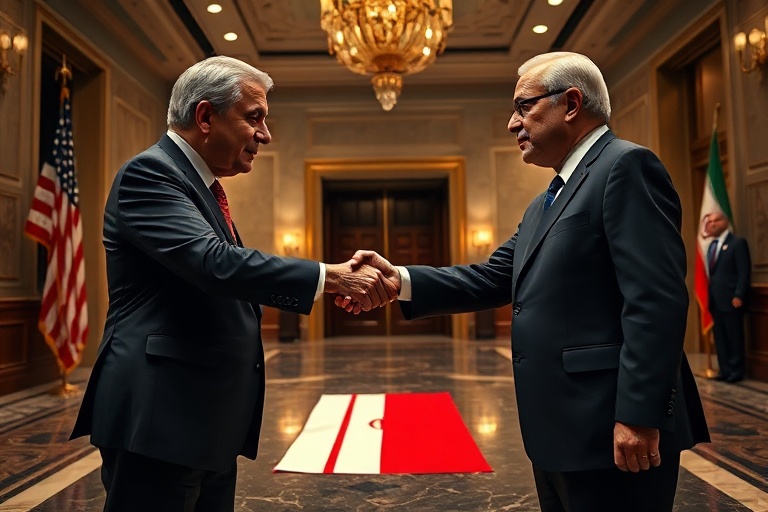
US-Iran Tensions: A 40-Year History of Conflict and Standoffs
Decades of Tension: The Complex US-Iran Relationship
The relationship between the United States and Iran remains one of the most intricate and consequential geopolitical dynamics of the modern era. Since the 1979 Islamic Revolution toppled the U.S.-backed monarchy in Tehran, the two nations have navigated a web of ideological clashes, proxy conflicts, and diplomatic standoffs. This rivalry transcends mere bilateral tensions, shaping regional stability in the Middle East and influencing global energy markets.
At its core, the US-Iran relationship is a collision of opposing worldviews. The U.S. has historically positioned itself as a defender of Western liberal democracy and regional allies like Saudi Arabia and Israel. Iran, under its revolutionary Islamic Republic, has championed anti-imperialism and Shi’a Muslim solidarity. These fundamental differences have fueled decades of mutual suspicion, with each nation viewing the other as an existential threat.
The 1979 Revolution and the Birth of Hostility
The rupture in relations began with the 1979 Iranian Revolution, which overthrew Mohammad Reza Pahlavi, the Shah of Iran. The Shah had been a key U.S. ally during the Cold War, serving as a bulwark against Soviet expansion in the region. His authoritarian rule, however, fueled widespread discontent, culminating in the revolution led by Ayatollah Ruhollah Khomeini.
When the new Islamic Republic took power, it declared the U.S. the “Great Satan” and severed diplomatic ties. The immediate flashpoint came later that year with the hostage crisis at the U.S. Embassy in Tehran, where 52 American diplomats were held captive for 444 days. This event cemented Iran’s image in American politics as a rogue state and set the tone for decades of hostility.
Following the crisis, the U.S. imposed economic sanctions and supported Iraq during the Iran-Iraq War (1980–1988), further entrenching the divide. The war left hundreds of thousands dead and solidified Iran’s narrative of being encircled by hostile powers, while the U.S. viewed Tehran as a destabilizing force in the region.
Nuclear Ambitions and the JCPOA Era
The most explosive dimension of the US-Iran conflict has centered on Iran’s nuclear program. International inspectors have long suspected that Tehran’s uranium enrichment activities could lead to the development of nuclear weapons. The U.S. and its European allies have consistently demanded transparency and restrictions, while Iran has maintained its nuclear program is for peaceful energy purposes.
Tensions escalated in 2002 when an Iranian dissident group revealed the existence of clandestine nuclear facilities. The subsequent decade saw a series of punitive measures, including crippling UN-mandated sanctions that isolated Iran economically. The situation reached a turning point in 2015 with the signing of the Joint Comprehensive Plan of Action (JCPOA), or Iran Nuclear Deal.
The JCPOA, negotiated under President Barack Obama, lifted sanctions in exchange for strict limits on Iran’s nuclear activities and intrusive inspections. It was hailed as a diplomatic breakthrough, offering a pathway to normalize relations. However, the deal’s future remained fragile, as domestic opposition in both countries threatened its survival.
In 2018, President Donald Trump unilaterally withdrew the U.S. from the JCPOA, reimposing sanctions and escalating tensions. Iran responded by gradually breaching its nuclear commitments, enriching uranium beyond agreed limits. The move reignited fears of a nuclear arms race in the Middle East and strained global non-proliferation efforts.
Proxy Wars and Regional Power Struggles
The US-Iran rivalry extends far beyond nuclear diplomacy—it plays out daily through proxy conflicts across the Middle East. Both nations have cultivated alliances with local factions, turning civil wars and political crises into battlegrounds for influence.
In Syria, Iran has provided critical military and financial support to President Bashar al-Assad, ensuring his survival during a devastating civil war. The U.S., in contrast, has backed various rebel groups and maintained a military presence to counter Iranian influence. The Syrian conflict has become a microcosm of the broader regional struggle.
In Yemen, Iran supports the Houthi rebels, while the U.S. backs the Saudi-led coalition fighting them. The war has caused one of the world’s worst humanitarian crises, with millions displaced and facing famine. In Iraq, Iran-backed militias have clashed with U.S. forces, complicating efforts to stabilize the country after the fall of Saddam Hussein.
These proxy wars have drawn in regional and global powers, turning local conflicts into flashpoints for broader confrontation. The U.S. has accused Iran of destabilizing the region through its support for militant groups, while Iran argues that American military presence and support for authoritarian regimes fuel insecurity.
The Human Cost: Sanctions and Civil Society
While geopolitical maneuvering dominates headlines, the human toll of the US-Iran conflict is often overlooked. Decades of sanctions have crippled Iran’s economy, leading to hyperinflation, unemployment, and shortages of medicine and food. The U.S. has justified sanctions as a tool to pressure Iran into changing its behavior, but critics argue they disproportionately harm civilians.
Iranian society has shown remarkable resilience in the face of economic hardship. Protests have erupted repeatedly, demanding political reform and economic relief. In 2019, nationwide demonstrations over fuel price hikes were met with a violent crackdown, resulting in hundreds of deaths. The government blamed foreign instigators, a familiar refrain in Tehran’s narrative of external threats.
Meanwhile, Iranian-Americans and dual citizens have faced arbitrary detention and travel bans. The U.S. has justified such measures as necessary for national security, citing Iran’s history of hostage-taking and espionage. Families separated by travel restrictions have become unintended casualties of the broader conflict.
Looking Ahead: Diplomacy or Escalation?
The future of US-Iran relations remains uncertain. Diplomatic channels are largely frozen, and military incidents—such as the 2020 U.S. drone strike that killed Iranian General Qasem Soleimani—have pushed both sides to the brink of direct conflict. Yet, there are glimmers of hope. Regional players like Iraq and Oman have attempted to mediate, and public fatigue with endless confrontation may pressure both governments toward dialogue.
For any meaningful progress, both nations must address core grievances. The U.S. must balance its security concerns with a recognition of Iran’s legitimate regional interests. Iran, for its part, must curb its support for militant groups and commit to transparency. Neither outcome seems likely without significant concessions or a shift in leadership on either side.
In the meantime, the Middle East remains a powder keg, with the US-Iran rivalry acting as a constant source of instability. The international community must prioritize de-escalation, not only to prevent another catastrophic war but to protect the millions of civilians caught in the crossfire.
As the world watches, the question is no longer whether the U.S. and Iran can coexist—but whether they can afford not to.
Key Takeaways
- The 1979 Islamic Revolution and hostage crisis severed US-Iran relations and set the stage for decades of hostility.
- The nuclear program remains the most contentious issue, with the JCPOA offering temporary relief but ultimate collapse under U.S. withdrawal.
- Proxy wars in Syria, Yemen, and Iraq have turned the region into a battleground for influence.
- Sanctions have devastated Iran’s economy and civilian population, fueling protests and repression.
- Without renewed diplomacy, the risk of further escalation remains dangerously high.
For more on regional conflicts and their global implications, explore our News and Politics sections.