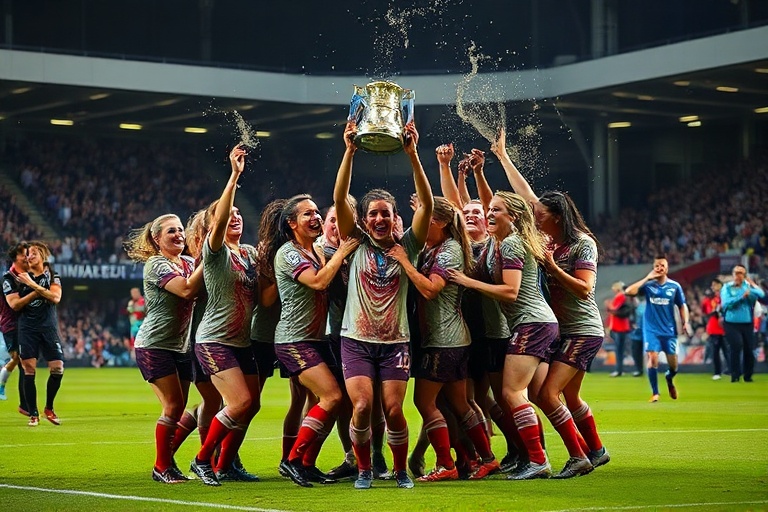
The Women’s FA Cup: A Global Stage for Football’s Fastest Growing League
The Women’s FA Cup stands as one of the most prestigious and historic competitions in women’s football. Since its inception in 1970, the tournament has evolved from a grassroots initiative into a globally recognized event that showcases elite talent, tactical innovation, and the growing influence of women’s sports. Unlike its male counterpart, which often overshadows the women’s game, the Women’s FA Cup has carved its own identity, attracting record-breaking crowds and broadcast audiences while fostering a new generation of players and fans.
The competition’s journey reflects broader societal shifts. In the 1970s, women’s football faced significant barriers, including bans on playing on Football League grounds and limited media coverage. Yet, the FA Cup provided a platform for female athletes to defy these constraints. Today, the tournament is a celebration of progress, mirroring the rise of leagues like the Women’s Super League (WSL) and the increasing professionalization of women’s football worldwide.
The Evolution of a Competition: From Humble Beginnings to Global Attention
The Women’s FA Cup was officially launched in 1970 by the Women’s Football Association (WFA), which had been formed two years earlier to promote and organize the sport. The inaugural final took place at the Crystal Palace National Sports Centre, where Southampton Women defeated West Bromwich Albion 4-1. This match, though modest in scale, laid the foundation for what would become a cornerstone of women’s football.
For decades, the competition operated on the fringes of the footballing world. Limited funding and media attention meant that matches were often played in front of small crowds, with players balancing the sport alongside full-time jobs. However, the tide began to turn in the 2010s, as women’s football gained traction globally. The FA’s decision to invest in the women’s game, coupled with the success of the England national team at UEFA Women’s Euro 2022, propelled the Women’s FA Cup into the spotlight.
Key milestones in the competition’s evolution include:
- 2015: The FA announced a £3 million investment to grow women’s and girls’ football, including the Women’s FA Cup. This funding helped professionalize clubs and improve facilities.
- 2018: The final moved to Wembley Stadium for the first time, drawing a crowd of 45,423. This marked a turning point in the competition’s visibility.
- 2022: The final returned to Wembley, this time attracting over 77,000 spectators—the largest crowd for a domestic women’s football match in England. The broadcast reached millions more, cementing the tournament’s status as a major sporting event.
- 2023: The introduction of a new trophy design and enhanced prize money reflected the FA’s commitment to elevating the competition’s prestige.
These developments underscore how the Women’s FA Cup has transitioned from a symbolic tournament to a high-profile spectacle, mirroring the growth of women’s football on the global stage.
Cultural Impact: Breaking Barriers and Inspiring Generations
The Women’s FA Cup transcends sport; it is a cultural force that challenges stereotypes and redefines what it means to be a female athlete. Historically, women’s football has been dismissed as inferior to the men’s game, but the Women’s FA Cup has consistently proven this narrative wrong. Matches often feature technical skill, tactical depth, and physicality that rival top-tier men’s competitions, dispelling myths about the sport’s “lack of excitement.”
One of the most significant cultural impacts of the tournament is its role in inspiring young girls to pursue football. The visibility of professional female players—such as Beth Mead, Sam Kerr, and Lauren James—has created relatable role models for aspiring athletes. Clubs participating in the Women’s FA Cup frequently engage in community outreach, hosting coaching clinics and school visits to nurture the next generation of talent.
The competition also serves as a platform for social change. In recent years, players have used their platforms to advocate for gender equality, LGBTQ+ rights, and mental health awareness. For example, during the 2022 final, both teams wore rainbow armbands in support of inclusivity, demonstrating how football can be a vehicle for activism. Additionally, the FA has implemented initiatives to increase diversity within the sport, such as the “Gameplan for Growth” strategy, which aims to double participation and broaden access to underrepresented groups.
Beyond the UK, the Women’s FA Cup has inspired similar tournaments worldwide. Leagues in the United States, Australia, and Europe have drawn parallels with the competition’s structure and ambition, creating a ripple effect that is reshaping global women’s football.
The Business of the Women’s FA Cup: Commercial Growth and Future Prospects
The commercialization of the Women’s FA Cup has been a game-changer for women’s football. Sponsorship deals, broadcasting rights, and prize money have all seen significant increases, reflecting the tournament’s growing marketability. In 2022, the FA secured a multi-year broadcast agreement with BBC Sport and the FA Player, ensuring wider coverage than ever before. This deal not only boosted viewership but also attracted high-profile sponsors, including Barclays, which became the first title sponsor of the Women’s FA Cup in 2022.
The financial growth of the competition has had a tangible impact on participating clubs. Increased revenue streams have allowed teams to invest in player salaries, youth academies, and stadium upgrades. For instance, Arsenal Women, one of the competition’s most successful teams, have used their FA Cup success to fund their move to the Meadow Park stadium, a state-of-the-art facility designed to meet the needs of a professional women’s team.
However, challenges remain. Despite progress, the Women’s FA Cup still lags behind the men’s competition in terms of commercial revenue and fan engagement. The average attendance for Women’s FA Cup matches in the 2022-23 season was just over 2,000, a fraction of the men’s equivalent. Similarly, while broadcast deals are improving, they do not yet match the scale of men’s football. This disparity highlights the ongoing need for investment and strategic planning to ensure sustainable growth.
The future of the Women’s FA Cup will likely be shaped by several key trends:
- Technology and Innovation: The use of VAR (Video Assistant Referee) and enhanced broadcasting technologies could improve the quality and accessibility of the competition. The FA has already trialed VAR in the Women’s FA Cup, signaling a commitment to maintaining high standards.
- Fan Engagement: Clubs are exploring ways to enhance the matchday experience, such as family-friendly zones, interactive fan zones, and improved stadium facilities. The goal is to create an atmosphere that rivals men’s football while catering to a diverse audience.
- Global Expansion: There is potential for the Women’s FA Cup to attract international clubs or host matches abroad, particularly in regions where women’s football is rapidly growing, such as Africa and Asia. This could elevate the tournament’s profile and create new revenue streams.
- Sustainability: Environmental initiatives, such as reducing plastic waste and promoting sustainable travel, are becoming increasingly important for sports organizations. The FA has already taken steps in this direction, and the Women’s FA Cup could serve as a model for eco-friendly sporting events.
As the competition continues to evolve, its success will depend on balancing commercial growth with the core values of inclusivity and accessibility. The Women’s FA Cup has the potential to become a blueprint for how women’s sports can thrive in a competitive global market.
Conclusion: A Legacy in the Making
The Women’s FA Cup is more than a tournament; it is a testament to the resilience and ambition of women’s football. From its humble beginnings to its current status as a global spectacle, the competition has played a pivotal role in shaping the landscape of the sport. Its cultural impact, commercial growth, and ability to inspire future generations underscore its significance—not just in the UK, but worldwide.
As the Women’s FA Cup continues to break barriers, it challenges the status quo and redefines what is possible for women in sports. With ongoing investment and a commitment to innovation, the tournament is poised to reach even greater heights, leaving a lasting legacy for generations to come. For fans, players, and advocates alike, the Women’s FA Cup represents hope—a reminder that progress is not just possible, but inevitable.
For those looking to stay updated on the latest developments in women’s football, following the Sports section on Dave’s Locker will provide insights into the competition’s evolving story and its broader impact on the game.