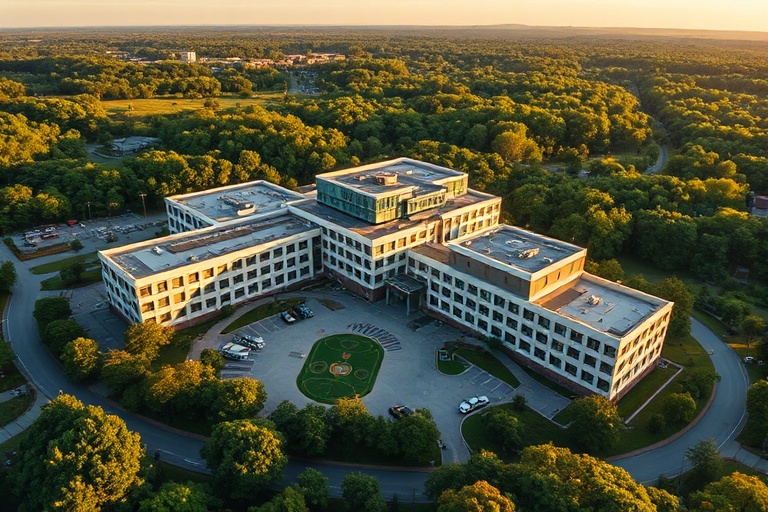
Arrowe Park Hospital: A Regional Healthcare Landmark
Arrowe Park Hospital stands as a cornerstone of healthcare delivery in the North West of England, serving a population of over 350,000 across Wirral and surrounding areas. Since its opening in 1982, the hospital has evolved from a district general facility into a major acute care provider, reflecting broader trends in NHS service consolidation and specialization.
The hospital is operated by Wirral University Teaching Hospital NHS Foundation Trust, which also manages nearby Clatterbridge Hospital and the Wirral Community NHS Trust. This network approach allows for shared resources and expertise, particularly in specialized services where patient volumes might not support standalone facilities.
A Brief History of Service
Arrowe Park Hospital’s origins trace back to the post-war era when the NHS was expanding to meet growing healthcare needs. Originally designed as a 500-bed facility, it has undergone multiple expansions to accommodate advances in medical technology and changing patient demographics. Key milestones include:
- 1982: Official opening as a district general hospital
- 1990s: Introduction of specialized units including cardiology and orthopedics
- 2000s: Redevelopment of emergency and maternity services
- 2018: Completion of a £25 million outpatient and diagnostic center
These developments reflect a broader shift in NHS strategy toward regional hubs of excellence rather than standalone facilities. Arrowe Park’s role expanded particularly after the closure of nearby Victoria Central Hospital in 2010, which consolidated services under one roof.
Specialized Care and Service Offerings
The hospital now provides a comprehensive range of services, with particular strengths in several areas:
- Emergency and Critical Care: The hospital operates a 24/7 emergency department with a dedicated trauma unit, serving as a major trauma center for the region. Its proximity to the M53 motorway makes it strategically important for road traffic accident response.
- Cardiology and Stroke Services: Home to one of the North West’s busiest cardiac units, performing over 1,200 procedures annually. The hospital also hosts a hyperacute stroke unit, part of a regional network that has reduced stroke mortality rates by 20% since its inception.
- Women’s and Children’s Health: The maternity unit delivers approximately 3,500 babies per year, supported by a neonatal intensive care unit. Community midwifery services extend care into local neighborhoods.
- Orthopedics and Rehabilitation: A leading center for joint replacement surgery, performing over 1,500 hip and knee replacements annually. Its rehabilitation unit supports patients recovering from surgery, accidents, or chronic conditions.
These specialized services have positioned Arrowe Park as a referral center for complex cases, reducing the need for patients to travel to Liverpool or Manchester for advanced treatment. The hospital’s catchment area includes not only Wirral but also parts of Cheshire and North Wales, creating a de facto cross-border healthcare partnership.
The Human Impact: Staff and Patient Experiences
Behind the clinical statistics lies the human experience of Arrowe Park Hospital. For staff, the hospital represents both opportunity and challenge. The trust employs over 4,000 people, making it one of the largest employers in Wirral. Many staff members live locally, creating a deep connection to the community they serve.
Patient stories often highlight the hospital’s role during critical moments. Sarah Thompson, a 68-year-old from Birkenhead, underwent emergency heart surgery at Arrowe Park in 2022. “The staff saved my life,” she recalls. “From the paramedics who got me here in time to the surgeons who operated within hours, it was seamless.” Such testimonials underscore the hospital’s importance beyond its physical infrastructure.
However, the hospital has not been without controversy. Like many NHS facilities, it has faced challenges including:
- Staffing shortages in nursing and support roles
- Delays in emergency department performance targets
- Public concerns about parking availability and visitor access
These issues reflect systemic pressures within the NHS, where demand for services often outstrips available resources. The hospital’s leadership has responded with initiatives such as expanded recruitment drives and digital transformation projects to improve efficiency.
Broader Implications for Regional Healthcare
Arrowe Park Hospital’s evolution offers insights into broader healthcare trends across the UK. Its development mirrors a national shift toward specialized regional centers, which aim to balance accessibility with clinical excellence. This model has both advantages and drawbacks:
Advantages:
- Concentration of expertise in high-volume centers improves patient outcomes
- Shared resources and infrastructure reduce costs per procedure
- Easier implementation of advanced technologies like robotic surgery
Challenges:
- Increased travel times for patients in rural areas
- Pressure on public transport links to hospital sites
- Potential erosion of local healthcare jobs and services
The hospital’s location also raises questions about healthcare equity. While its services benefit the densely populated Wirral peninsula, residents in more remote areas of North Wales may face longer journeys. This geographic disparity highlights the tension between specialization and accessibility that defines modern healthcare policy.
Looking ahead, Arrowe Park Hospital must navigate several critical questions. How will it adapt to an aging population with increasing chronic disease burdens? Can technology like telemedicine reduce pressure on its facilities while maintaining quality? What role will it play in the NHS’s long-term sustainability plans?
These questions extend beyond Arrowe Park itself, touching on the future of regional healthcare delivery across the UK. The hospital’s ability to innovate while maintaining its community roots may serve as a template for similar facilities nationwide.
A Model for the Future?
Arrowe Park Hospital represents more than just a building or a collection of departments. It embodies the NHS’s enduring commitment to universal healthcare, adapted to meet 21st-century challenges. Its successes in specialized care demonstrate what can be achieved when resources are concentrated wisely. Yet its struggles with capacity and staffing remind us of the ongoing need for investment and reform.
For the Wirral community, the hospital remains a vital institution—one that has witnessed generations grow up within its walls and care for one another through its doors. As healthcare continues to evolve, Arrowe Park’s story will likely reflect the broader trajectory of public health in Britain: a blend of innovation, resilience, and the unyielding human spirit to heal and be healed.
Those interested in exploring similar healthcare facilities or regional service models may find value in examining other NHS trust operations. For further reading on healthcare trends, visit our Health category or explore analysis pieces in our Analysis section.