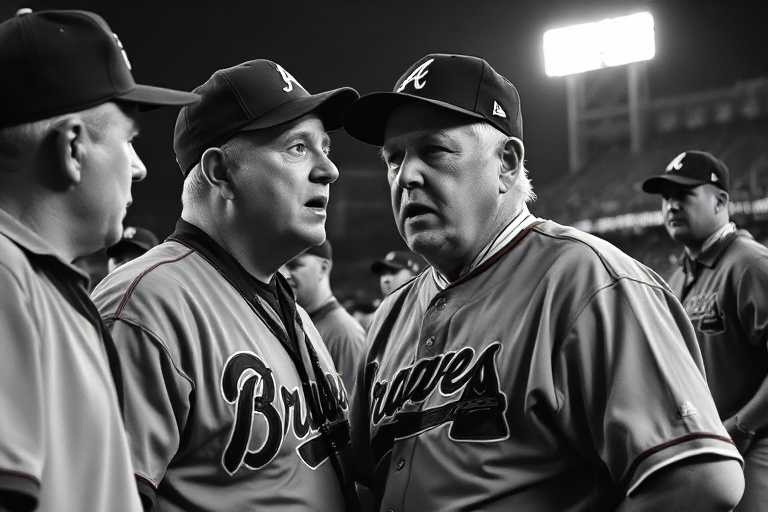
Bobby Cox’s name doesn’t always headline the biggest sports stories, but his influence on baseball is undeniable. As the manager of the Atlanta Braves from 1990 to 2010, Cox wasn’t just a coach—he was the steady hand that guided one of the most dominant teams of the modern era. His leadership produced 14 straight division titles, five National League pennants, and one World Series championship in 1995. Yet, beyond the statistics and trophies, Cox’s legacy is defined by something quieter: consistency.
What set Cox apart wasn’t just his tactical acumen or his ability to manage egos, though he excelled at both. It was his unwavering commitment to a philosophy that prioritized fundamentals over flash. In an era where analytics and instant replay dominate the conversation, Cox’s approach feels almost old-school. But that old-school mentality built a dynasty. His teams weren’t just winning—they were dominating, and they did it with a blueprint that few could replicate.
The Early Years: From Player to Manager
Cox’s journey to managing the Braves began in an unlikely place: as a third baseman for the New York Yankees in the 1960s. Though his playing career was unremarkable—he appeared in just 33 games over three seasons—it was his time in the minors that shaped his understanding of the game. By the 1970s, Cox was transitioning into coaching, first as a minor league manager for the Yankees and later as a coach for the Atlanta Braves under Joe Torre.
His first managerial stint came with the Toronto Blue Jays in 1982, where he quickly earned a reputation as a disciplinarian. Cox’s no-nonsense style clashed with the free-spirited culture of the Blue Jays at the time, and he was fired in 1985. Yet, his time in Toronto wasn’t a failure. It was a proving ground. When the Braves called him back in 1990, they weren’t just hiring a manager—they were hiring a project manager, someone who could rebuild a franchise from the ground up.
Cox’s early years in Atlanta were marked by struggle. The Braves finished last in the NL West in 1990, but the seeds of greatness were already being planted. By 1991, the team surged to a division title, and the rest, as they say, is history.
The Cox Philosophy: Discipline Over Drama
What made Bobby Cox’s teams so successful? At its core, it was a refusal to deviate from a simple but effective philosophy: control the controllable. Cox’s Braves were built on pitching, defense, and timely hitting—three pillars that sound basic but are devilishly hard to execute at an elite level. His teams rarely led the league in home runs, but they led in runs scored because they didn’t waste opportunities.
Cox’s managerial style was understated. He wasn’t a loud cheerleader like Earl Weaver or a fiery motivator like Billy Martin. Instead, he led by example, fostering an environment where accountability mattered more than ego. Players knew their roles, and they executed them without complaint. This culture of discipline extended beyond the field. Cox wasn’t afraid to bench a star player if they violated team rules, a rarity in an era where stars often operated with impunity.
His bench management was another hallmark of his tenure. Cox had a knack for making the right move at the right time, whether it was a well-timed pitching change or a pinch-hit that changed the complexion of a game. In an era before advanced analytics dominated decision-making, Cox relied on intuition honed by decades in the game. And more often than not, he was right.
Key Principles of Cox’s Leadership
- Pitching First: Cox built his teams around dominant starting pitching, a philosophy that culminated in the Braves’ rotation of Greg Maddux, Tom Glavine, and John Smoltz—three Hall of Famers who anchored the staff for over a decade.
- Defensive Rigor: The Braves were known for their slick fielding, a testament to Cox’s emphasis on defense. Players like Andruw Jones and Rafael Furcal became household names not just for their offensive contributions but for their defensive brilliance.
- Fundamental Offense: Cox’s teams weren’t afraid to manufacture runs. They bunted, stole bases, and hit behind the runner—small-ball tactics that frustrated opponents used to high-scoring games.
- Accountability: Cox’s no-nonsense approach extended to clubhouse discipline. Players who violated team rules, whether it was a curfew violation or a lack of effort, paid the price.
The Broader Impact: How Cox Redefined Managerial Success
Bobby Cox’s tenure with the Braves coincided with a transformative era in baseball. The steroid era was in full swing, and offense was skyrocketing across the league. Yet, Cox’s Braves thrived without relying on power hitters or performance-enhancing drugs. Their success was a counterpoint to the era’s excesses, a reminder that fundamentals still mattered.
Cox’s influence extended beyond Atlanta. He set a standard for managerial excellence that resonated with a generation of coaches. His emphasis on pitching and defense became a blueprint for smaller-market teams looking to compete without the financial firepower of big-market franchises. In many ways, Cox was a pioneer of the “pitching-and-defense” model that would later define teams like the 2010s Kansas City Royals and the 2020s Tampa Bay Rays.
His impact wasn’t just tactical. Cox’s leadership style offered a counterbalance to the increasingly flashy, media-driven world of modern sports. In an era where managers are often judged by their sound bites or social media presence, Cox’s quiet professionalism stood out. He let his teams’ performance speak for itself, a rarity in today’s sports landscape.
Legacy: More Than Just Wins
When Cox retired after the 2010 season, he left behind a record 2,504 wins as a manager, placing him fourth on the all-time list. But his legacy isn’t just in the numbers. It’s in the culture he built, a culture that prioritized teamwork over individualism and discipline over drama. The Braves’ 14 straight division titles from 1991 to 2005 remain one of the most impressive streaks in sports history, a testament to Cox’s ability to sustain excellence over time.
Cox’s retirement didn’t mark the end of his influence. Many of the managers who followed in his footsteps, from Joe Torre to Terry Francona, cite him as an inspiration. His approach to the game—grounded, methodical, and unapologetically old-school—remains a touchstone for those who believe in the power of fundamentals.
In an era where baseball is increasingly dominated by analytics and launch angles, Bobby Cox’s legacy serves as a reminder of what can be achieved when a team commits to the basics. His story isn’t one of revolution or reinvention. It’s a story of persistence, of a man who trusted his instincts and built something that lasted. And that, perhaps, is the rarest form of success in sports.
For fans of the Atlanta Braves and baseball purists alike, Bobby Cox’s name will always be synonymous with greatness—not just in wins and losses, but in the way he defined what it meant to lead a team.
Explore more Sports articles on Dave’s Locker.
Dive into Baseball coverage for additional context on Cox’s era.