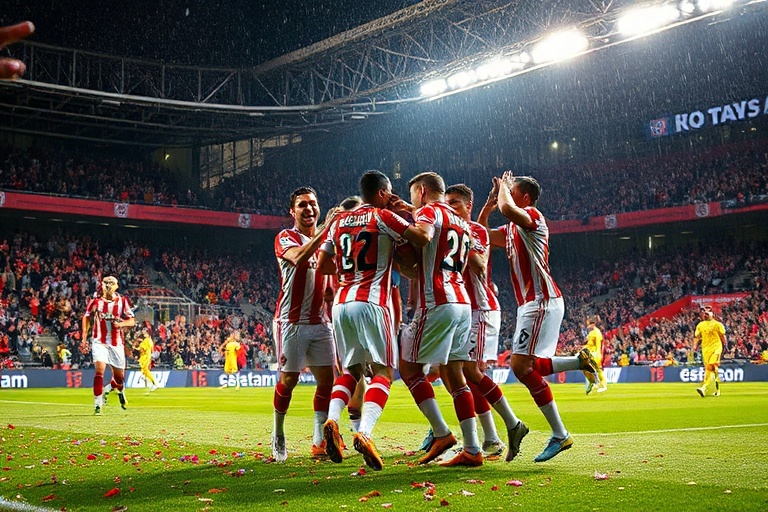
Founded in 1906, Club Deportivo Guadalajara—commonly known as Chivas FC—stands as one of Mexico’s most iconic football institutions. Unlike many clubs that prioritize foreign talent, Chivas has built its identity on a strict policy of fielding only Mexican players, a tradition that has earned it both fierce loyalty and occasional criticism. The club’s red-and-white striped jerseys and the roaring atmosphere at Estadio Akron in Zapopan reflect more than just sporting success; they symbolize a cultural legacy that transcends sport.
The team’s nickname, “Chivas,” means “goats” in Spanish, a reference that traces back to the club’s early days when its first president, Edgar Everaert, reportedly imported goats from Belgium. This quirky origin story has since become part of the club’s charm, reinforcing its unique place in Mexican football.
The Foundations of Identity: Chivas FC’s Philosophy
Chivas FC’s commitment to Mexican players has shaped its philosophy for over a century. The club’s academy, known as Chivas Youth Academy, has produced some of Mexico’s most celebrated talents, including Javier “Chicharito” Hernández and Carlos Vela. While the policy has faced scrutiny—particularly in an era when global football increasingly favors international stars—it remains a cornerstone of the club’s ethos.
The “only Mexican players” rule extends beyond the first team. Chivas’ entire squad, from reserves to the senior side, adheres to this principle, creating a pipeline that nurtures homegrown talent. Critics argue that this approach limits the club’s competitiveness in continental tournaments like the CONCACAF Champions Cup, where foreign experience can be advantageous. Yet supporters counter that Chivas’ identity is irreplaceable, offering a counterpoint to the globalized nature of modern football.
Chivas’ philosophy also extends to its fan engagement. The club’s leadership has long emphasized community ties, with players frequently participating in local initiatives and charity events. This connection fosters a sense of belonging among supporters, who view the club as more than just a team—it’s a cultural institution.
Key Pillars of Chivas FC’s Philosophy
- Homegrown Talent: Exclusively Mexican players in all squads, from youth to senior levels.
- Academy Development: A robust youth system that has produced national team stars.
- Community Engagement: Strong ties with local fans through outreach programs.
- Cultural Pride: Emphasis on Mexican heritage in branding and player selection.
On-Field Triumphs and Challenges
Chivas FC’s trophy cabinet reflects its status as one of Mexico’s most successful clubs. With 12 Liga MX titles, 4 Copa MX championships, and 2 CONCACAF Champions’ Cups, the team has left an indelible mark on domestic and regional football. The 2017 Clausura title, secured under manager José Manuel de la Torre, remains a highlight, as it marked the club’s first league triumph in a decade.
However, Chivas’ journey has not been without struggles. Financial constraints, managerial turnover, and the pressure to maintain its unique identity have posed challenges. The club’s 2022 Clausura final loss to Atlas FC, where Chivas failed to capitalize on home advantage, underscored the difficulties of balancing tradition with modern competitiveness.
In continental competitions, Chivas has often fallen short against clubs with deeper pockets and more international experience. Yet, its passionate fanbase—known as “La Adicción” (The Addiction)—continues to fill Estadio Akron, creating an intimidating atmosphere for visiting teams. The club’s 2018 CONCACAF Champions Cup victory over Toronto FC, where Chivas triumphed 2-1 on aggregate, was a rare continental highlight.
Chivas FC in the Broader Football Landscape
Chivas FC’s model offers a fascinating case study in football identity. In an era where clubs are increasingly owned by foreign investors and players are traded globally, Chivas remains a rare bastion of local pride. This approach resonates deeply in Mexico, where football is more than a sport—it’s a unifying force.
The club’s influence extends beyond the pitch. Chivas’ branding, with its iconic stripes and goat emblem, has become synonymous with Mexican football. Sponsorship deals with local companies, rather than global giants, further reinforce its community-focused ethos. This strategy has allowed the club to maintain financial stability while staying true to its roots.
Yet, the club’s model is not without risks. As younger Mexican players seek opportunities abroad, Chivas must work harder to retain top talent. The rise of Liga MX clubs like Monterrey and Club América, which blend local and international players, has intensified competition. Chivas’ recent investments in its academy and scouting network suggest a commitment to evolving while preserving its identity.
Globally, Chivas FC serves as a reminder of football’s cultural power. Clubs like FC Barcelona (with its “Mes Que Un Club” ethos) and Celtic FC (rooted in Irish heritage) share similar philosophies. Chivas’ ability to balance tradition with ambition could offer lessons for other clubs seeking to carve out a distinct identity in a homogenized football landscape.
Chivas FC’s Global Influence
- Cultural Ambassador: Represents Mexican football abroad through its unique identity.
- Youth Development Model: Inspires other clubs to prioritize homegrown talent.
- Community-Focused Branding: Builds loyalty through local engagement rather than global marketing.
- Contrast to Globalization: Offers a counterpoint to the trend of foreign ownership and player recruitment.
The Future of Chivas FC
As Chivas FC looks ahead, the club faces a pivotal moment. The appointment of new leadership, including sporting director Rafael Puente Jr., signals a desire to modernize while staying true to its roots. The recent signings of young Mexican talents like Roberto Alvarado and Orbelín Pineda suggest a blend of experience and potential.
Off the pitch, Chivas is exploring innovative ways to engage fans. The club’s digital presence, including social media campaigns and interactive content, has expanded its reach beyond traditional supporters. A planned expansion of Estadio Akron could further enhance the matchday experience, ensuring the stadium remains a fortress for La Adicción.
Yet, the biggest question remains: Can Chivas FC maintain its unique identity while competing at the highest level? The answer may lie in its ability to adapt without losing sight of what makes it special. If the club can strike this balance, it could serve as a model for football clubs worldwide.
For now, Chivas FC continues to write its story—one match, one goal, and one generation of Mexican talent at a time.
Conclusion
Chivas FC is more than a football club; it’s a cultural institution that embodies Mexican pride. Its commitment to homegrown talent, community engagement, and tradition sets it apart in a globalized sport. While challenges lie ahead, Chivas’ ability to evolve while staying true to its roots will determine its legacy. For fans, the club remains a symbol of hope, identity, and unwavering passion.