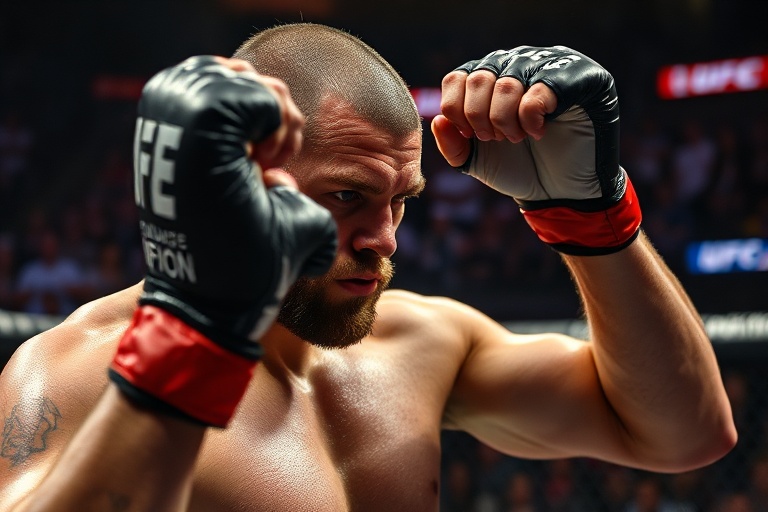
Chris Weidman’s MMA Legacy: Rise, Fall, and Comeback Story
Chris Weidman’s name resonates in combat sports circles not just for his achievements inside the cage, but for his unyielding spirit. Once considered the future of middleweight MMA, Weidman’s career has been a rollercoaster of triumphs, setbacks, and remarkable comebacks. His journey mirrors the grit of a sport where physical durability and mental resilience are tested as fiercely as one’s technique.
Raised in Baldwin, New York, Weidman developed a passion for wrestling early in life, a foundation that would later define his MMA style. After a decorated amateur career, he transitioned to professional fighting in 2008 and quickly rose through the ranks. His technical precision and strategic acumen caught the attention of major promotions, including the UFC, where he became a household name.
Weidman’s defining moment came at UFC 162 in 2013, when he dethroned Anderson Silva to claim the UFC Middleweight Championship. The victory wasn’t just a personal milestone—it symbolized a shift in the sport’s landscape, proving that technique could triumph over sheer dominance. Yet, as is often the case in combat sports, Weidman’s story didn’t follow a straight path.
The Rise: From Wrestling Pedigree to UFC Champion
Weidman’s wrestling background wasn’t just a footnote in his career—it was the bedrock of his success. Unlike many fighters who rely solely on striking or grappling, Weidman blended his collegiate wrestling skills with Muay Thai and Brazilian Jiu-Jitsu, creating a well-rounded style that perplexed opponents. His ability to dictate where the fight took place, whether on the feet or on the mat, made him a nightmare for middleweight contenders.
By 2012, Weidman had compiled an 8-0 record in the UFC, including dominant wins over Mark Munoz and Demian Maia. His striking improved rapidly under the tutelage of coaches like Greg Jackson, and his wrestling remained elite. When he stepped into the Octagon with Silva, a man who had dominated the division for seven years, few gave Weidman a chance. Yet, in a stunning display of composure and precision, Weidman took Silva down at will, landed clean strikes, and submitted him in the second round to claim the title.
The victory catapulted Weidman into the stratosphere of MMA stardom. He became a symbol of the sport’s evolution—a fighter who could break the mold of traditional dominance. His success also highlighted the growing influence of collegiate wrestling in MMA, a trend that continues to shape the sport today.
The Fall: Injuries, Setbacks, and a Devastating Loss
Weidman’s reign as champion lasted until UFC 170 in 2014, when he lost the title to Lyoto Machida via knockout. The setback was minor compared to what followed. In 2017, a horrific leg injury during a fight with Uriah Hall sidelined him for nearly two years. The injury wasn’t just physically grueling—it tested his mental fortitude, a critical yet often overlooked aspect of an athlete’s recovery.
Upon his return in 2019, Weidman faced an even greater challenge: the specter of failure loomed large. He lost his next two fights, including a brutal knockout defeat to Israel Adesanya in 2019. Critics questioned whether he could recapture his former glory. The sport, known for its unforgiving nature, had little patience for comebacks.
Yet, Weidman’s resilience became the focal point of his narrative. In a sport where careers often flame out as quickly as they ignite, his refusal to fade into obscurity stood out. His journey mirrored the broader cultural fascination with redemption arcs, a theme that transcends sports and resonates in literature, film, and real life.
The Comeback: Proving the Critics Wrong
Weidman’s resurgence began in earnest in 2021, when he returned to the UFC with a renewed sense of purpose. His performances against Uriah Hall and Sean Strickland showcased a fighter who had refined his game. While he didn’t reclaim the title, his technical improvements were evident. He became more strategic, less reliant on athleticism, and more calculated in his approach.
In 2023, Weidman faced off against Brad Tavares at UFC 285. The fight was a masterclass in veteran resilience. Weidman utilized his wrestling to control the pace, avoided Tavares’s power, and outworked him in the later rounds. The victory wasn’t just a win—it was a statement. At 39 years old, Weidman proved that experience and intelligence could still triumph over youth and athleticism.
His career statistics tell part of the story:
- 16 wins in the UFC, including victories over former champions Anderson Silva and Vitor Belfort
- 7 losses, with notable setbacks against Israel Adesanya and Uriah Hall
- A wrestling background that includes a 2008 NCAA Division I All-American honor
- Over 200 amateur wrestling matches before transitioning to MMA
These numbers underscore his longevity and impact on the sport.
The Legacy: Beyond the Octagon
Weidman’s influence extends beyond his in-cage performances. He has become a voice for fighters navigating the complexities of life after combat sports. His openness about mental health struggles and career transitions has humanized athletes who are often seen as invincible. In an era where fighters are increasingly vocal about their personal journeys, Weidman’s candor adds depth to his public persona.
Culturally, Weidman represents the archetype of the underdog who refuses to stay down. His story resonates globally, from the wrestling hotbeds of the United States to the growing MMA scenes in Europe and Asia. In countries like Brazil, where Jiu-Jitsu is a national point of pride, Weidman’s success underscores the sport’s universal appeal.
Moreover, Weidman’s career highlights the shifting dynamics of MMA. Fighters today must be more versatile than ever, blending multiple disciplines to stay competitive. His ability to evolve with the sport speaks to the importance of adaptability—a lesson that transcends athletics.
As Weidman continues to compete, his legacy is already secure. He has cemented his place as one of the most technically gifted middleweights in UFC history. Whether he adds more wins to his record or transitions to a new role within the sport, his impact on MMA is undeniable.
For aspiring fighters, Weidman’s journey serves as a reminder that success isn’t linear. It’s a testament to the power of perseverance, adaptability, and self-belief. In a sport defined by fleeting moments of glory, Weidman has carved out a career that defies convention.