Chris Weidman’s MMA Legacy: The Titan Who Redefined Resilience
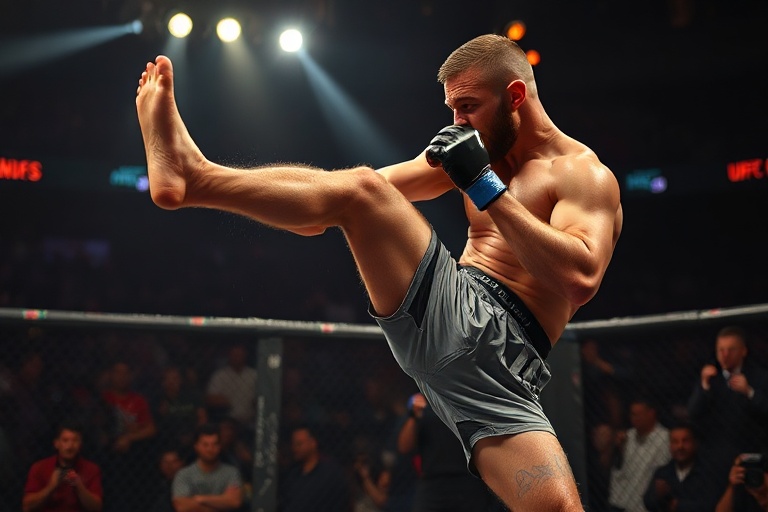
Chris Weidman’s name resonates in mixed martial arts not just for his accomplishments, but for the sheer willpower he displayed inside the cage. A former NCAA Division I All-American wrestler, Weidman transitioned into the brutal world of professional MMA with an unshakable belief in his abilities. Though his career faced both soaring triumphs and devastating setbacks, his impact on the sport endures as a testament to perseverance.
Beyond his athletic prowess, Weidman’s journey reflects a broader narrative in combat sports—one where technical mastery and mental fortitude often outweigh raw athleticism. His rise from wrestling dominance to becoming UFC Middleweight Champion illustrated a rare fusion of discipline and adaptability. Even in defeat, Weidman’s refusal to accept limitations cemented his status as a fan favorite and a symbol of resilience.
From Wrestling Pedigree to UFC Supremacy
Weidman’s foundation in wrestling provided him with a tactical edge long before he stepped into the Octagon. Born in Baldwin, New York, in 1984, he began wrestling at West Babylon High School, where he compiled a 122-7 record. His collegiate career at Hofstra University further sharpened his technique, earning him All-American honors in 2006 and 2007.
His transition to MMA seemed inevitable. With a wrestling base and a calm demeanor, Weidman joined the professional ranks in 2009, quickly amassing a 9-0 record. What set him apart was not just his undefeated streak, but the methodical way he dismantled opponents. His striking improved, his grappling refined, and his confidence grew—culminating in a UFC debut in 2012 against a then-unknown opponent, Mark Muñoz.
The fight was a statement. Weidman dominated Muñoz with precision, culminating in a first-round knockout that announced his arrival. It wasn’t just a win; it was a declaration that wrestling, when executed with technical precision, could dominate the evolving landscape of MMA.
The Historic UFC Middleweight Title Reign
Weidman’s defining moment arrived on July 6, 2013, at UFC 162. Anderson Silva, the long-reigning Middleweight Champion, entered the bout as a 10-to-1 favorite. Silva was a striking virtuoso, a fighter whose creativity and precision made him nearly untouchable. Weidman, however, was not intimidated.
In a shocking upset, Weidman took Silva down in the first round and finished him with strikes. The victory not only dethroned a legend but also signaled a generational shift in the division. Weidman’s reign as UFC Middleweight Champion lasted nearly three years, during which he defended his belt three times—each victory showcasing his adaptability and fight IQ.
His most memorable title defense came against Lyoto Machida in 2014. Machida, a karate stylist with explosive counter-striking, seemed an unlikely matchup for Weidman’s wrestling. Yet, Weidman neutralized Machida’s kicks, took him down, and finished him with ground-and-pound—a performance that silenced critics who doubted his ability to adapt beyond wrestling.
Overcoming Adversity: The Comeback and Unyielding Spirit
Weidman’s career took a dramatic turn in 2017 during a title fight rematch against Israel Adesanya. A brutal calf kick from Adesanya left Weidman with a fractured tibia and fibula. The injury required multiple surgeries and months of rehabilitation, a process that could have ended any athlete’s career.
Yet, Weidman refused to walk away. His recovery was grueling. He spent over a year rehabbing, enduring setback after setback, including a staph infection that threatened his ability to walk. Through it all, he shared his journey publicly, inspiring fans and fellow athletes alike.
Weidman returned to the Octagon in 2019, nearly two years after the injury. Though he lost by unanimous decision to Dominick Reyes, the fight proved his heart remained intact. He continued to compete, facing top contenders and proving that his spirit was as strong as his technique.
His final UFC fight came in 2022 against Bruno Silva. Though he lost by unanimous decision, the bout highlighted his enduring skill and resilience. Weidman announced his retirement shortly after, ending a career that spanned over a decade and left an indelible mark on the sport.
Legacy: More Than Just a Fighter
Weidman’s legacy extends beyond his record or titles. He represented the archetype of the underdog who refused to accept defeat. His story is one of discipline, adaptability, and an unshakable belief in his abilities—qualities that resonate far beyond the Octagon.
In an era where flashy knockouts and viral moments often dominate, Weidman’s career stood out for its consistency and intelligence. He adapted his game as the sport evolved, proving that wrestling could remain a dominant force in MMA even as striking and grappling continued to advance.
Off the canvas, Weidman became an advocate for athlete health and mental resilience. His openness about his injuries and recovery process helped destigmatize discussions about long-term athlete health, particularly in combat sports where injuries are often hidden until they become severe.
Weidman’s influence is also felt in the next generation of fighters. Many wrestlers who transitioned to MMA cite him as an inspiration, a testament to how a strong base and relentless work ethic can overcome even the toughest challenges.
Key Takeaways from Chris Weidman’s Career
- Wrestling as a Foundation: Weidman’s wrestling background provided him with a tactical edge that allowed him to dominate early in his career and adapt as he faced more skilled strikers.
- Defying Expectations: His victory over Anderson Silva in 2013 was one of the biggest upsets in UFC history, proving that technique and preparation could overcome even the most established stars.
- Resilience in the Face of Adversity: His ability to recover from a devastating leg injury and return to competition showcased his mental and physical toughness.
- Advocacy for Athlete Health: Weidman’s openness about his injuries and recovery process has contributed to broader conversations about athlete health and long-term well-being in combat sports.
- Adaptability: Weidman’s career illustrated how fighters can evolve their game to stay competitive, even as the sport around them changes.
Conclusion: A Fighter’s Legacy That Endures
Chris Weidman’s career was a masterclass in discipline, adaptability, and resilience. Though his later years were marked by injuries and setbacks, his early dominance and unwavering spirit cemented his place in MMA history. He proved that success in combat sports is not solely about athleticism, but about preparation, heart, and the ability to rise after falling.
As the sport continues to evolve, Weidman’s story serves as a reminder of what it means to compete with honor and perseverance. His legacy is not just in the titles he held or the fights he won, but in the lives he inspired—both inside and outside the Octagon.
For aspiring fighters and fans alike, Weidman’s journey offers a blueprint: work relentlessly, adapt constantly, and never accept defeat—not even in the face of insurmountable odds.
As the UFC and MMA community reflect on his contributions, one thing is clear: Chris Weidman was more than a fighter. He was a symbol of what it means to fight—not just for victory, but for the love of the sport.