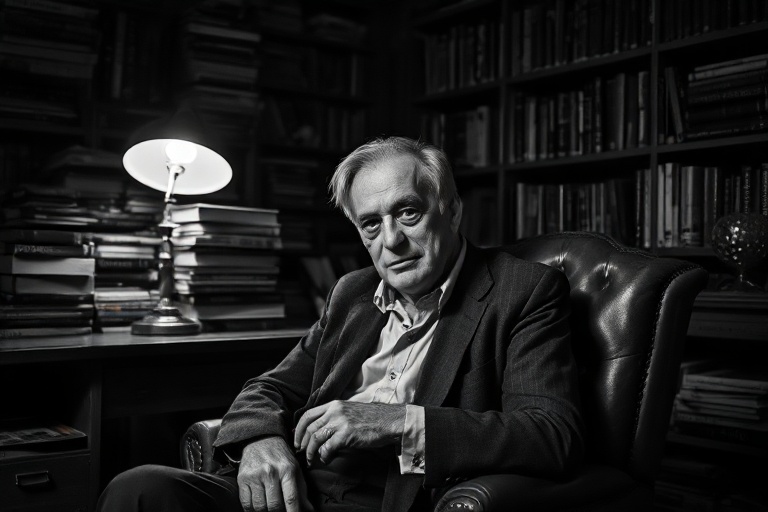
David Morrell: The Literary Architect of Modern Suspense
David Morrell stands as a towering figure in the world of thriller and suspense literature, a man whose work has reshaped the genre for generations. Born in 1943 in Kitchener, Ontario, Morrell’s journey from a childhood marked by tragedy to becoming a bestselling author is one of resilience and reinvention. His debut novel, First Blood, introduced the world to John Rambo, a character who would become a cultural icon and redefine the action hero archetype. Decades later, Morrell’s influence extends far beyond the printed page, seeping into film, television, and the broader cultural lexicon.
Morrell’s career is not merely a story of literary success; it is a testament to the power of storytelling to transcend borders and languages. His novels have been translated into more than 30 languages, a feat that underscores the universal appeal of his narratives. From the gritty streets of America to the political machinations of Europe, Morrell’s work taps into primal fears and societal anxieties, making him a global literary force. His ability to craft tension with surgical precision has earned him comparisons to masters like Alfred Hitchcock and Graham Greene, yet Morrell’s voice remains distinctly his own.
The Early Years: A Foundation of Pain and Perseverance
David Morrell’s early life was shaped by loss and hardship. At the age of 14, he witnessed the death of his father in a train accident, an event that left an indelible mark on his psyche. This trauma became a recurring theme in his work, manifesting in characters who grapple with grief, vengeance, and the search for meaning. After his father’s death, Morrell’s mother moved the family to Toronto, where he struggled to adapt to a new environment. His academic prowess, however, provided an escape. He excelled in school, eventually earning a scholarship to study at St. Jerome’s College in Waterloo, Ontario.
Morrell’s academic journey took him to the United States, where he pursued a Ph.D. in American literature at Pennsylvania State University. His doctoral dissertation explored the works of Ernest Hemingway, a writer whose influence on Morrell’s prose is evident in the lean, muscular style of his later novels. Yet, it was not academia that would define Morrell’s legacy, but the stories he would go on to write. In 1972, he moved to Santa Fe, New Mexico, with his wife and two children, seeking a quieter life that would allow him to focus on his writing. Little did he know that this decision would lead to the creation of one of literature’s most enduring characters.
First Blood and the Birth of Rambo: A Cultural Earthquake
In 1972, Morrell published First Blood, a novel that introduced the world to John Rambo, a troubled Vietnam veteran. The book was a departure from the typical war narratives of the time, delving instead into the psychological toll of combat and the alienation of returning soldiers. The character of Rambo was raw, unfiltered, and deeply human—a far cry from the one-dimensional action heroes that dominated the era. When the novel was adapted into the 1982 film First Blood, starring Sylvester Stallone, Rambo became a global phenomenon. However, the cinematic version took significant liberties with Morrell’s original vision, transforming Rambo into a symbol of militaristic heroism rather than a complex figure grappling with trauma.
This divergence between Morrell’s literary Rambo and the film’s Rambo highlights the challenges authors face when their work enters the public consciousness. Morrell has spoken openly about his disappointment with the film’s alterations, particularly the sanitization of Rambo’s character. Yet, despite these differences, the cultural impact of First Blood cannot be overstated. The novel and its adaptations sparked conversations about the treatment of veterans, the ethics of war, and the nature of heroism, themes that remain relevant decades later.
Morrell’s Rambo was not just a character; it was a mirror held up to society, reflecting its fears and hypocrisies. The novel’s exploration of post-traumatic stress disorder (PTSD) was decades ahead of its time, predating the formal recognition of the condition by the psychiatric community. In this sense, Morrell was not just a storyteller but a pioneer, using fiction to illuminate truths that society was not yet ready to confront.
The Evolution of a Master: Morrell’s Literary Legacy
Over the past five decades, David Morrell has carved out a niche as one of the most versatile and enduring authors of his generation. His bibliography spans multiple genres, from psychological thrillers to historical fiction, each marked by meticulous research and an unerring sense of tension. One of his most acclaimed works, The Brotherhood of the Rose (1984), is a gripping tale of espionage and betrayal that draws inspiration from the Watergate scandal. The novel was so compelling that it was adapted into a television miniseries in 1989, further cementing Morrell’s reputation as a master of suspense.
Morrell’s ability to blend historical detail with fictional narrative is evident in works like The Fifth Profession (1990), which explores the world of professional assassins, and Scavenger Hunt (2003), a fast-paced thriller set against the backdrop of the art world. His historical novels, such as The Shimmer (2017), which reimagines the life of the Lewis and Clark expedition, demonstrate his knack for blending fact with fiction in a way that feels both authentic and thrilling.
Here are some of Morrell’s most notable works that showcase his range as a writer:
- First Blood (1972) – The novel that introduced John Rambo and redefined the action genre.
- The Brotherhood of the Rose (1984) – A Cold War-era thriller that blends espionage and suspense.
- The Fifth Profession (1990) – A dark exploration of the world of hired killers.
- Desperate Measures (1994) – A high-stakes thriller involving a desperate father and a kidnapping.
- The Shimmer (2017) – A historical novel that reimagines the Lewis and Clark expedition.
Morrell’s writing is characterized by its precision and emotional depth. He often spends years researching his subjects, immersing himself in the details of everything from forensic science to historical events. This dedication to authenticity lends his work a credibility that resonates with readers and critics alike. Yet, for all his meticulousness, Morrell never loses sight of the human element. His characters are flawed, vulnerable, and deeply relatable, which is why they linger in the minds of readers long after the final page is turned.
Beyond the Page: Morrell’s Influence on Culture and Media
David Morrell’s impact extends far beyond the realm of literature. His work has inspired countless adaptations, from films and television shows to video games and comic books. The Rambo franchise alone has spawned multiple sequels, a television series, and numerous video games, each contributing to the character’s enduring legacy. Morrell’s other works have also been adapted, including The Brotherhood of the Rose, which was turned into a TV miniseries in 1989, and Desperate Measures, which was adapted into a 1998 film starring Michael Keaton.
Morrell’s influence can also be seen in the broader cultural landscape. His exploration of themes like trauma, betrayal, and the search for justice has paved the way for a new generation of thriller writers. Authors such as Lee Child, Vince Flynn, and Brad Thor have cited Morrell as a major inspiration, and his work continues to be studied in creative writing programs around the world. In an era where storytelling is increasingly dominated by multimedia franchises, Morrell’s ability to craft self-contained, emotionally resonant narratives is more valuable than ever.
Beyond his literary contributions, Morrell has also been an advocate for writers’ rights. He served as the president of the Mystery Writers of America from 1988 to 1989 and has been a vocal advocate for fair compensation and recognition for authors. His efforts have helped shape industry standards and have ensured that the voices of writers are heard in an increasingly commercialized landscape.
A Legacy That Endures
David Morrell’s career is a testament to the power of storytelling to transcend time and geography. His work has captivated readers across the globe, from the bustling cities of North America to the remote villages of Asia and Europe. What sets Morrell apart is his ability to tap into universal emotions—fear, hope, love, and loss—and weave them into stories that feel both timeless and urgently relevant.
As we look to the future of literature, Morrell’s legacy serves as a reminder of the importance of authenticity, perseverance, and the courage to explore the darker corners of the human experience. Whether through the lens of a thriller, a historical epic, or a psychological drama, Morrell’s work challenges us to confront our fears and question our assumptions. In a world that often feels increasingly divided, his stories offer a unifying thread—a shared experience that connects us all.
For aspiring writers, Morrell’s journey is a masterclass in dedication and reinvention. His ability to evolve with the times while staying true to his artistic vision is a rare and valuable lesson. For readers, his work is a gift—a chance to lose themselves in worlds that are as thought-provoking as they are thrilling.
As David Morrell continues to write and inspire, his place in the pantheon of literary greats is secure. His stories will endure, not just as relics of a bygone era, but as living, breathing testaments to the power of the written word.