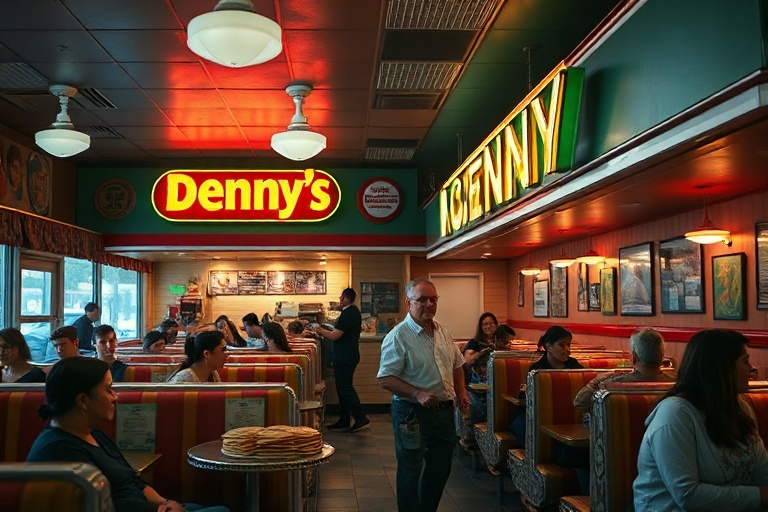
Denny’s: How a 24-Hour Diner Became a Global Cultural Icon
Few American brands carry the same cultural weight as Denny’s. Since its founding in 1953, the 24-hour diner chain has evolved from a single Los Angeles coffee shop into a global institution. With over 1,700 locations across the United States and international outposts in Canada, Mexico, and beyond, Denny’s has transcended its origins to become a symbol of comfort food, late-night meals, and American culinary tradition.
What began as a humble donut shop called Danny’s Donuts—owned by Richard Jezak and Harold Butler—transformed under Butler’s vision into a full-service diner. By 1963, the first Denny’s restaurant debuted in Lakewood, California, introducing the world to its signature moons over my hammy, endless coffee refills, and a menu designed for every hour of the day. Over the decades, Denny’s has not only survived economic shifts and changing dining trends but has thrived by becoming a cultural touchstone.
A Global Expansion Built on Familiarity and Adaptability
Denny’s international presence reflects a careful balance between global brand consistency and localized adaptation. In Canada, where the chain has operated since the 1960s, Denny’s is often seen as a go-to spot for breakfast at any time of day. Canadian locations frequently feature maple syrup-infused dishes and local twists on classic American fare, appealing to regional tastes while maintaining the core identity of the brand.
The chain’s expansion into Mexico began in the late 1980s, capitalizing on the growing appetite for American-style dining. Mexican Denny’s locations often include hybrid dishes such as chilaquiles with eggs or huevos rancheros, blending traditional Mexican flavors with American diner staples. This strategy—maintaining brand integrity while adapting to local palates—has been key to Denny’s sustained international growth.
Beyond North America, Denny’s has tested markets in the Middle East and the Caribbean, though its strongest foothold remains in the United States. Each location, regardless of geography, carries the same neon signage and red booths, creating an immediate sense of familiarity. This visual consistency is intentional, reinforcing the idea that stepping into a Denny’s anywhere in the world feels like coming home.
Cultural Icons and Pop Culture Presence
Denny’s has embedded itself into the fabric of American pop culture. The diner has been featured in countless films, television shows, and songs, often serving as a backdrop for late-night conversations, first dates, and post-party recovery meals. Iconic moments include the 1994 film Pulp Fiction, where John Travolta and Samuel L. Jackson’s characters discuss the philosophical implications of a quarter-pounder in France while eating at a Denny’s.
Television has also immortalized Denny’s, particularly in sitcoms like Seinfeld and Friends, where the diner is portrayed as a social hub for characters to gather, argue, and bond. The chain’s presence in these narratives reinforces its role as a modern-day town square, a place where people from all walks of life intersect over shared meals.
Even in the digital age, Denny’s has maintained relevance. Its social media presence is notably playful and self-aware, often poking fun at its own 24-hour nature with memes and viral content. This approach has helped the brand stay relatable to younger generations while preserving its nostalgic appeal to older patrons.
The Denny’s Menu: A Reflection of American Comfort Food
The Denny’s menu is a carefully curated journey through American comfort food, designed to satisfy cravings at any hour. While breakfast remains the chain’s signature offering—with classics like the Grand Slam, pancake varieties, and build-your-own omelets—Denny’s has expanded its offerings to include lunch, dinner, and late-night favorites.
A typical evening at Denny’s might feature burgers, steaks, and loaded potato dishes, while the late-night menu caters to post-bar crowds with items like the Moons Over My Hammy or the Bacon Slam. The chain’s commitment to affordability and portion size has made it a favorite among families, road trippers, and night owls alike.
Denny’s has also embraced dietary trends by introducing gluten-free, vegetarian, and lighter fare options. While purists may argue that these alternatives deviate from the brand’s hearty roots, the inclusion of such choices reflects an understanding of modern dining preferences without alienating the core customer base.
Signature Dishes and Customer Favorites
Some Denny’s dishes have achieved near-mythical status among its patrons. The Grand Slam—a hearty plate of eggs, pancakes, bacon, and sausage—is perhaps the most famous, earning its own annual holiday in 1978 when a California franchise owner declared March 23rd as National Grand Slam Day. Fans still celebrate the occasion with special promotions and social media tributes.
Other fan favorites include:
- The Moons Over My Hammy, a gooey, cheesy ham and egg sandwich
- The Meat Lover’s Scramble, a protein-packed omelet for hearty appetites
- The Country Fried Steak, a Southern-inspired staple covered in creamy gravy
- The Loaded Nachos, a late-night indulgence for sharing
These dishes are more than just food; they are experiences. They evoke nostalgia, comfort, and a sense of indulgence that is increasingly rare in today’s fast-paced dining landscape.
Challenges and Reinvention in a Changing World
Despite its enduring popularity, Denny’s has faced challenges. The rise of fast-casual dining, delivery apps, and shifting consumer preferences toward healthier eating have forced the chain to adapt. In response, Denny’s has invested in technology, modernizing its ordering systems and expanding delivery partnerships to compete with newer brands.
The COVID-19 pandemic posed another significant hurdle, particularly for a chain reliant on late-night diner culture and family dining. However, Denny’s demonstrated resilience by quickly pivoting to curbside pickup, family meal bundles, and limited-time offers to keep customers engaged. The chain’s ability to pivot during crises has been a testament to its operational flexibility.
Looking ahead, Denny’s continues to explore opportunities in international markets, particularly in Asia, where there is growing interest in Western-style diner culture. The brand’s focus on nostalgia and comfort positions it well in an era where consumers increasingly seek familiar experiences amid rapid globalization.
A Legacy of Community and Connection
At its core, Denny’s is more than a restaurant; it is a community hub. The chain has long been associated with charitable initiatives, including partnerships with organizations like Feeding America and local food banks. Denny’s “Denny’s Community Grants” program supports initiatives that address hunger and poverty, reinforcing the brand’s commitment to giving back.
Moreover, Denny’s has become a gathering place for people from all walks of life. Whether it’s a family celebrating a birthday, a group of friends catching up after years apart, or a lone traveler seeking a hot meal at 3 a.m., Denny’s provides a space for connection. This role as a social equalizer is perhaps the brand’s most enduring legacy.
Conclusion: The Enduring Appeal of Denny’s
Denny’s success is a testament to the power of consistency, adaptability, and cultural resonance. In an era where dining trends come and go, the chain has maintained its relevance by staying true to its roots while embracing change. Its global presence is a reminder that comfort food knows no borders, and its menu—whether enjoyed in Los Angeles or Tokyo—translates the universal language of hearty, satisfying meals.
As Denny’s continues to expand and evolve, one thing remains certain: the neon sign will keep shining, the coffee will remain bottomless, and the Moons Over My Hammy will always be waiting. In a world of fleeting trends, Denny’s offers something timeless—a place where everyone is welcome, and every meal feels like home.
For those looking to explore more about American dining culture or global food trends, be sure to check out our Food and Travel sections for deeper insights and recommendations.