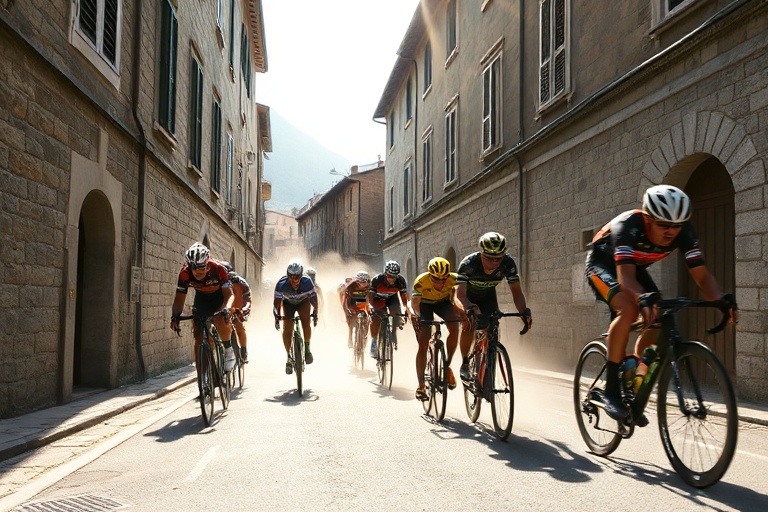
Giro d’Italia: Why Cycling’s Most Underrated Grand Tour Deserves Your Attention
The Giro d’Italia stands as one of cycling’s three Grand Tours, yet it often lives in the shadow of its more famous counterparts, the Tour de France and the Vuelta a España. Since its inception in 1909, the Giro has carved out a unique identity—one defined by grueling climbs, dramatic stages, and a relentless test of endurance. Unlike other races that prioritize flat sprints or time trials, the Giro thrives on the brutal terrain of the Dolomites and the Apennines, where riders must conquer legendary ascents like the Stelvio and Mortirolo.
What truly sets the Giro apart, however, is its cultural significance. It is deeply embedded in Italian tradition, with fans lining the roads in droves, creating an atmosphere that rivals even the Tour de France’s most iconic moments. The race’s pink jersey, or maglia rosa, symbolizes not just leadership but a connection to Italy’s cycling heritage. For many riders, winning the Giro is as prestigious as winning any other Grand Tour—but for the Italians, it’s personal.
The History and Evolution of the Giro
The Giro d’Italia was born out of a rivalry between two Italian newspapers, La Gazzetta dello Sport and Corriere della Sera. In 1908, La Gazzetta proposed a multi-stage race to boost circulation, and the first Giro kicked off the following year with 127 riders. The early editions were brutal, with stages lasting up to 400 kilometers and riders often riding through the night. The race quickly became a proving ground for Italian cyclists, with names like Alfredo Binda and Fausto Coppi etching their legacies into its history.
Over the decades, the Giro has evolved from a purely national event into an international spectacle. Foreign riders now dominate the standings, with champions like Eddy Merckx, Bernard Hinault, and more recently, Tadej Pogačar and Primož Roglič, adding their names to the list of winners. Yet, the race’s Italian soul remains intact. The tifosi—fans who follow the race with religious fervor—still gather in the mountains, creating a wall of noise and color that is unmatched in cycling.
The Giro’s route changes every year, but it always includes a mix of flat stages, medium mountains, and the infamous arrivi in salita—summit finishes that test riders to their limits. The race’s unpredictable nature has led to some of cycling’s most dramatic moments, from Marco Pantani’s solo attacks in the 1990s to Nairo Quintana’s stunning 2014 victory.
Key Moments That Define the Giro
The Giro’s history is rich with unforgettable moments, but a few stand out as defining chapters in the race’s legacy. These are the stories that fans return to year after year:
- The 1949 Coppi vs. Bartali Rivalry: Fausto Coppi and Gino Bartali were cycling’s original superstars, and their rivalry elevated the Giro to new heights. In 1949, Coppi attacked on the Col d’Izoard in France, leaving Bartali behind and securing a stage win that would propel him to overall victory. This moment cemented Coppi’s status as a legend and set the stage for modern Grand Tour rivalries.
- Marco Pantani’s 1998 Triumph: Pantani, known as “Il Pirata” for his bandana and shaved legs, delivered one of the most dominant performances in Giro history. He won three stages, including a breathtaking solo effort on the Alpe di Pampeago, and finished nearly 6 minutes ahead of his nearest rival. His victory remains a benchmark for climbing prowess.
- Tom Dumoulin’s 2017 Time Trial Masterclass: In a race that often favors climbers, Dumoulin proved that time trialing could be just as decisive. His performance in the 39.6-kilometer individual time trial from Montale to the Alpe di Poti shattered the field and gave him the maglia rosa, which he held until the final stage.
- The 2020 Virtual Giro: When the COVID-19 pandemic forced the cancellation of the race, organizers pivoted to a virtual edition. Riders competed in Zwift’s digital world, with Miguel Ángel López taking the win. While not a traditional Giro, it highlighted the race’s adaptability in the face of adversity.
The Giro’s Global Impact and Future
The Giro d’Italia is more than just a bike race; it is a cultural institution with far-reaching implications. Economically, the race injects millions of euros into the regions it passes through, boosting tourism and local businesses. The 2023 edition, for example, generated an estimated €150 million for Italy, with stages in Sicily, Emilia-Romagna, and the Dolomites drawing massive crowds.
Environmentally, the Giro has also taken steps to reduce its carbon footprint. In recent years, organizers have partnered with sustainability initiatives, including carbon offset programs and efforts to minimize plastic waste. The race’s commitment to green practices reflects a broader trend in professional cycling toward eco-consciousness.
For riders, the Giro remains a career-defining challenge. Unlike the Tour de France, which often sees early dominance by one team, the Giro is known for its unpredictability. The 2022 edition, won by Jai Hindley, saw Remco Evenepoel lose the maglia rosa on the final day due to a mechanical issue. Such drama keeps fans engaged and ensures that no race is ever truly over until the last pedal stroke.
The future of the Giro looks bright, with organizers continuing to innovate. Recent editions have included stages in neighboring countries like Slovenia and Hungary, expanding the race’s global appeal. Meanwhile, the rise of young talents like Juan Ayuso and Cian Uijtdebroeks suggests that the Giro will remain a breeding ground for future champions.
Why the Giro Deserves More Attention
Despite its rich history and cultural significance, the Giro d’Italia often receives less mainstream attention than the Tour de France. This is partly due to geography—Italy’s relatively small size means the race doesn’t traverse as many countries as the Tour. Additionally, the Tour’s long-standing tradition of global broadcasting has given it a larger international audience.
Yet, the Giro offers something the Tour cannot: a raw, unfiltered test of endurance and strategy. The race’s unpredictable weather, relentless climbs, and passionate fans create an atmosphere that is electric. For those who appreciate cycling’s purest form, the Giro is the ultimate spectacle.
As professional cycling continues to evolve, the Giro’s role in shaping the sport remains vital. It is a race that rewards grit, creativity, and courage—qualities that define the best athletes in any discipline. Whether you’re a casual fan or a die-hard cycling enthusiast, the Giro d’Italia is a must-watch event that transcends sport.
For those looking to dive deeper into the world of Grand Tours, explore the Cycling Analysis and Sports sections on Dave’s Locker, where we break down the strategies, stories, and statistics behind the sport’s biggest races.
The Giro d’Italia may not always dominate headlines, but its legacy is undeniable. As the peloton gears up for another edition, one thing is clear: this race is a testament to the enduring power of cycling.