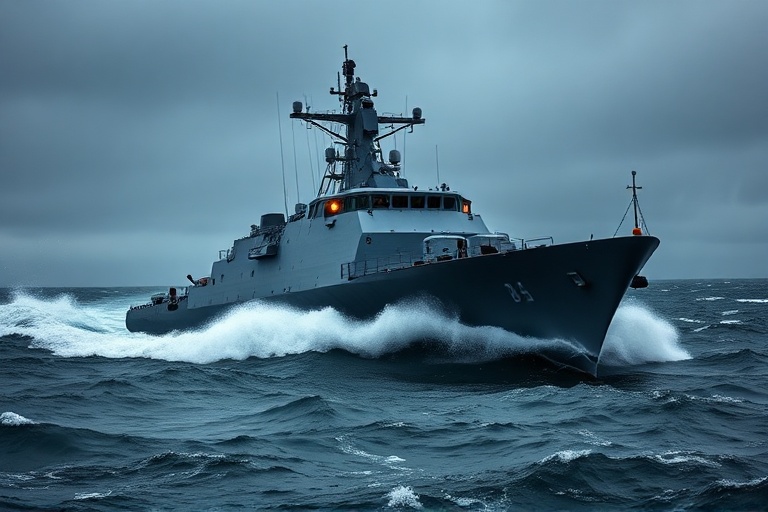
HMS Dragon: The Royal Navy’s Advanced Type 45 Destroyer
Commissioned in 2012, HMS Dragon is one of the Royal Navy’s most advanced Type 45 destroyers, designed to deliver unmatched air defense and maritime security. Built by BAE Systems at the Scotstoun shipyard in Glasgow, this vessel represents a cornerstone of Britain’s naval capabilities. Its sleek design, cutting-edge technology, and operational versatility have made it a key asset in both national and international missions.
Unlike traditional destroyers, the Type 45 class was specifically engineered to counter aerial threats, particularly ballistic missiles and enemy aircraft. HMS Dragon, the fourth ship in its class, has since proven its worth in exercises and real-world operations, from the Mediterranean to the Persian Gulf. Its ability to integrate with NATO forces and allied navies underscores its strategic importance in modern naval warfare.
Design and Capabilities
The Type 45 destroyers were developed as part of the UK’s Future Surface Combatant program, with HMS Dragon embodying the pinnacle of British shipbuilding innovation. At 152.4 meters long and displacing 8,500 tons, the vessel is both imposing and agile, capable of speeds exceeding 30 knots. Its propulsion system, powered by two Rolls-Royce WR-21 gas turbines and two diesel generators, ensures reliability and endurance during extended deployments.
The ship’s most defining feature is its Sea Viper air defense system, centered around the PAAMS (Principal Anti-Air Missile System). This system integrates the SAMPSON radar and Aster missiles, allowing HMS Dragon to track and intercept multiple aerial threats simultaneously. Whether facing supersonic anti-ship missiles or stealthy aircraft, the destroyer’s layered defense ensures dominance in contested airspace.
Beyond air defense, HMS Dragon is equipped for a range of missions:
- Anti-submarine warfare: The ship carries a Merlin or Wildcat helicopter, equipped with sonar and torpedoes for submarine detection.
- Maritime security: Its 114mm main gun and Phalanx CIWS provide close-in defense against small boats and asymmetric threats.
- Command and control: The vessel serves as a flagship, coordinating operations with allied fleets in joint exercises.
- Humanitarian aid: HMS Dragon has participated in disaster relief, such as the 2017 hurricane response in the Caribbean.
Operational History and Deployments
Since entering service, HMS Dragon has been deployed across the globe, demonstrating the Royal Navy’s global reach. One of its earliest high-profile missions was Operation Atalanta, the EU’s anti-piracy operation off the coast of Somalia. During this deployment, the ship conducted counter-piracy patrols, escorted merchant vessels, and disrupted illegal fishing activities—securing vital shipping lanes.
In 2015, HMS Dragon joined NATO’s Standing Maritime Group 2, participating in exercises such as Trident Juncture in Norway. These drills tested the ship’s interoperability with allied navies, reinforcing collective defense under Article 5 of the NATO treaty. The destroyer’s presence in the Baltic Sea and Mediterranean highlighted its role in deterring regional threats.
More recently, HMS Dragon has been involved in UK Carrier Strike Group deployments, including the 2021 CSG21 mission with HMS Queen Elizabeth. As part of this carrier’s escort, the destroyer provided air defense and anti-submarine protection, proving its value in modern carrier battle groups. Such deployments underscore the Type 45’s role in supporting the UK’s carrier ambitions—a key pillar of its future naval strategy.
Challenges and Future Upgrades
Despite its strengths, HMS Dragon has faced operational challenges. In 2016, the ship suffered a propulsion system failure during a deployment, forcing an early return to port. Investigations revealed issues with the WR-21 turbines, leading to a temporary reduction in operational availability. The Royal Navy subsequently implemented maintenance upgrades to address the problem, but the incident raised questions about the Type 45 class’s reliability.
Another persistent concern is the limited endurance of the Type 45s. While their air defense capabilities are unmatched, their fuel consumption and lack of a dedicated anti-ship missile (until recent upgrades) have led to debates about their versatility. In response, the Royal Navy has accelerated plans to integrate the NSM (Naval Strike Missile) on HMS Dragon and its sister ships, enhancing their strike capabilities.
Looking ahead, HMS Dragon is expected to undergo the Type 45 Power Improvement Project, which will replace the WR-21 turbines with more efficient engines. This upgrade, along with the addition of directed energy weapons and advanced radar systems, will extend the ship’s service life into the 2040s. The Royal Navy’s focus on modernization ensures that HMS Dragon remains relevant in an era of great power competition.
Cultural and Strategic Significance
Beyond its military role, HMS Dragon has become a symbol of British naval prowess and engineering excellence. The ship’s namesake, the mythical dragon, reflects its formidable presence, while its crew embodies the Royal Navy’s tradition of discipline and adaptability. Public tours and open days have allowed civilians to witness the destroyer’s capabilities firsthand, fostering national pride in the armed forces.
Strategically, HMS Dragon’s deployments reinforce the UK’s commitment to global security. Whether countering piracy, deterring Russian aggression in the North Atlantic, or supporting NATO allies, the ship plays a critical role in maintaining maritime stability. Its integration with modern naval technologies also highlights the importance of innovation in defense.
As geopolitical tensions rise, the Royal Navy’s destroyers remain vital to the UK’s defense posture. HMS Dragon, with its advanced systems and proven track record, stands ready to meet future challenges—whether in the Arctic, the Indo-Pacific, or the Mediterranean.
A Legacy of Excellence
Since its commissioning, HMS Dragon has proven that the Type 45 class is more than just a platform—it is a force multiplier. Its ability to adapt to evolving threats, from hypersonic missiles to cyber warfare, ensures its place in the Royal Navy’s future. As the ship undergoes upgrades and new destroyers like the Type 83 enter service, HMS Dragon’s legacy will endure as a testament to British naval ingenuity.
For enthusiasts and defense analysts alike, the destroyer remains a fascinating subject—blending cutting-edge technology with the enduring traditions of the sea. Whether patrolling contested waters or welcoming visitors during port visits, HMS Dragon continues to make its mark on the world stage.