irán war
Iran’s Shadow War: How Regional Tensions Shape Global Power Struggles
The conflict in and around Iran has evolved beyond traditional battlefields. What began as domestic unrest has expanded into a complex web of proxy wars, economic blockades, and cyber skirmishes. These tensions ripple across the Middle East and beyond, redefining alliances, disrupting energy markets, and testing the resolve of global powers. Iran’s strategic position at the crossroads of Europe, Asia, and the Arab world makes it a critical player in a broader geopolitical chess game.
The roots of Iran’s current instability trace back decades. The 1979 Islamic Revolution reshaped the nation’s political identity, replacing a U.S.-backed monarchy with a theocratic government. Since then, Iran has navigated sanctions, internal dissent, and external pressure from Israel, Saudi Arabia, and Western powers. The 2022 protests over women’s rights and government corruption marked another turning point, galvanizing international attention and inspiring global solidarity movements.
The Global Players in Iran’s Proxy War
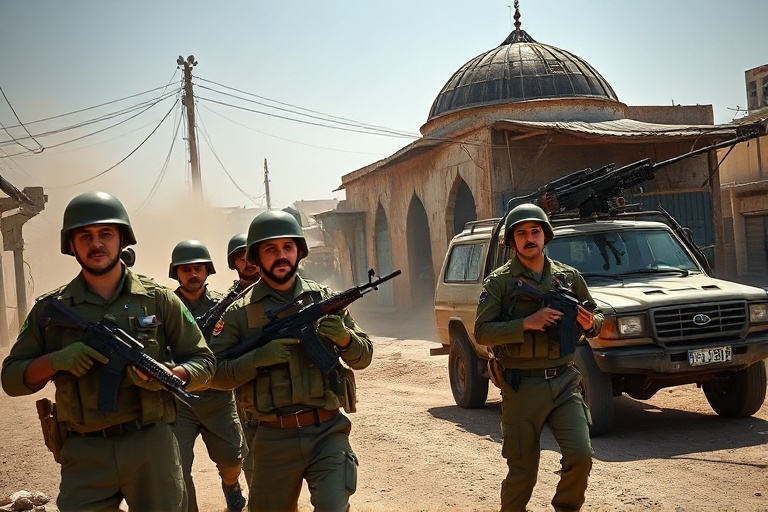
Iran’s influence extends through a network of allied militias and political factions across the Middle East. These groups operate in Lebanon, Yemen, Syria, and Iraq, often acting as extensions of Tehran’s foreign policy. The Islamic Revolutionary Guard Corps (IRGC) plays a central role in coordinating these efforts, blending military strategy with ideological expansion.
Key regional actors include:
- Hezbollah (Lebanon): A long-standing ally of Iran, Hezbollah has evolved from a resistance movement into a powerful political and military force. Its arsenal and operational capacity make it a major player in Lebanon’s domestic politics and a deterrent against Israeli aggression.
- Houthis (Yemen): The Ansar Allah movement, commonly known as the Houthis, has transformed from a local insurgency into a regional force capable of striking Saudi Arabia and international shipping lanes. Their attacks on Red Sea vessels have drawn U.S. and U.K. military responses, escalating tensions in one of the world’s most vital trade corridors.
- Hashd al-Shaabi (Iraq): Officially known as the Popular Mobilization Forces, this coalition of Shiite militias emerged during the fight against ISIS. Many factions remain closely tied to Iran, complicating Iraq’s efforts to balance sovereignty and regional alliances.
These relationships are not static. Shifts in leadership, battlefield outcomes, and diplomatic overtures can realign loyalties overnight. For instance, the 2023 ceasefire in Yemen between Saudi Arabia and the Houthis demonstrated how even long-standing conflicts can yield unexpected breakthroughs when geopolitical winds shift.
Economic Warfare: Sanctions, Oil, and the Struggle for Stability
Iran’s economy remains under intense pressure from U.S. and European sanctions, particularly those targeting its oil exports and financial sector. Despite these restrictions, Iran has found ways to circumvent them, relying on smuggling networks, cryptocurrency transactions, and trade with countries like China and Russia. The rial’s dramatic devaluation has fueled hyperinflation, pushing millions into poverty and sparking periodic protests.
Oil remains the lifeblood of Iran’s economy, and its production levels send ripples through global energy markets. When tensions rise, oil prices often spike, reminding the world of Iran’s pivotal role in stabilizing or destabilizing supply chains. The 2019 attacks on Saudi oil facilities and the 2023 drone strikes on Russian refineries underscored how quickly regional conflicts can escalate into global economic crises.
Tehran has also leveraged its position in the trending narrative of “resistance economies,” promoting self-sufficiency and alternative trade routes. The expansion of the International North-South Transport Corridor, linking India to Europe via Iran, offers a glimpse of how Iran is attempting to bypass Western isolation. Yet, these efforts remain fragile, vulnerable to sabotage and shifting political winds.
Cyber Fronts and the Battle for Narrative Control
The war in and around Iran is no longer confined to physical territory. Cyber warfare has emerged as a critical domain, with both state and non-state actors launching attacks to disrupt infrastructure, steal intelligence, and manipulate public opinion. Iran’s cyber capabilities, developed over years by the IRGC and affiliated groups, now rival those of regional powers and global players alike.
Recent years have seen a surge in cyber incidents linked to Iran:
- Stuxnet and Beyond: The 2010 Stuxnet attack, widely attributed to the U.S. and Israel, crippled Iran’s nuclear centrifuges. In response, Iran invested heavily in its own cyber defense and offensive capabilities, leading to retaliatory attacks on U.S. banks and Saudi Aramco in the following years.
- Disinformation Campaigns: Iran has been accused of running extensive disinformation operations to influence elections and public opinion in the West. These campaigns often exploit social media platforms, amplifying divisive narratives and sowing discord in polarized societies.
- Critical Infrastructure Targets: From power grids to water systems, Iranian-linked hackers have demonstrated the ability to infiltrate and disrupt vital services. The 2021 attack on Israel’s water facilities and the 2022 ransomware strike on Albania’s government servers highlight the growing threat of state-sponsored cyber aggression.
The battle for narrative control extends beyond code and cables. Iran’s state-run media outlets, such as Press TV and Al-Alam, compete with Western and Gulf-funded networks to shape global perceptions. In an era where information travels faster than missiles, the war of words can be as decisive as any battlefield engagement.
Human Costs and Cultural Resilience
Behind the geopolitical maneuvering and economic calculations lies the human toll. Ordinary Iranians bear the brunt of sanctions, inflation, and repression. The 2022 protests, sparked by the death of Mahsa Amini in police custody, revealed the depth of public frustration with the regime. The government’s violent crackdown—resulting in hundreds of deaths and thousands of arrests—drew international condemnation but also highlighted the resilience of civil society.
Cultural expression has become a form of resistance. Music, film, and literature are increasingly used to challenge authority and preserve national identity. Filmmakers like Jafar Panahi, despite imprisonment and bans, continue to produce work that critiques the regime. Musicians such as Googoosh and Hichkas, the “Godfather of Iranian Rap,” use their platforms to inspire dissent and unity, often at great personal risk.
The diaspora, meanwhile, has become a powerful voice for change. Iranian communities in North America, Europe, and Australia organize protests, fund independent media, and lobby governments to maintain pressure on Tehran. Their activism keeps the plight of Iranians visible on the global stage, countering the regime’s efforts to control the narrative.
A Fragile Future: Diplomacy or Escalation?
The path forward remains uncertain. Diplomatic efforts to revive the 2015 nuclear deal have stalled repeatedly, with both Iran and the U.S. accusing each other of bad faith. Regional initiatives, such as the 2023 Saudi-Iran détente brokered by China, offer cautious hope but remain fragile. Meanwhile, the specter of direct military confrontation looms, particularly in light of Israel’s ongoing conflicts and Iran’s nuclear ambitions.
What is clear is that Iran’s war is not a single conflict but a constellation of struggles—political, economic, cyber, and cultural. Its resolution will require more than military solutions; it demands a rethinking of how global powers engage with the Middle East. Until then, the shadow war will continue to shape the region’s future, with consequences that extend far beyond its borders.
The people of Iran, caught in the crossfire of these competing forces, deserve a future defined by peace and prosperity rather than perpetual conflict. Whether that future arrives through diplomacy, revolution, or the slow erosion of authoritarianism remains an open question. What is certain is that the world cannot afford to look away.