Iran’s Missile Program: A Strategic Pillar in the Middle East
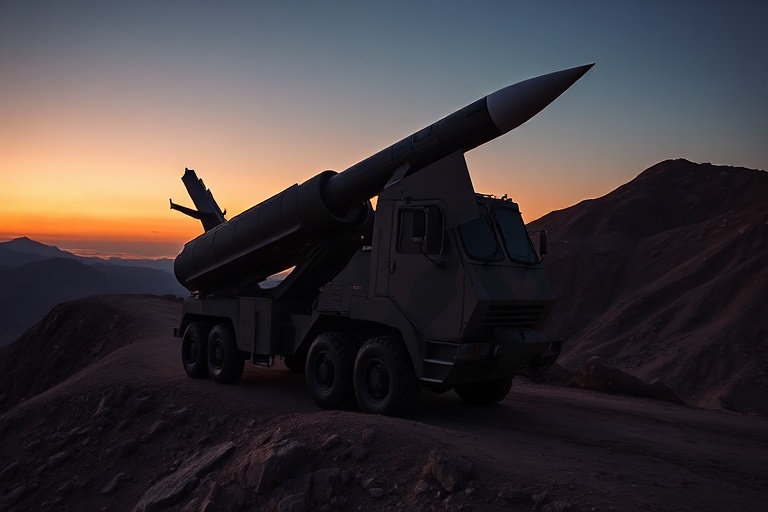
The Islamic Republic of Iran has long viewed ballistic missiles as a cornerstone of its military doctrine. These weapons serve multiple purposes: deterring external threats, projecting power regionally, and compensating for conventional military weaknesses. Iran’s missile program, which began in the 1980s during the Iran-Iraq War, has evolved into one of the most advanced and diverse arsenals in the Middle East. Today, Tehran’s arsenal includes short-, medium-, and long-range missiles, some of which can reach targets across the Gulf and beyond.
What makes Iran’s missile program particularly significant is its integration into a broader strategy of asymmetric warfare. Unlike traditional military powers that rely on advanced air forces and naval capabilities, Iran has prioritized missiles as a cost-effective way to maintain a credible deterrent against both regional adversaries and global powers. This approach has drawn international scrutiny, particularly from the United States, Israel, and Gulf states, all of which view Iran’s missile advancements as a destabilizing factor in the region.
The Evolution of Iran’s Missile Arsenal
Iran’s missile program traces its origins to the late stages of the Iran-Iraq War (1980–1988), when the country faced severe shortages of advanced weaponry. With international arms embargoes in place, Iran turned to domestic production and foreign procurement to bolster its defenses. The program received a significant boost in the 1990s and 2000s, as Iran sought to develop its own ballistic and cruise missiles. Key milestones include the development of the Shahab series (Shahab-1, -2, and -3), which were based on North Korean and Soviet-era designs but later modified and expanded by Iranian engineers.
By the 2010s, Iran had demonstrated the ability to produce missiles with increasing range and precision. The unveiling of the Sejjil-2 in 2009 marked a turning point, as it was Iran’s first domestically produced two-stage solid-fuel missile, capable of reaching targets up to 2,000 kilometers away. This development reduced Iran’s dependence on liquid-fuel missiles, which are less mobile and more vulnerable to preemptive strikes. More recently, Iran has introduced the Emad, a precision-guided missile with a range of approximately 1,700 kilometers, and the Fateh-110, a short-range ballistic missile used extensively in regional conflicts.
Iran’s missile program is not limited to ballistic missiles. The country has also invested in cruise missiles, such as the Soumar and Ya Ali, which can be launched from land, sea, or air. These missiles are harder to detect and intercept than ballistic missiles, making them a valuable addition to Iran’s arsenal. Additionally, Iran has developed a range of unmanned aerial vehicles (UAVs), which are often used in tandem with missiles to conduct precision strikes or gather intelligence.
Regional Implications and Geopolitical Tensions
The expansion of Iran’s missile program has had far-reaching consequences for Middle Eastern geopolitics. One of the most immediate impacts has been the heightened tensions between Iran and its neighbors, particularly Saudi Arabia and the United Arab Emirates (UAE). Both countries view Iran’s missiles as a direct threat to their security, given their proximity to Iran and the potential for missile strikes on critical infrastructure, such as oil facilities and military bases. In response, Saudi Arabia has invested heavily in missile defense systems, including the U.S.-supplied Patriot missile system and the Israeli-developed Arrow system, while the UAE has pursued its own ballistic missile program with assistance from North Korea and other partners.
Israel, too, has been deeply concerned by Iran’s missile advancements. The Islamic Revolutionary Guard Corps (IRGC) has repeatedly threatened to strike Israeli targets, and Iran’s missiles have been used to support proxy groups such as Hezbollah in Lebanon and the Houthis in Yemen. Israel’s military doctrine has long emphasized preemptive strikes to neutralize emerging threats, and the country has conducted several covert operations aimed at sabotaging Iran’s missile program. These efforts have included cyberattacks, targeted assassinations of Iranian scientists, and airstrikes on missile production facilities in Syria and Iraq.
The international community has also responded to Iran’s missile program, though with mixed results. The United Nations Security Council has imposed several rounds of sanctions on Iran in an attempt to curb its missile activities, most notably through UN Resolution 2231, which endorsed the Joint Comprehensive Plan of Action (JCPOA) nuclear deal in 2015. However, the U.S. withdrawal from the JCPOA in 2018 and the subsequent reimposition of sanctions have complicated these efforts. Iran has responded by accelerating its missile program, arguing that its missiles are purely defensive and not subject to international restrictions.
Technological Advancements and Future Challenges
Iran’s missile program has made significant strides in recent years, driven by domestic innovation and foreign partnerships. One of the most notable advancements is the development of hypersonic technology, which could allow Iran to field missiles that travel at speeds greater than Mach 5, making them nearly impossible to intercept. While Iran has not yet deployed a hypersonic missile, reports suggest that it is actively researching this technology, likely with assistance from Russia and China.
Another area of focus is the improvement of missile accuracy and payload capacity. Iran has increasingly emphasized precision-guided missiles, which reduce collateral damage and increase the effectiveness of strikes. The Emad missile, for example, is equipped with a maneuverable warhead that allows it to adjust its trajectory in the terminal phase of flight, making it more difficult to intercept. Additionally, Iran has worked to increase the payload capacity of its missiles, enabling them to carry multiple warheads or more advanced guidance systems.
Despite these advancements, Iran’s missile program faces several challenges. International sanctions have limited Iran’s access to advanced materials and technology, forcing the country to rely on domestic production and reverse-engineering. The COVID-19 pandemic and economic crises have also strained Iran’s defense budget, leading to delays in some missile projects. Moreover, Iran’s reliance on foreign partners, such as North Korea and Russia, has made it vulnerable to diplomatic pressure and supply chain disruptions.
What Lies Ahead for Iran’s Missile Program?
The future of Iran’s missile program will be shaped by a combination of technological, political, and economic factors. On the technological front, Iran is likely to continue investing in hypersonic missiles, precision-guided weapons, and UAVs, all of which could enhance its deterrent capabilities. Politically, Iran’s missile program will remain a flashpoint in its relations with the U.S., Israel, and Gulf states, with each side likely to escalate its efforts to counter the other’s advances.
Economically, Iran’s ability to sustain its missile program will depend on the lifting of sanctions and the restoration of international trade. The recent negotiations to revive the JCPOA offer a glimmer of hope, but the outcome remains uncertain. If sanctions are lifted, Iran may redirect some of its resources toward economic development and social programs, though it is unlikely to abandon its missile program entirely. Conversely, if sanctions persist, Iran may double down on its domestic production capabilities, further isolating itself from the global community.
For the broader Middle East, the continued development of Iran’s missile program will likely lead to further militarization and arms races. Countries like Saudi Arabia and the UAE will likely expand their own missile programs, while Israel may intensify its covert operations to sabotage Iran’s efforts. The result could be a more volatile and unpredictable security environment, with increased risks of miscalculation and escalation.
Ultimately, Iran’s missile program is more than just a military issue—it is a reflection of the country’s broader strategic ambitions and its struggle to assert itself in a region dominated by external powers. Whether this program will lead to greater stability or further conflict remains an open question, but one thing is clear: the missiles of Iran will continue to shape the geopolitics of the Middle East for years to come.
For more insights into regional military dynamics, visit our News and Politics categories on Dave’s Locker.
Key Takeaways on Iran’s Missile Program
- Deterrence and Asymmetric Warfare: Iran views missiles as a cost-effective way to deter external threats and compensate for conventional military weaknesses.
- Technological Advancements: Iran has made significant progress in developing solid-fuel missiles, precision-guided weapons, and cruise missiles, reducing its dependence on foreign technology.
- Regional Tensions: Iran’s missile program has heightened tensions with Saudi Arabia, the UAE, and Israel, prompting these countries to invest in their own missile defense systems.
- International Response: The UN and individual countries have imposed sanctions on Iran to curb its missile activities, though these efforts have had limited success.
- Future Challenges: Iran’s missile program faces economic and technological hurdles, but it is likely to continue evolving, particularly in the areas of hypersonic technology and UAV integration.