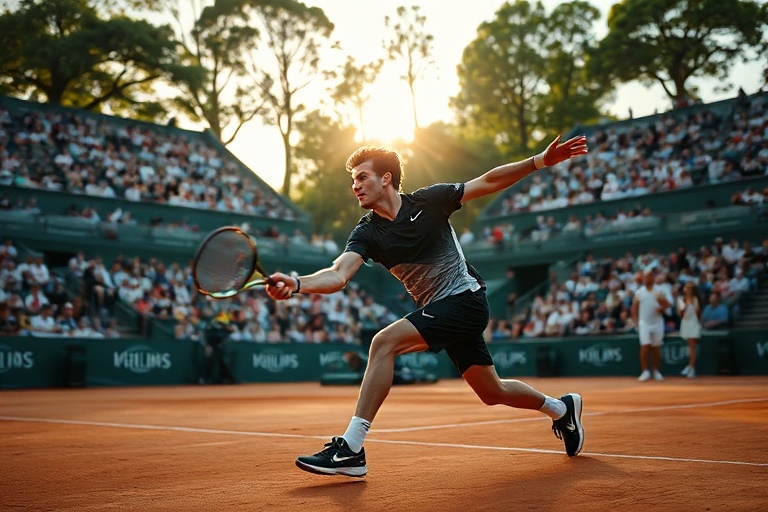
italian open
The Italian Open, known as the Internazionali BNL d’Italia, stands as one of the most prestigious clay-court tournaments in professional tennis. Held annually in Rome, this event draws the world’s top players to the Foro Italico, a historic sports complex that blends athletic excellence with Italian architectural grandeur. More than just a warm-up for the French Open, the tournament has carved its own legacy in the sport, celebrated for its intensity, tradition, and the unmistakable Roman atmosphere.
Since its inception in 1930, the Italian Open has grown from a regional competition into a global spectacle. It has witnessed legendary performances, dramatic upsets, and the emergence of tennis icons who have etched their names into its storied history. Beyond the baseline battles, the tournament reflects Italy’s deep connection to the sport and its role as a cultural bridge between Europe and the wider tennis world.
The Tournament’s Rise: From Humble Beginnings to Global Stage
The Italian Open began as a modest event in Milan, organized by the Italian Tennis Federation in 1930. It was initially a men’s-only competition, reflecting the gender norms of the era. By 1935, the tournament expanded to include women’s singles, and in 1961, it moved to Rome’s Foro Italico—a venue that would become synonymous with its identity.
The shift to Rome marked a turning point. The Foro Italico, with its neoclassical buildings and towering obelisk, provided a dramatic backdrop for world-class tennis. The clay courts, slow and high-bouncing, demanded patience, endurance, and tactical mastery, qualities that would define the tournament’s reputation as a true test of a player’s all-around game.
In 1979, the Italian Open joined the newly formed Grand Prix circuit, and later, in 1990, it became part of the ATP Tour. This elevation solidified its status as a mandatory Masters 1000 event for men and a Premier 5 event for women, drawing elite competitors who view Rome as a critical stop before Roland Garros.
The tournament’s evolution mirrors broader changes in tennis. It transitioned from a European-focused event to a truly international gathering, reflecting the globalization of the sport. Today, players from every continent arrive in Rome, not just to compete, but to prepare physically and mentally for the challenges of the clay season.
Clay-Court Mastery: Why Rome is a Crucible for Champions
The Italian Open’s surface is its defining feature. Played on red clay, the tournament demands a unique blend of athleticism, strategy, and mental resilience. Unlike hard courts or grass, clay slows the ball down and produces a higher bounce, rewarding players who excel in long rallies, sliding defense, and precise shot placement.
This surface has historically favored players with strong baseline games and exceptional endurance. Legends like Rafael Nadal, Chris Evert, and Serena Williams have thrived in Rome, using the clay to refine their clay-court mastery before the French Open. Nadal, in particular, has a record 10 titles in Rome, a testament to his dominance on the surface and his deep connection to the tournament.
The clay also amplifies the importance of physical conditioning. Matches can stretch for three or four hours, testing stamina and mental toughness. Players must adapt their game plans on the fly, adjusting to the changing conditions as the tournament progresses. A strong serve or a powerful forehand is less effective without the tactical flexibility to navigate extended exchanges.
This emphasis on endurance and strategy has made the Italian Open a proving ground for champions. Winning in Rome often signals a player’s readiness for the rigors of the French Open, where the same clay courts await. It’s no coincidence that many Roland Garros champions have used Rome as their final preparation stop.
The Italian Open in the Modern Era: Tradition Meets Innovation
The past two decades have brought significant changes to the Italian Open. The tournament has embraced modernity while preserving its historical identity. In 2021, it introduced night sessions under floodlights, a move that expanded its global audience and added a new dimension to the on-court experience. These evening matches have become a highlight, drawing fans who appreciate the dramatic atmosphere of primetime tennis.
The tournament has also expanded its digital presence. Live streaming, interactive fan experiences, and social media engagement have transformed how audiences connect with the event. The Italian Open now reaches millions of fans across platforms, from TikTok highlights to in-depth analysis on sports networks.
Yet, despite these innovations, the tournament retains its soul. The Foro Italico’s iconic setting, the passionate Italian crowd, and the sense of history remain unchanged. The stadium, with its capacity of over 12,000, buzzes with energy, especially when Italian players take the court. The crowd’s enthusiasm is infectious, creating an atmosphere that is both electric and intimate.
One of the most compelling aspects of the modern Italian Open is its role in promoting diversity and inclusion in tennis. The tournament has increased efforts to support rising stars from emerging tennis nations, offering wild cards and development programs. Players from countries like Colombia, Argentina, and Japan have used Rome as a platform to announce their arrival on the global stage.
Cultural Impact: More Than Just Tennis in the Eternal City
The Italian Open is deeply intertwined with Rome’s cultural fabric. The Foro Italico itself is a symbol of Italy’s architectural heritage, designed in the 1920s and 1930s as a showcase of fascist-era ambition. Today, it stands as a reminder of the past, juxtaposed against the dynamic energy of modern tennis.
The tournament also reflects Italy’s broader relationship with sport. Tennis, though not the country’s most popular sport, holds a special place in Italian culture, particularly in the north. Cities like Milan, Rome, and Turin have produced world-class players and hosted major events, reinforcing tennis’s role as a cultural touchstone.
Off the court, the Italian Open fosters connections between sport and society. The tournament supports local charities, promotes environmental sustainability, and engages with Rome’s artistic community. Exhibitions, concerts, and cultural events run alongside the tennis matches, creating a festival-like atmosphere that extends beyond the stadium.
For international visitors, the Italian Open offers a gateway to Rome’s timeless appeal. Fans from around the world combine their tournament experience with visits to landmarks like the Colosseum, the Trevi Fountain, and the Vatican. The juxtaposition of high-stakes tennis and ancient history creates a unique travel narrative, one that blends the thrill of competition with the serenity of Italy’s cultural treasures.
Key Highlights from Recent Editions
- 2023 Men’s Singles: Novak Djokovic claimed his sixth title in Rome, defeating Casper Ruud in straight sets. The victory reinforced his status as the tournament’s most decorated male player and set the stage for his French Open campaign.
- 2023 Women’s Singles: Elena Rybakina won her first Italian Open title, defeating Anhelina Kalinina in a three-set thriller. Her powerful serve and aggressive baseline game showcased the evolving style of modern women’s tennis.
- 2022 Men’s Doubles: The Croatian duo of Nikola Mektić and Mate Pavić secured the title, demonstrating their chemistry and dominance on clay. Their partnership has been a cornerstone of men’s doubles tennis for years.
- 2021 Innovations: The introduction of night sessions drew record television ratings and expanded the tournament’s global footprint. The event also implemented stricter sustainability measures, including waste reduction and energy efficiency.
The Road to Roland Garros: A Strategic Necessity
For many players, the Italian Open is not just a tournament—it’s a strategic imperative. The clay court season, which includes Madrid and Rome, serves as the final preparation for the French Open. Players use these weeks to fine-tune their games, build confidence, and test their fitness on a surface that closely resembles Roland Garros.
This preparation is particularly critical for players who struggle on clay. The Italian Open offers a chance to identify weaknesses, experiment with new strategies, and gain match practice without the pressure of a Grand Slam. For clay specialists, it’s an opportunity to assert dominance and intimidate rivals ahead of the season’s biggest event.
Injuries and fatigue are constant concerns during this stretch. The demands of back-to-back tournaments can derail even the fittest players. Rafael Nadal, for instance, has often adjusted his schedule to manage his workload, skipping certain events to prioritize longevity and performance.
The Italian Open’s place in the tennis calendar underscores the sport’s complexity. Success here doesn’t guarantee victory in Paris, but failure often signals trouble ahead. The clay court season is a gauntlet, and the Italian Open is its most grueling stop.
A Lasting Legacy: The Italian Open’s Role in Tennis History
The Italian Open’s influence extends far beyond its immediate results. It has shaped the careers of countless players, provided unforgettable moments, and contributed to the global growth of tennis. From the dominance of Chris Evert and Martina Navratilova in the 1980s to the modern rivalries of Djokovic and Nadal, the tournament has been a stage for legends.
It has also played a role in breaking barriers. The Italian Open was one of the first major tournaments to offer equal prize money to men and women, a milestone reached in 2007. This commitment to equality reflects the tournament’s progressive values and its recognition of women’s contributions to the sport.
As tennis continues to evolve, the Italian Open remains a constant—rooted in tradition, yet adaptable to change. Its future is bright, with plans for further innovation, sustainability initiatives, and expanded global engagement. For players, it’s a rite of passage. For fans, it’s a celebration of the sport’s artistry and intensity. And for Rome, it’s a reminder of the city’s enduring connection to the world stage.
The Italian Open is more than a tournament. It’s a testament to the beauty of tennis, the allure of Rome, and the unyielding pursuit of excellence. As the clay courts of the Foro Italico continue to host the world’s best, the legacy of the Italian Open grows ever stronger.
Explore more sports coverage on Dave’s Locker.