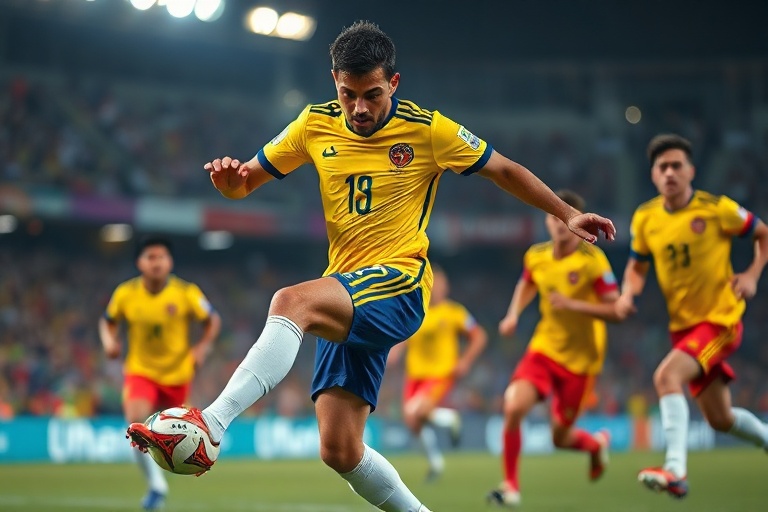
James Rodríguez: How a Colombian Playmaker Redefined Modern Football
James Rodríguez is more than a footballer; he’s a symbol of elegance, creativity, and the enduring allure of South American talent in European football. Born on July 12, 1991, in Cúcuta, Colombia, he rose from modest beginnings to become one of the most recognizable names in the sport. His journey is a testament to technical brilliance, tactical intelligence, and the power of individual flair in a game increasingly dominated by physicality.
At his peak, Rodríguez dazzled fans with his dribbling, vision, and knack for scoring crucial goals. Whether at Bayern Munich, Real Madrid, or with the Colombian national team, he consistently delivered moments of magic that transcended the ordinary. His career, though marked by highs and lows, remains a compelling narrative about persistence, adaptability, and the artistry of playmaking.
The Rise of a Prodigy: From Colombia to Global Stardom
Rodríguez’s early career was anything but ordinary. He began playing professionally at 14 with Envigado FC in Colombia’s lower divisions before making his senior debut at 16. His rapid ascent caught the attention of European scouts, leading to a move to Banfield in Argentina’s Primera División in 2008. There, he became the youngest foreign player to score in the league, showcasing a maturity beyond his years.
His breakthrough came at FC Porto, where he joined in 2010 under the guidance of André Villas-Boas. Under Villas-Boas and later Vítor Pereira, Rodríguez flourished as a playmaker, forming a lethal partnership with Hulk and Radamel Falcao. His performances in the 2010-11 Europa League, where he scored twice in the final, cemented his reputation as a future star. By 2012, he had won three Primeira Liga titles and a Europa League medal, firmly establishing himself as one of Europe’s most exciting young talents.
His crowning moment arrived at the 2014 FIFA World Cup in Brazil. Playing for Colombia, Rodríguez delivered a masterclass in midfield dominance, scoring six goals to win the Golden Boot. His volley against Uruguay in the Round of 16 is etched in World Cup lore—a moment of pure improvisation that reminded the world of football’s beauty. The goal not only propelled Colombia to the quarterfinals but also sparked a bidding war for his signature.
Key Moments in Rodríguez’s Early Career
- 2008: Made his professional debut with Envigado FC at age 16.
- 2010: Joined FC Porto and quickly became a key player in the team’s Europa League triumph.
- 2012: Won three Primeira Liga titles and established himself as a top European midfielder.
- 2014: Scored six goals at the World Cup, winning the Golden Boot and earning a move to Real Madrid.
Real Madrid and the Weight of Expectations
Rodríguez’s transfer to Real Madrid in 2014 for a reported €80 million was seen as a bold statement by the club. At the time, Los Blancos were assembling a galaxy of stars under Carlo Ancelotti, including Cristiano Ronaldo, Gareth Bale, and Toni Kroos. For Rodríguez, the pressure was immense. He was expected to fill the void left by Luka Modrić’s injury and justify his hefty price tag.
His first season in Madrid was mixed. While he scored 13 goals and provided 13 assists in all competitions, the team struggled with inconsistency in La Liga. However, his technical prowess was undeniable. His ability to thread passes through defenses and his first-time finishing made him a constant threat. His most iconic moment came in the Champions League, where his overhead kick against Schalke 04 in the Round of 16 showcased his audacity and skill.
Yet, Rodríguez’s time at Real Madrid was also defined by what he wasn’t—a physical midfielder or a pressing machine. As football evolved under Zinedine Zidane and later Santiago Solari, Rodríguez found himself out of favor. His loan spells at Bayern Munich and Everton highlighted his struggles to adapt to different tactical systems. At Bayern, under Niko Kovač, he was often confined to a substitute role, while at Everton, injuries and form issues limited his impact.
The Challenges of Fitting In at a Galáctico Club
- High Expectations: Signed as a marquee signing, Rodríguez faced immense pressure to deliver instantly.
- Tactical Mismatch: His strengths—vision and creativity—sometimes clashed with the physical demands of La Liga and the Champions League.
- Competition: With players like Modrić, Kroos, and Isco ahead of him, Rodríguez often found minutes hard to come by.
- Injuries: Recurring issues limited his availability during critical periods.
Legacy Beyond the Pitch: A Cultural Icon and Philanthropist
Rodríguez’s influence extends far beyond his club career. He is one of the most marketable footballers of his generation, known for his charisma and fashion sense. His social media presence is a blend of football highlights, lifestyle content, and charitable initiatives. In 2015, he launched the “James Rodríguez Foundation”, which focuses on education and sports development for underprivileged children in Colombia. His efforts have earned him praise as a role model, particularly in his home country, where he is seen as a symbol of hope and aspiration.
Rodríguez’s off-field ventures also reflect his entrepreneurial spirit. He has collaborated with global brands like Adidas and Puma, and his fashion line, “James Rodríguez x PUMA,” has gained traction for its blend of streetwear and athletic aesthetics. His ability to transcend football has made him a sought-after figure in both sports and lifestyle media.
Beyond his commercial appeal, Rodríguez has used his platform to advocate for social causes. During the COVID-19 pandemic, he donated ventilators to hospitals in Colombia and supported local communities affected by the crisis. His philanthropy underscores a deeper commitment to giving back, a trait that resonates with fans worldwide.
The Future: What’s Next for James Rodríguez?
As Rodríguez approaches the latter stages of his career, his future remains uncertain yet intriguing. At 33, he is no longer a young prodigy but a seasoned veteran with a wealth of experience. His recent move to São Paulo FC in Brazil’s Série A offers a fresh challenge, allowing him to rediscover his form in a league known for its flair and creativity. The Brazilian league’s emphasis on individual skill and attacking football could be the perfect stage for Rodríguez to showcase his remaining talents.
For Colombia, Rodríguez remains a pivotal figure. With the 2026 World Cup on the horizon, he could still play a key role in guiding a new generation of Colombian talent. His leadership and experience would be invaluable as the team looks to build on its recent successes, including reaching the quarterfinals at the 2022 World Cup.
Speculation about his retirement is inevitable. Given his style of play and physical demands, Rodríguez may not have many years left at the top level. However, his legacy is already secure. He redefined what it means to be a modern playmaker—blending artistry with pragmatism, and proving that football is as much about creativity as it is about results.
Why Rodríguez’s Career Matters
Rodríguez’s career offers several broader lessons for football:
- Technical Excellence: His dribbling and passing statistics highlight the importance of pure skill in an era dominated by data and analytics.
- Adaptability: His struggles at Real Madrid and Bayern Munich show that even the most talented players must adapt to different systems and expectations.
- Cultural Impact: His global appeal demonstrates how footballers can transcend the sport to become cultural icons.
- Philanthropy: His charitable work sets an example for athletes to use their influence for social good.
Conclusion: Celebrating the Art of Playmaking
James Rodríguez’s career is a reminder that football is not just a sport but an art form. His ability to create magic on the pitch, whether through a perfectly weighted through-ball or a last-minute winner, has left an indelible mark on the game. While his club career may not have matched the lofty expectations set by his transfer to Real Madrid, his impact on and off the field is undeniable.
As football continues to evolve, Rodríguez stands as a testament to the enduring value of creativity. In an era where physicality often overshadows artistry, his career reminds us why we fell in love with the game in the first place. Whether he’s orchestrating attacks in Brazil, mentoring young players, or inspiring the next generation through his foundation, Rodríguez’s legacy will continue to resonate.
For fans of the beautiful game, James Rodríguez is more than a player—he’s a reminder of what makes football magical.