The world of American whiskey is undergoing a quiet revolution, led by a figure better known for his political career than his palate. Kash Patel, a former Trump administration official and outspoken conservative commentator, has entered the spirits industry with a bourbon brand that blends bold flavor profiles with a defiant, unapologetic brand identity. Patel’s entry into the whiskey market isn’t just another celebrity-backed spirit—it’s a cultural statement, a challenge to tradition, and a reflection of shifting consumer tastes in the United States and beyond.
The Rise of Patel’s Bourbon: From Politics to the Barrel
Kash Patel’s name became widely known during his tenure as a deputy assistant to former President Donald Trump, where he was a vocal defender of the administration’s policies. After leaving politics, Patel turned his focus to entrepreneurship, launching Kash Patel Bourbon in 2023. The brand’s emergence is part of a growing trend of public figures transitioning into the spirits industry, but Patel’s approach is distinct. Unlike many celebrity-backed bourbons that rely on mass marketing, Patel’s whiskey is positioned as a premium product with a narrative rooted in authenticity and craftsmanship.
The bourbon is distilled in Kentucky, the heart of American whiskey production, but Patel has emphasized transparency in sourcing and aging. The brand’s flagship expression, a 10-year single barrel bourbon, retails for around $150, positioning it in the upper tier of the market. This pricing strategy reflects Patel’s ambition to compete with established names like Buffalo Trace and Woodford Reserve, while also appealing to a younger, politically engaged consumer base that values both quality and brand ethos.
A Bourbon for the Unapologetic Drinker
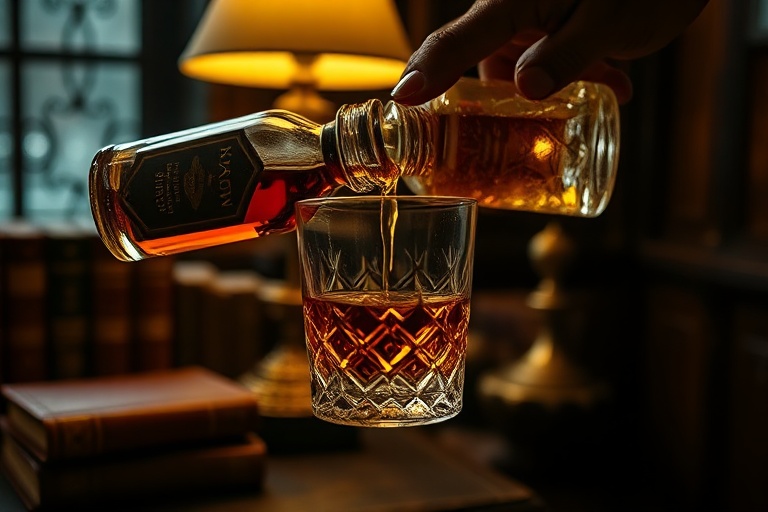
What sets Kash Patel Bourbon apart is its branding—a deliberate fusion of rugged individualism and political defiance. The bottle’s design features bold, minimalist typography and a label that subtly nods to Patel’s conservative roots. The whiskey itself is aged in charred oak barrels for a decade, yielding a rich, caramel-forward profile with notes of vanilla, oak, and a hint of spice. Tasting notes describe it as “bold yet balanced,” a descriptor that aligns with Patel’s public persona.
The brand’s marketing strategy has been equally unorthodox. Patel has leveraged his large social media following to promote the bourbon, often framing it as a product for those who reject “woke” culture and embrace traditional American values. This messaging has resonated in certain circles, particularly among conservative consumers who see the whiskey as more than just a drink—it’s a statement. However, it has also drawn criticism from those who argue that Patel is commercializing patriotism, a charge he has dismissed as misplaced.
The Global Appeal of American Whiskey
While Kash Patel Bourbon is rooted in Kentucky tradition, its appeal extends far beyond U.S. borders. American whiskey, particularly bourbon, has seen a surge in international popularity over the past decade. Countries like Japan, Germany, and the United Kingdom have developed a voracious appetite for premium American spirits, driven by a fascination with craftsmanship and the “all-American” narrative that bourbon embodies.
In Japan, for example, bourbon has become a status symbol among younger consumers who associate it with luxury and sophistication. Distilleries like Maker’s Mark and Jim Beam have capitalized on this trend by exporting aged expressions and collaborating with local bars to create bespoke cocktails. Patel’s entry into this market could further solidify bourbon’s global footprint, particularly if he targets regions where political branding resonates.
However, Patel’s conservative leanings may pose challenges in markets where progressive values dominate. In Europe, for instance, brands that align too closely with polarizing political figures often face backlash. Patel’s team has acknowledged this, opting for a more neutral distribution strategy in international markets while focusing on the whiskey’s craftsmanship in promotional materials.
The Future of Celebrity-Backed Bourbon
The whiskey industry has long been a playground for celebrities looking to monetize their fame, but Patel’s approach is noteworthy for its refusal to rely solely on star power. Unlike brands like George Clooney’s Casamigos or Snoop Dogg’s 1969 whiskey, Patel’s bourbon is positioned as a serious contender in the premium category, with an emphasis on quality and heritage. This strategy mirrors that of other non-celebrity-backed brands like Blanton’s and Wild Turkey, which have thrived by prioritizing craftsmanship over marketing gimmicks.
Yet, the line between authenticity and opportunism remains thin. Consumers today are increasingly skeptical of brands that leverage political or cultural identities without substance. For Patel’s bourbon to succeed long-term, it will need to prove that its quality can stand on its own—regardless of the bottle’s messaging. Early reviews have been mixed, with some praising the whiskey’s depth and others questioning whether the political undertones dilute its appeal.
If Patel’s bourbon can transcend its branding and carve out a niche in the competitive whiskey market, it could set a new standard for celebrity-backed spirits. The brand’s success—or failure—will likely hinge on its ability to balance its political identity with the expectations of discerning drinkers. In an industry where tradition often reigns supreme, Kash Patel Bourbon represents a bold experiment in blending commerce, culture, and controversy.
What’s Next for Patel’s Whiskey Empire?
Patel has hinted at expanding the Kash Patel Bourbon portfolio, with plans to release limited-edition cask strength releases and potential collaborations with other distilleries. There’s also speculation about a potential whiskey-focused media venture, where Patel could blend his political commentary with spirits education. Such a move would further cement his brand as more than just another celebrity endorsement—it could position him as a thought leader in the beverage industry.
For now, Kash Patel Bourbon remains a curiosity—a whiskey that challenges conventions in more ways than one. Whether it becomes a lasting legacy or a footnote in the broader story of American whiskey will depend on factors beyond politics: consistency in quality, adaptability in the market, and the ability to resonate with drinkers who prioritize substance over symbolism.
The experiment is underway. The question is whether the world is ready for a bourbon that tastes as bold as its creator’s reputation.