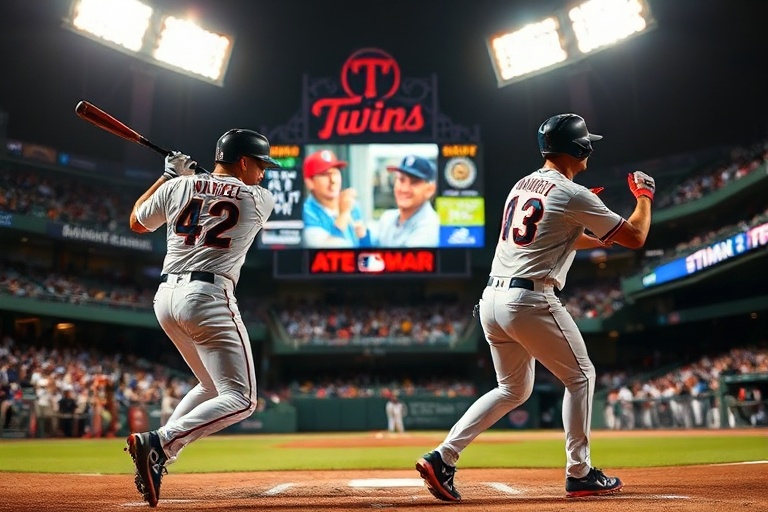
The Miami Marlins and Minnesota Twins may not dominate the headlines like the Yankees or Red Sox, but their matchups carry a unique cultural significance in baseball. While the Marlins thrive on the vibrancy of Miami’s Latin American influence, the Twins represent the heartland’s scrappy underdog spirit. Together, they form a rivalry that transcends geography, blending global talent with small-market grit.
Their occasional interleague clashes provide a fascinating contrast. The Marlins, with their roster often brimming with speed and power, face a Twins team that leans on precision pitching and defensive mastery. Beyond the diamond, these teams reflect broader themes: Miami’s role as a gateway for Latin American talent, Minnesota’s emphasis on homegrown development, and the broader MLB strategy of balancing big markets with regional identity.
The Global Influence of the Marlins
Few teams embody the internationalization of baseball quite like the Miami Marlins. Miami’s position as a cultural crossroads means the franchise has long prioritized Latin American scouting, producing stars like José Fernández, Giancarlo Stanton, and current standout Jazz Chisholm Jr. The Marlins’ farm system has become a pipeline for talent from the Dominican Republic, Venezuela, and beyond, reinforcing baseball’s status as a global sport.
This international focus also shapes the team’s identity. The Marlins’ fanbase is a mosaic of cultures, with game-day atmospheres blending Spanish chants and Caribbean rhythms. When Miami hosts the Twins, it’s not just another interleague series—it’s a collision of baseball philosophies. The Marlins play with flair, often relying on explosive offensive bursts, while the Twins counter with methodical, low-scoring efficiency.
This contrast was on full display during their 2023 interleague series, where Miami’s power hitters faced Minnesota’s suffocating pitching staff. The Twins’ ability to limit mistakes contrasted sharply with the Marlins’ high-variance approach—a microcosm of the broader debate in baseball: analytics-driven consistency versus high-ceiling unpredictability.
The Twins’ Small-Market Grit
The Minnesota Twins have long been the darlings of small-market baseball. Operating with one of the league’s smallest payrolls, they’ve consistently punched above their weight, thanks to a farm system that prioritizes development over splashy free-agent signings. Players like Byron Buxton, Carlos Correa, and Joe Ryan exemplify this philosophy—homegrown talent refined through years of minor-league grinding.
The Twins’ approach mirrors the economic realities of baseball’s middle tier. While markets like New York and Los Angeles can absorb financial missteps, Minnesota’s success hinges on drafting wisely and maximizing every asset. This philosophy extends to their on-field strategy, where pitching and defense often take precedence over power hitting.
When the Twins face the Marlins, it’s a clash of methodologies. The Marlins’ high-octane offense, fueled by Latin American stars, meets Minnesota’s disciplined, contact-heavy lineup. This dynamic makes their matchups particularly intriguing for analysts. Do the Twins’ pitching and defensive schemes neutralize Miami’s power? Or does Miami’s explosive potential break through? The answers often come down to execution—and a bit of luck.
A Rivalry Beyond the Box Score
The Marlins-Twins rivalry isn’t just about wins and losses. It’s a reflection of baseball’s broader evolution. The Marlins represent the sport’s global future, while the Twins embody its traditional values of teamwork and resilience. Their interleague series are more than games—they’re cultural exchanges.
Consider the 2022 series at loanDepot Park. Miami’s Latin-infused energy collided with Minnesota’s blue-collar mentality. The Twins’ bullpen, led by Jorge López, shut down rallies in high-leverage moments, while the Marlins’ lineup, featuring Jazz Chisholm Jr. and Luis Arraez, showcased the kind of speed and contact ability that scouts covet. The result was a tightly contested series where every run mattered, a testament to both teams’ competitive natures.
Beyond the field, their rivalry highlights MLB’s shifting dynamics. The Marlins’ financial constraints (due to their stadium situation) mirror the Twins’ small-market challenges. Both teams operate in environments where every dollar must be stretched, yet they remain competitive through innovation—whether it’s Miami’s international scouting or Minnesota’s advanced analytics.
What’s Next for This Matchup?
The Marlins and Twins are likely to meet again in interleague play, and their next series could carry even more weight. With the Marlins poised to contend in the NL East and the Twins rebuilding around a core of young talent, these matchups may soon take on playoff implications.
For fans, these games offer a rare blend of styles. The Marlins bring the excitement of big bats and stolen bases, while the Twins showcase the beauty of small-ball—sacrifice flies, defensive gems, and pitchers’ duels. It’s a contrast that keeps baseball fresh, proving that even in an era dominated by analytics, the human element still shines.
As MLB continues to globalize, the Marlins-Twins rivalry may become more prominent. Miami’s role as a talent hub and Minnesota’s tradition of development ensure that their matchups will remain a microcosm of baseball’s future—and its enduring appeal.
Key Takeaways from Marlins vs. Twins
- Global vs. Local: The Marlins represent baseball’s international future, while the Twins embody small-market resilience.
- Style Clash: Miami’s power and speed collide with Minnesota’s pitching and defense, creating unpredictable outcomes.
- Cultural Exchange: The series is as much about fan experiences as it is about stats—Latin rhythms meet blue-collar grit.
- Future Implications: With both teams on the rise, their next meetings could carry playoff weight.
For a deeper look at how these teams fit into MLB’s broader trends, check out our Sports section. And for more on the Marlins’ international influence, explore our piece on Culture and baseball’s global reach.
As baseball evolves, the Marlins-Twins rivalry stands out as a reminder that the game’s heart lies in its diversity—of players, strategies, and cultures. Whether you’re a stathead or a traditionalist, these matchups offer something for everyone.
© 2024 Dave’s Locker. All rights reserved.