Missiles: How These Weapons Shape Modern Warfare and Global Security
The missile has long been a cornerstone of military strategy, serving as both a deterrent and a weapon of decisive force. From early guided rockets to today’s hypersonic systems, these projectiles have reshaped warfare and global security. Their development reflects not just technological progress but also shifting geopolitical realities.
Understanding missiles requires examining their history, the mechanics behind their operation, and their broader implications for international relations. This analysis explores those dimensions while considering what the future may hold for these powerful tools of modern conflict.
The Origins and Evolution of Missiles
The story of missiles begins in the early 20th century, when visionaries like Robert Goddard experimented with liquid-fueled rockets. These early efforts laid the groundwork for more sophisticated systems developed during World War II. The German V-2 rocket, for instance, became the first long-range ballistic missile to target population centers, demonstrating the potential for missiles to change the nature of warfare.
Post-war, the United States and Soviet Union raced to refine missile technology, fueled by Cold War tensions. Intercontinental Ballistic Missiles (ICBMs) emerged as the ultimate strategic weapons, capable of delivering nuclear warheads across continents in minutes. By the 1960s, missiles had evolved from rudimentary rockets to precision-guided systems, incorporating inertial navigation and later GPS technology.
Today, missiles span a vast spectrum:
- Short-range missiles: Designed for battlefield use, often with ranges under 1,000 kilometers.
- Medium-range missiles: Capable of striking targets between 1,000 and 3,000 kilometers away.
- Intercontinental Ballistic Missiles (ICBMs): With ranges exceeding 5,500 kilometers, these are the backbone of nuclear arsenals.
- Cruise missiles: Powered by jet engines, these fly low to avoid detection and deliver precision strikes.
- Hypersonic missiles: Capable of traveling at speeds greater than Mach 5, these represent the cutting edge of missile technology.
The proliferation of missile technology has also democratized its use. While initially confined to superpowers, smaller nations and even non-state actors now possess or seek these capabilities. This shift has introduced new challenges for global security frameworks designed for a bipolar world.
How Missiles Work: A Technical Breakdown
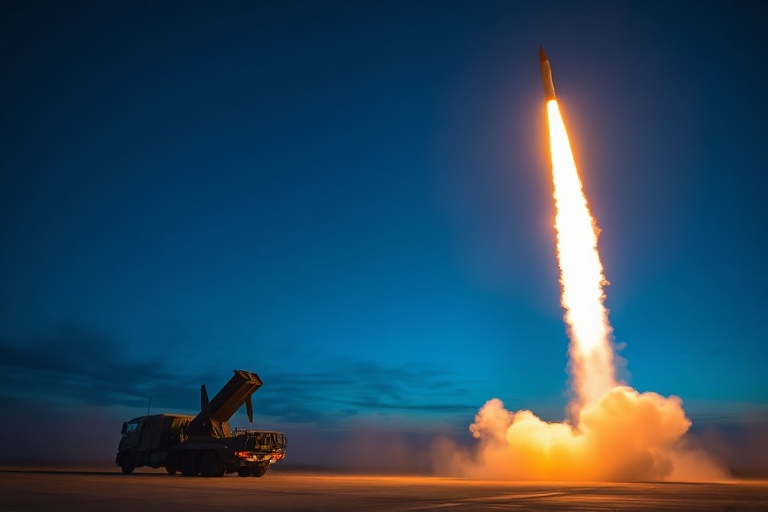
Missiles operate on principles that blend physics, engineering, and computer science. At their core, they are self-propelled guided weapons, distinguishing them from unguided rockets. The process begins with launch, which can occur from land, sea, or air platforms. Solid-fueled missiles ignite instantly, while liquid-fueled systems require more preparation but offer greater control.
The guidance system is where missiles truly differentiate themselves. Early systems relied on inertial guidance, using gyroscopes and accelerometers to track movement. Modern missiles integrate multiple technologies:
- Inertial Navigation Systems (INS): Provide mid-course guidance by tracking acceleration and rotation.
- GPS/GLONASS: Offers real-time positioning data to correct flight paths.
- Terrain Contour Matching (TERCOM): Uses radar to compare the missile’s flight path with stored topographical data.
- Optical or Infrared Homing: Targets emit heat or light signatures that the missile locks onto.
- Command Guidance: A human operator or external system directs the missile via radio or laser.
The propulsion system varies by missile type. Ballistic missiles often use multi-stage rockets to achieve the necessary velocity and altitude. Cruise missiles, in contrast, rely on jet engines that sustain flight at subsonic or supersonic speeds. Warhead delivery mechanisms have also evolved, with modern systems capable of deploying conventional explosives, nuclear payloads, or even multiple independently targetable reentry vehicles (MIRVs).
These technical advancements have made missiles increasingly precise. Today’s systems can hit targets with circular error probable (CEP) measurements of just a few meters, minimizing collateral damage while maximizing lethality. This precision has lowered the threshold for their use, as states can deploy missiles without triggering large-scale retaliation.
Missiles in Modern Geopolitics
The deployment and proliferation of missiles have become central issues in international relations. Regional conflicts, such as those in the Middle East and Eastern Europe, often hinge on missile capabilities. For instance, North Korea’s development of ICBMs has intensified tensions with the United States and its allies, prompting debates about preemptive strikes and diplomatic engagement.
Missiles also play a critical role in alliance structures. NATO’s missile defense systems, designed to counter threats from Iran or North Korea, have sparked protests from Russia, which views them as a threat to its strategic deterrent. Similarly, China’s rapid expansion of its missile arsenal has raised concerns in Washington about regional stability in the Asia-Pacific.
These dynamics have led to a complex web of treaties and agreements, though many are now under strain. The Intermediate-Range Nuclear Forces (INF) Treaty, which eliminated an entire class of missiles, collapsed in 2019 after accusations of violations by both the U.S. and Russia. The New START treaty, which limits strategic nuclear arsenals, remains in limbo, raising fears of a new arms race.
Beyond nuclear systems, conventional missiles have redefined modern warfare. Precision strikes against high-value targets—such as command centers, infrastructure, or military units—have become a staple of military doctrine. The 2020 Nagorno-Karabakh conflict, for example, showcased the devastating effectiveness of Turkish-made drones and their accompanying missile systems, altering the balance of power in the region.
Future Trends and Ethical Considerations
The next frontier in missile technology is hypersonic flight. Missiles traveling at Mach 5 or faster pose unique challenges because they are difficult to detect and intercept. Both the U.S. and China are investing heavily in these systems, with Russia also claiming operational hypersonic capabilities. The potential for these weapons to render existing defense systems obsolete has sparked renewed arms races and calls for international regulation.
Another trend is the integration of artificial intelligence (AI) into missile systems. AI can enhance targeting, improve evasion tactics, and even enable swarming attacks, where multiple missiles coordinate to overwhelm defenses. However, this also raises ethical questions about autonomous weapons and the risk of unintended escalation in conflicts.
On the diplomatic front, efforts to control missile proliferation face significant hurdles. The Missile Technology Control Regime (MTCR), an informal agreement among 35 countries, aims to limit the spread of missile technology, but its effectiveness is limited by non-member states and dual-use technologies. Emerging technologies, such as additive manufacturing (3D printing), further complicate enforcement by enabling the rapid, decentralized production of missile components.
For policymakers and military strategists, the challenge lies in balancing deterrence with stability. Missiles remain essential for national security, but their unchecked development risks creating a more volatile world. Confidence-building measures, such as transparency in missile tests and deployments, could mitigate some of these risks, but achieving consensus in a fractured geopolitical landscape is no small feat.
Conclusion
Missiles are more than just weapons; they are symbols of technological prowess and instruments of geopolitical power. Their evolution from simple rockets to hyper-precise, hypersonic systems reflects broader trends in science and international relations. As these technologies advance, the stakes for global security grow ever higher.
The path forward requires a nuanced approach—one that acknowledges the strategic necessity of missiles while addressing the risks they pose. International cooperation, technological restraint, and ethical foresight will be critical in shaping a world where these powerful tools do not undermine, but rather contribute to, global stability. For now, the missile remains both a marvel of engineering and a sobering reminder of humanity’s capacity for both innovation and destruction.
For further analysis on related topics, explore our Technology and Politics sections.