In the highlands of Guatemala, Mixco stands as a dynamic municipality that blends tradition with rapid urbanization. Once a quiet town on the outskirts of Guatemala City, Mixco has transformed into one of the country’s most populous and economically vibrant regions. Its growth reflects broader trends in Central America—where urban expansion meets cultural preservation, and infrastructure demands collide with environmental concerns.
The Rise of Mixco: From Rural Town to Urban Powerhouse
Mixco’s evolution is a story of demographic and economic shifts. In the mid-20th century, it was a modest agricultural community with a population of just a few thousand. By the 1980s, however, Guatemala City’s sprawl began to absorb surrounding areas, and Mixco was no exception. Today, it is home to over 500,000 residents, making it one of the country’s most densely populated municipalities.
The transformation was fueled by several factors. First, its strategic location—adjacent to Guatemala City—made it a prime destination for migrants seeking affordable housing. Second, the municipality’s relatively lower crime rates compared to the capital attracted families and businesses. Finally, government investments in roads and utilities, though uneven, have accelerated development.
Yet this growth has not come without challenges. Rapid urbanization has strained public services, from water supply to waste management. Informal settlements have expanded on hillsides vulnerable to landslides, a recurring hazard during Guatemala’s rainy season. Mixco’s leaders now face the dual task of managing expansion while mitigating risks.
Economic Engines: What Drives Mixco’s Growth?
Mixco’s economy is a mix of formal and informal sectors, each playing a distinct role. The municipality hosts industrial parks that produce textiles, plastics, and food products, many of which export to the United States and Mexico. These factories provide thousands of jobs, particularly for women, who make up a significant portion of the workforce in garment production.
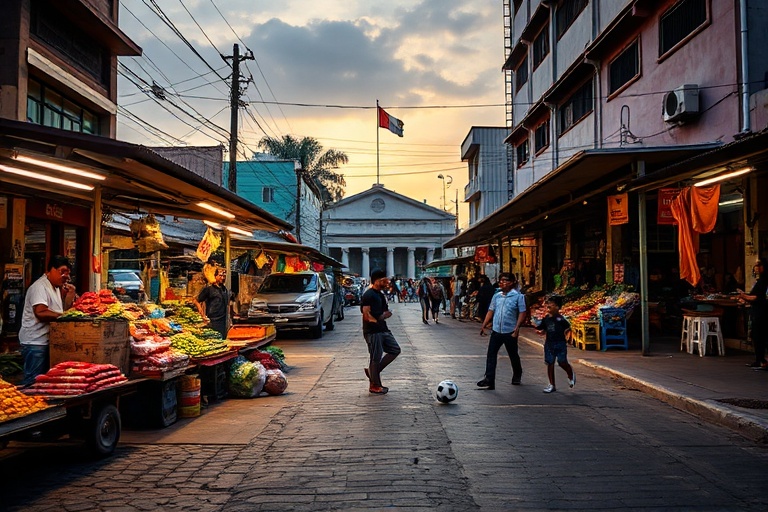
Retail and services are another pillar. Shopping centers like Mixco’s Zonal 12 have become commercial hubs, attracting shoppers from across the metropolitan area. Meanwhile, street vendors and local markets sustain a parallel economy, offering goods at prices accessible to lower-income residents.
The municipality also benefits from its proximity to Guatemala City. Many residents commute for work, while businesses in Mixco serve as suppliers and service providers to the capital. This interdependence creates a symbiotic relationship, though it also means Mixco’s fortunes rise and fall with those of the larger city.
Key Industries in Mixco
- Manufacturing: Textiles, plastics, and food processing dominate the industrial sector. Many factories operate under maquila arrangements, producing goods for export.
- Retail and Services: Shopping centers, supermarkets, and local markets cater to both residents and commuters from Guatemala City.
- Construction: The demand for housing has spurred a boom in residential and commercial construction, though often without adequate urban planning.
- Agriculture: While declining in prominence, small-scale farming persists on the municipality’s outskirts, supplying local markets with fresh produce.
Challenges and Controversies: The Dark Side of Growth
Mixco’s rapid development has not been without controversy. One of the most pressing issues is land use. The municipality’s hilly terrain has led to unregulated construction on steep slopes, increasing the risk of landslides. In 2021, heavy rains triggered a disaster in the village of El Cambray II, killing dozens and displacing hundreds. The tragedy exposed flaws in urban planning and disaster preparedness.
Another concern is water scarcity. Mixco relies on aquifers that are being depleted faster than they can recharge. Industrial and residential use has strained local water sources, forcing some communities to rely on expensive trucked-in water. Efforts to build new infrastructure, such as reservoirs, have been slow and often mired in bureaucratic delays.
Corruption and inefficiency in local government have also hindered progress. Critics argue that municipal funds are frequently misallocated, with infrastructure projects awarded to politically connected firms. Transparency International has flagged Guatemala as one of the most corrupt countries in Latin America, and Mixco is no exception.
“Mixco’s growth is a double-edged sword. It offers opportunities, but without proper planning, those opportunities come at a cost to safety and sustainability.” — Urban planning expert, interviewed in 2023
Cultural Identity: Preserving Heritage Amid Change
Despite its urbanization, Mixco retains deep cultural roots. The municipality is home to Kaqchikel Maya communities, whose traditions endure in festivals like the Fiesta de San Juan, celebrated with dances, music, and traditional food. Local artisans produce textiles, ceramics, and wood carvings, keeping indigenous crafts alive.
However, cultural preservation faces challenges. Younger generations are increasingly drawn to urban lifestyles, and traditional practices risk fading. Some community leaders are working to revive interest in Maya heritage through schools and cultural centers, but funding and interest remain inconsistent.
Religion also plays a central role. While Catholicism remains dominant, evangelical churches have proliferated, reflecting broader trends in Guatemala. These churches often serve as community hubs, providing social services in areas where the state is absent.
Conclusion: A Municipality at a Crossroads
Mixco’s story is a microcosm of Guatemala’s broader struggles and aspirations. Its growth offers economic opportunities and cultural dynamism, yet it also highlights the perils of unchecked urbanization. The municipality stands at a crossroads, where decisions today will shape its future for decades.
For Mixco to thrive, three priorities must guide its development: sustainable urban planning, transparent governance, and investment in infrastructure. Without these, the municipality risks repeating the mistakes of Guatemala City—where inequality and environmental degradation have become intractable problems.
Yet there is hope. Grassroots movements are pushing for reform, from community-led water projects to advocacy for safer housing. International organizations, including the Inter-American Development Bank, have pledged support for infrastructure upgrades. If these efforts succeed, Mixco could serve as a model for balanced urban growth in Central America.
One thing is certain: Mixco’s trajectory will continue to fascinate observers, not just for its economic potential, but for the lessons it offers about balancing progress with preservation.