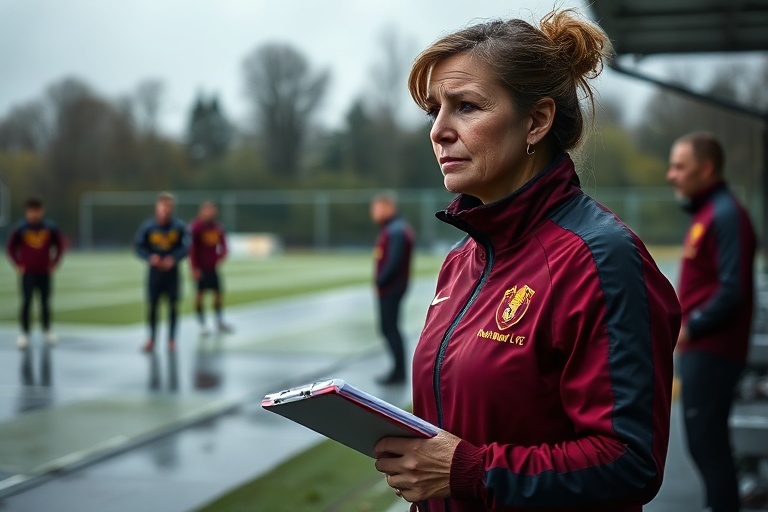
Motherwell FC’s Managerial Evolution: A Global Perspective
The managerial landscape at Motherwell Football Club has long been a topic of intrigue for fans and analysts alike. With a history stretching back to 1886, the club has navigated numerous transitions on the pitch and in the dugout. Recent years, in particular, have seen a shift in how the club approaches leadership, blending traditional Scottish football values with modern tactical innovations.
Scotland’s top-flight football scene remains a fascinating microcosm of broader global trends. While clubs in England, Spain, and Germany often dominate headlines, Motherwell’s story reflects the challenges and triumphs of mid-tier European football. The club’s managerial choices—whether hiring experienced tacticians or promoting youth—speak to a broader strategy of balancing ambition with pragmatism.
The Role of Leadership in Scottish Football
In Scottish football, managerial appointments often carry extra weight due to financial constraints and the need to develop homegrown talent. Motherwell has historically leaned toward coaches with deep local ties, a strategy that fosters fan loyalty but sometimes limits tactical flexibility. Recent seasons, however, have seen a subtle but noticeable shift toward a more cosmopolitan approach.
Consider the tenure of managers like Stephen Robinson, who blended defensive solidity with attacking flair during his time at Fir Park. His successor, Graham Alexander, brought a different philosophy—one rooted in structure and set-piece efficiency. These transitions mirror broader trends in European football, where clubs increasingly prioritize adaptability over tradition.
- Local roots vs. global experience: Motherwell’s traditional preference for Scottish managers contrasts with clubs like Celtic and Rangers, which have often looked abroad for proven winners.
- Tactical evolution: The shift from possession-based play to more pragmatic approaches reflects wider trends in the Scottish Premiership.
- Youth development as a priority: Recent managers have placed greater emphasis on integrating academy products, aligning with UEFA’s push for homegrown talent.
Cultural Context: How Motherwell Reflects Broader Trends
Motherwell’s managerial carousel is not unique, but it offers a compelling case study in how smaller clubs adapt in a rapidly changing football landscape. The club’s ability to balance financial prudence with competitive ambition has drawn comparisons to clubs like Burnley in England or Union Berlin in Germany—teams that punch above their weight through smart recruitment and tactical discipline.
Scotland’s football culture, with its deep community ties and passionate fanbases, adds another layer to this narrative. Unlike clubs in wealthier leagues, Motherwell cannot rely on massive transfer budgets. Instead, it must cultivate a distinct identity—one that resonates with supporters while remaining competitive. This duality is evident in the club’s recent managerial hires, where technical expertise is increasingly valued alongside emotional intelligence.
One notable example is the appointment of Stuart Kettlewell in 2023. His tenure, though short-lived, highlighted the club’s willingness to take calculated risks. Kettlewell’s aggressive pressing system, inspired by European models, was a bold departure from the club’s traditional approach. While the experiment ultimately faltered, it underscored Motherwell’s commitment to innovation—a trait increasingly essential for clubs aiming to break the Old Firm dominance.
Comparing Motherwell to European Counterparts
To understand Motherwell’s managerial philosophy, it’s worth looking beyond Scotland’s borders. Clubs in Scandinavia, for instance, have long embraced progressive coaching styles, often prioritizing data-driven decision-making. Motherwell’s recent forays into analytics—under managers like Stephen Robinson—suggest a similar evolution.
Another parallel can be drawn with clubs in the Dutch Eredivisie, where technical directors wield significant influence. While Motherwell lacks the resources of Ajax or PSV, its willingness to experiment with formations and player roles reflects a broader shift toward modern football thinking. The club’s focus on set-piece optimization, for example, mirrors the strategies employed by Brentford in England, where marginal gains have become a cornerstone of success.
Yet, Motherwell also retains distinct Scottish characteristics. The emphasis on physicality and direct play, while less fashionable in top European leagues, remains a hallmark of the Premiership. This hybrid approach—combining local traditions with global best practices—has become a defining feature of the club’s identity.
What’s Next for Motherwell’s Management?
The future of Motherwell’s managerial structure will likely hinge on a few key factors. First is the club’s ability to attract and retain top-tier coaching talent. With the Scottish Premiership becoming more competitive, Fir Park’s leadership will need to strike a balance between ambition and realism.
Second is the role of the technical director. Clubs like Brighton in England have thrived under models where sporting directors oversee recruitment and tactical planning. Motherwell has flirted with this structure before, and a more formalized approach could yield long-term benefits.
Finally, the club’s relationship with its fanbase will remain critical. Motherwell’s supporters are known for their loyalty, but they are also quick to voice dissatisfaction when results falter. Navigating this dynamic will require transparency and consistency from the club’s hierarchy.
As the football world becomes increasingly interconnected, Motherwell’s journey offers a microcosm of the challenges and opportunities facing mid-tier clubs. Whether through bold tactical experiments or steady, incremental improvements, the club’s next managerial chapter will be one to watch—for fans of Scottish football and beyond.
For deeper insights into the tactical trends shaping European football, explore our Analysis section, where we break down the strategies behind the game’s biggest stories.