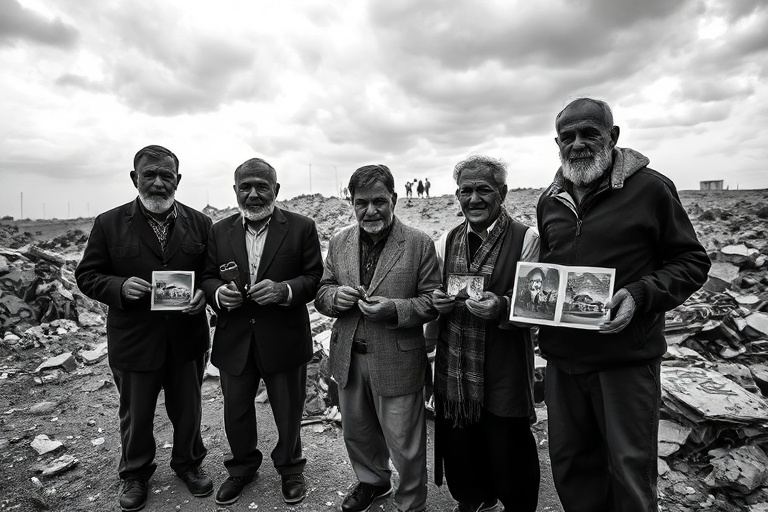
What Is Nakba Day?
Nakba Day, observed annually on May 15, marks the displacement of approximately 700,000 Palestinians during the 1948 Arab-Israeli War. The term “Nakba” means “catastrophe” in Arabic, reflecting the profound loss experienced by Palestinian communities as villages were destroyed, families were separated, and a new state—Israel—was established on what many Palestinians consider their ancestral land.
The events of 1948 did not occur in isolation. They were part of a broader regional shift, where colonial powers redrew borders, and competing nationalisms clashed in the wake of World War II. For Palestinians, Nakba Day is not merely historical commemoration; it is a living memory that shapes identity, politics, and daily life. The day is observed with protests, vigils, and cultural events across the West Bank, Gaza, Israel, and refugee communities worldwide.
Historical Context and Global Echoes
The 1948 war followed the UN partition plan of 1947, which proposed dividing British Mandate Palestine into separate Jewish and Arab states. Jewish leaders accepted the plan; Arab leaders rejected it, viewing it as unjust. Violence escalated into full-scale war as neighboring Arab states—Egypt, Jordan, Syria, and Iraq—intervened after Israel declared independence on May 14, 1948. By the time armistice agreements were signed in 1949, Israel controlled 78% of historic Palestine, while Jordan and Egypt held the West Bank and Gaza, respectively.
For Palestinians, Nakba was not a single event but a process. Mass expulsions and forced displacements occurred through military operations like Plan Dalet, which aimed to secure Jewish control over key territories. Entire communities were uprooted. More than 400 Palestinian villages were destroyed or depopulated, their names erased from maps and official records. These actions left deep scars, reinforced by Israeli laws that restricted Palestinian refugees from returning to their homes.
The global response to the Nakba has been uneven. Western nations often framed the 1948 war as a triumph of Jewish self-determination after centuries of persecution, especially in the wake of the Holocaust. This narrative dominated international diplomacy and media coverage for decades. Meanwhile, Palestinian voices were marginalized, and their narrative of dispossession was sidelined in Western public discourse.
The Cultural Dimensions of Memory and Identity
Nakba Day is deeply embedded in Palestinian cultural expression. Oral histories, poetry, music, and visual art preserve the memory of villages lost and families separated. Renowned poets like Mahmoud Darwish and Taha Muhammad Ali wrote about displacement and longing. Contemporary artists such as Emily Jacir and Larissa Sansour use film, installation, and photography to challenge erasure and reclaim historical narratives.
In literature, works like Men in the Sun by Ghassan Kanafani and The Secret of the Seed by Sahar Khalifeh explore themes of exile and resilience. These narratives are not confined to Palestine. They resonate in refugee communities from Beirut to Berlin, where generations born long after 1948 still carry the keys to homes they have never seen.
Cultural institutions have also played a role in sustaining Nakba memory. The Palestinian Museum near Ramallah, for example, curates exhibitions that connect archival documents to contemporary art, making the past tangible for younger audiences. Meanwhile, Palestinian filmmakers like Hany Abu-Assad have brought stories of displacement to international screens, earning acclaim in festivals from Cannes to Sundance.
Symbolism in Daily Life
Even mundane objects carry symbolic weight. The keys passed down through generations are not just heirlooms—they are tangible claims to property lost in 1948. Embroidered dresses, or thob, often feature village-specific patterns that serve as living archives of Palestinian heritage. These cultural practices ensure that Nakba is not just remembered, but lived.
Political Significance and International Reactions
Nakba Day is not merely a historical observance; it is a political statement. In Israel, public discourse has long framed the Nakba as a necessary consequence of war, emphasizing Jewish survival over Palestinian loss. However, in recent years, Palestinian citizens of Israel have increasingly challenged this narrative. In 2011, Israel passed a law allowing the finance minister to withdraw state funding from institutions that commemorate Nakba, sparking outrage and legal challenges.
Internationally, Nakba Day has gained visibility through solidarity movements. Pro-Palestinian activists stage protests outside Israeli embassies, while academic institutions have hosted conferences and teach-ins exploring the Nakba’s historical and legal dimensions. The Boycott, Divestment, and Sanctions (BDS) movement has also amplified calls for accountability, linking Nakba commemoration to broader demands for justice.
Contrasting Narratives
These developments have intensified debates over historical narratives. Supporters of Israel often argue that the 1948 war was a defensive struggle against Arab aggression. They point to the 1947 UN partition plan as a legitimate basis for statehood. Conversely, Palestinian scholars and activists emphasize the systematic nature of displacement and the ongoing denial of the right of return, which they view as a core issue in any just peace agreement.
The international community remains divided. The United States and several European countries generally support Israel’s position, while countries like Ireland, Spain, and Norway have taken steps to recognize Palestinian statehood and acknowledge Nakba history. The UN has repeatedly called for the right of return, though implementation remains unrealized.
Challenges and the Future of Nakba Commemoration
Despite its centrality in Palestinian identity, Nakba commemoration faces growing challenges. In Israel, laws restricting public discussion of the Nakba have created a chilling effect. Palestinian citizens of Israel who observe Nakba Day risk legal penalties or social ostracization. Meanwhile, in the West Bank and Gaza, access to education about the Nakba is limited by Israeli restrictions on movement and curriculum control.
Social media has transformed how Nakba narratives circulate. Videos of protests, personal testimonies, and historical reenactments now reach global audiences within minutes. Platforms like TikTok and Instagram have allowed younger Palestinians to share their families’ stories in creative formats, bypassing traditional media gatekeepers. However, this visibility has also led to increased censorship, as tech companies face pressure from pro-Israel advocacy groups to remove content deemed inflammatory.
The Role of Education
Education remains a battleground. In 2022, the Israeli government approved a new curriculum that reduces the space for Nakba studies in Arab schools, replacing it with more Zionist-oriented content. This move was condemned by human rights organizations as an attempt to erase Palestinian history. Meanwhile, Palestinian Authority schools in the West Bank teach Nakba as part of the national curriculum, ensuring that younger generations understand the roots of their displacement.
Abroad, diaspora communities have established Saturday schools and cultural centers to preserve Palestinian heritage. Organizations like the Arab American Institute and the Palestinian Youth Movement host workshops on oral history and political education, connecting youth to a narrative that spans continents.
Beyond 1948: The Ongoing Nakba
While Nakba Day centers on 1948, many Palestinians argue that displacement and dispossession continue today. The 1967 Six-Day War led to Israel’s occupation of the West Bank, Gaza, and East Jerusalem—territories where Palestinians still live under military rule. In East Jerusalem, Palestinian neighborhoods face home demolitions and settlement expansion. In the West Bank, checkpoints and the separation barrier restrict movement, fragmenting communities and limiting access to land and resources.
In Gaza, the blockade imposed in 2007 has created what the UN has described as “unlivable conditions.” The majority of Gaza’s population are refugees from 1948, their children and grandchildren born into a cycle of isolation and violence. Each Israeli military operation in Gaza—2008-2009, 2012, 2014, 2021, and 2023—has displaced more families, adding new chapters to the Nakba’s ongoing story.
Legal and Moral Frames
International law provides a framework for addressing these issues. The UN Resolution 194 (1948) affirms the right of Palestinian refugees to return to their homes or receive compensation. Yet, Israel has consistently rejected this resolution, arguing that the return of millions of Palestinians would threaten its Jewish majority. This impasse highlights the tension between legal principles and political realities.
Human rights organizations like Amnesty International and Human Rights Watch have documented policies that amount to apartheid, citing the denial of rights to Palestinians both within Israel and in the occupied territories. These reports have fueled global debates and prompted calls for sanctions and arms embargoes against Israel.
Conclusion: A Day of Remembrance and Resistance
Nakba Day is more than a historical anniversary. It is a day of defiance, resilience, and cultural reclamation. For Palestinians, it is a reminder that their struggle for justice did not begin in 1967 or 2000—it began in 1948. It is also a day when the world is invited to listen, learn, and reflect on the human cost of colonialism, nationalism, and unresolved displacement.
As global attention shifts toward accountability and justice, Nakba Day serves as a crucial touchstone. It challenges dominant narratives, exposes gaps between legal principles and lived realities, and underscores the importance of memory in shaping a just future. Whether through art, protest, scholarship, or policy advocacy, the commemoration of Nakba continues to evolve—rooted in the past, but urgently relevant to the present.
For those seeking to understand the Israeli-Palestinian conflict, Nakba Day offers a necessary starting point. It demands that we confront uncomfortable truths: that statehood for one people can mean catastrophe for another; that peace cannot be built on erasure; and that justice requires more than symbolic gestures—it requires action.