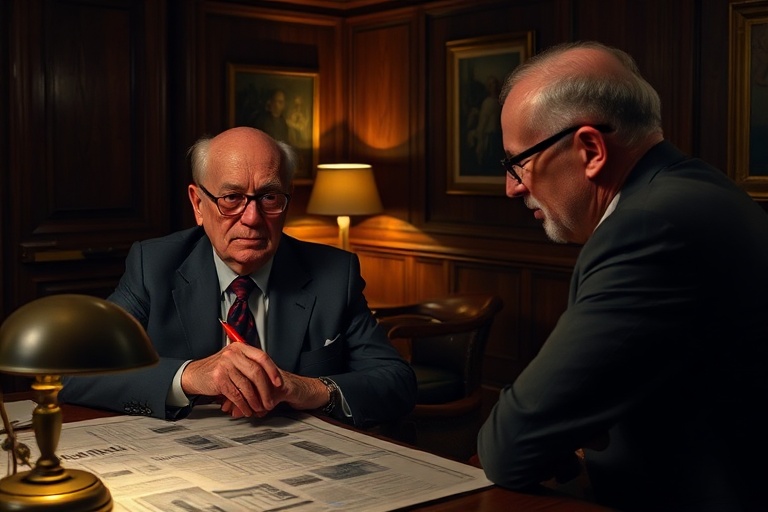
Rupert Murdoch: How One Media Mogul Changed Global Journalism
Rupert Murdoch remains one of the most influential figures in global media, a man whose career spans over six decades and whose business empire has redefined the industry. From his early days in Australia to his expansion into the United States and beyond, Murdoch built a media dynasty that continues to shape public discourse. His approach to journalism, business strategy, and political influence has made him both a revered and controversial figure. Understanding Murdoch’s impact requires examining his career trajectory, his business tactics, and the lasting consequences of his media holdings.
The Early Years: Building a Media Empire
Rupert Murdoch was born in 1931 in Melbourne, Australia, into a family with media roots—his father owned a newspaper, the Herald. After studying at Oxford, Murdoch returned to Australia in the 1950s to take over the family business. His first major move was acquiring the Adelaide News in 1952, which he transformed into a more sensationalist tabloid. This strategy proved successful, and he expanded by purchasing other struggling newspapers, including the Sydney Daily Telegraph in 1964.
Murdoch’s ambitions weren’t confined to Australia. In 1969, he set his sights on the UK, acquiring the News of the World and later The Sun, which became one of the country’s most widely read tabloids. His approach—mixing scandal, celebrity gossip, and populist headlines—revolutionized British journalism. By the 1970s, Murdoch had established himself as a global media player, but his most significant expansion was yet to come.
The American Expansion: Fox News and Beyond
Murdoch’s move into the U.S. market in the 1980s marked a turning point. He acquired The New York Post in 1976, but his most transformative purchase was the 1985 acquisition of 20th Century Fox, which provided the foundation for his next major venture: Fox Broadcasting Company. Launched in 1986, Fox initially struggled but eventually found success with shows like The Simpsons and The X-Files. The real game-changer, however, came in 1996 with the launch of Fox News.
Fox News, under Murdoch’s direction, became a dominant force in cable news by blending opinion-driven programming with hard news. Programs like The O’Reilly Factor and Hannity attracted a loyal audience, while the channel’s coverage often aligned with conservative viewpoints. This approach not only reshaped American media but also played a significant role in the polarization of political discourse. Murdoch’s ability to identify and exploit market gaps—whether in entertainment, news, or sports broadcasting—solidified his reputation as a media mogul who understood audiences better than anyone else.
- 1986: Fox Broadcasting Company launched, competing directly with major networks.
- 1996: Fox News debuted, becoming the most-watched cable news channel within a decade.
- 2002: Murdoch acquired DirecTV, expanding into satellite television.
- 2019: Disney acquired 21st Century Fox assets, ending Murdoch’s direct control over the studio.
Controversies and Ethical Concerns
Murdoch’s career has not been without controversy. His media outlets have faced repeated allegations of unethical journalism, particularly in the UK, where the News of the World phone-hacking scandal led to the paper’s closure in 2011. Investigations revealed that journalists had hacked the phones of celebrities, politicians, and even crime victims, leading to criminal charges and public outrage. Murdoch and his executives faced scrutiny over their role in fostering a culture that prioritized sensationalism over integrity.
In the U.S., Fox News has also faced criticism for its coverage of major events. During the 2020 presidential election, the channel amplified false claims about voter fraud, contributing to widespread misinformation. Lawsuits, including one from Dominion Voting Systems, accused Fox of knowingly spreading lies to bolster its ratings. These controversies have raised important questions about the responsibility of media conglomerates in shaping public opinion and the limits of editorial freedom.
The Political Influence of a Media Baron
Murdoch’s media empire has long been accused of wielding undue political influence. In the UK, his newspapers have historically backed the Conservative Party, with editors and columnists often aligning their coverage with Tory policies. His support for Margaret Thatcher in the 1980s and David Cameron in the 2010s underscored his ability to shape electoral outcomes. Similarly, in the U.S., Fox News has been a vocal advocate for conservative causes, with its programming frequently echoing Republican talking points.
Murdoch’s personal relationships with politicians have also drawn attention. He has been known to cultivate close ties with leaders across the aisle, from Ronald Reagan to Tony Blair to Donald Trump. Critics argue that his media outlets serve as propaganda tools for his political allies, while supporters claim he simply provides a counterbalance to what they see as liberal media bias. Regardless of perspective, it’s clear that Murdoch’s influence extends beyond business into the realm of politics, where his decisions can sway public opinion and policy.
His impact isn’t limited to traditional media. In 2007, Murdoch launched The Daily, an early attempt at a digital-only newspaper, though it ultimately failed. More recently, his company has invested in streaming services like Tubi, demonstrating an ability to adapt to changing media consumption habits. Yet, despite these innovations, Murdoch’s legacy remains tied to his role in consolidating media power—a trend that has raised concerns about media monopolies and the concentration of ownership.
The Legacy of a Media Titan
Rupert Murdoch’s career offers a study in contrasts: a visionary who transformed media, a businessman who built an empire, and a figure whose influence has sparked both admiration and criticism. His ability to anticipate market shifts and adapt to new technologies has kept him relevant for decades. Yet, his legacy is also marred by ethical lapses, political entanglements, and the commodification of news. As media landscapes continue to evolve, Murdoch’s approach—prioritizing profit and audience engagement over traditional journalism—remains a model that many emulate, for better or worse.
Today, at 93, Murdoch has stepped back from day-to-day operations, handing control of Fox Corporation and News Corp to his son Lachlan Murdoch. The transition marks the end of an era, but the institutions he built will continue to shape media for years to come. Whether his legacy is remembered as one of innovation or exploitation may depend on who you ask—but there’s no denying that Rupert Murdoch changed the media industry forever.
For those interested in the broader trends shaping modern media, our analysis section explores how digital transformation is redefining journalism, entertainment, and public discourse in the 21st century.