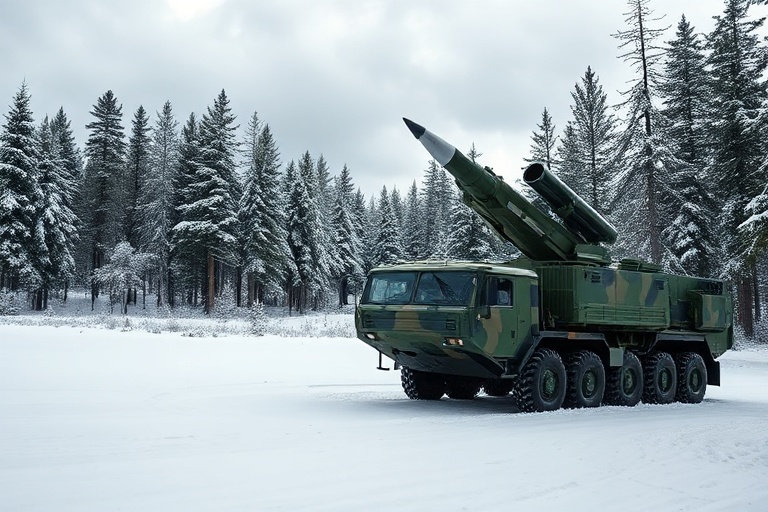
Russia’s Missile Arsenal: Capabilities, Recent Use, and Global Implications
The use of missiles by Russia has become a defining feature of its military strategy in the 21st century. From precision strikes in Ukraine to long-range deterrence postures, Moscow’s missile programs reflect both technological ambition and geopolitical intent. These weapons serve multiple roles—supporting conventional warfare, projecting power beyond its borders, and reinforcing nuclear deterrence. Understanding Russia’s missile capabilities requires examining its diverse arsenal, recent combat applications, and the broader strategic context that shapes their deployment.
Russia’s Missile Arsenal: Types and Technological Advancements
Russia maintains one of the world’s most sophisticated missile programs, spanning short-, medium-, and long-range systems. The country’s inventory includes both tactical and strategic missiles, many of which integrate advanced guidance systems, hypersonic speeds, and stealth features. Among the most notable systems are the Iskander-M (a short-range ballistic missile), the Kalibr cruise missile family, and the Avangard hypersonic glide vehicle. These platforms are designed for rapid deployment, high survivability, and precision targeting.
The Iskander-M, for instance, has a range of approximately 500 kilometers and can carry both conventional and nuclear warheads. Its mobility and ability to evade missile defenses make it a key asset in regional conflicts. Meanwhile, the 3M14 Kalibr cruise missile—often launched from ships, submarines, or aircraft—has demonstrated operational flexibility in Syria and Ukraine. With a range exceeding 2,500 kilometers, the Kalibr enables Russia to strike targets deep within enemy territory without risking manned aircraft.
In the strategic domain, Russia has prioritized hypersonic delivery systems. The Avangard, capable of speeds exceeding Mach 20, represents a leap in missile technology. Unlike traditional ballistic missiles, Avangard maneuvers during flight, making interception extremely difficult. Such systems underscore Russia’s commitment to maintaining a qualitative edge in an era of evolving missile defenses.
Missile Use in Ukraine: Tactical Integration and Strategic Impact
Since the full-scale invasion of Ukraine in February 2022, Russia has relied heavily on its missile arsenal to degrade Ukrainian infrastructure, disrupt military operations, and erode civilian morale. Missile strikes have targeted power plants, water treatment facilities, communication networks, and urban centers. The scale and frequency of these attacks have drawn international condemnation and prompted widespread discussions about escalation risks.
One of the most visible applications has been the use of long-range cruise and ballistic missiles, including the Kh-101 air-launched cruise missile and the Iskander-M. These weapons have been used to strike command centers, ammunition depots, and logistical hubs deep behind Ukrainian lines. The systematic targeting of energy infrastructure during winter months has led to prolonged blackouts and humanitarian crises, particularly in regions like Kyiv and Kharkiv.
Russia’s missile campaign has also evolved in response to Ukrainian air defenses. Early in the war, Ukraine relied on Soviet-era systems like the S-300 to intercept incoming missiles. However, as Russian forces depleted stockpiles of older missiles, they shifted toward newer, longer-range systems such as the Kinzhal air-launched ballistic missile and the Zircon anti-ship missile. These systems exploit gaps in Ukraine’s air defense coverage and test the limits of Western-supplied systems like the Patriot.
The psychological and economic toll of these strikes cannot be overstated. Beyond physical damage, missile attacks have forced millions of Ukrainians into shelters, disrupted education and healthcare, and strained the country’s energy grid. The use of missiles in this conflict has reaffirmed their role not just as precision weapons, but as instruments of coercion and attrition.
Global Responses: Sanctions, Alliances, and Missile Defense
The proliferation of Russian missiles has prompted a coordinated international response. The United States, European Union, and other allies have imposed sanctions targeting Russia’s defense industry, particularly entities involved in missile production. These measures aim to degrade Russia’s ability to manufacture and modernize its missile systems. However, the effectiveness of sanctions remains a subject of debate, as Russia has demonstrated resilience through domestic production and supply chain adaptations.
In response to Russian missile threats, NATO has accelerated the deployment of missile defense systems in Eastern Europe. Systems such as the U.S.-operated Aegis Ashore in Romania and Poland are designed to intercept ballistic missiles in their terminal phase. Additionally, NATO members have expanded intelligence-sharing and early warning networks to detect and track Russian missile launches. The alliance has also conducted joint exercises simulating missile defense scenarios, emphasizing collective preparedness.
Japan and South Korea, both geographically close to Russian missile tests, have enhanced their own defense postures. Tokyo has invested in long-range strike capabilities, including the domestically developed Type 12 surface-to-ship missile, to counter potential Russian naval threats. Meanwhile, Seoul has integrated ballistic missile defense systems like the THAAD to protect against North Korean and Russian missile launches.
Diplomatic efforts have also focused on arms control. The Intermediate-Range Nuclear Forces (INF) Treaty, which once limited ground-launched missiles with ranges between 500 and 5,500 kilometers, collapsed in 2019 after both the U.S. and Russia accused each other of violations. Without such constraints, Russia has continued to develop and field new intermediate-range systems, including the 9M729 cruise missile—a system that was central to the INF dispute.
The Future of Russia’s Missile Programs: Ambitions and Constraints
Russia’s missile programs are not static; they continue to evolve in response to technological and geopolitical pressures. One of the most significant trends is the development of hypersonic missiles, which combine speed, maneuverability, and precision. Beyond the Avangard, Russia is reportedly working on the Tsirkon hypersonic anti-ship missile and the Kinzhal-2, an upgraded variant of the Kinzhal. These systems are intended to penetrate advanced missile defenses and maintain Russia’s strategic advantage.
However, Russia faces significant constraints. International sanctions have limited access to critical components, such as microelectronics and advanced materials, which are essential for missile guidance and propulsion systems. Reports indicate that Russia has turned to countries like China, Iran, and North Korea for dual-use technologies, raising concerns about proliferation and violations of export controls. The reliance on foreign components also introduces risks of supply chain disruptions and quality control issues.
Economically, the cost of maintaining and modernizing the missile arsenal is substantial. While Russia has prioritized defense spending, competing demands for social programs, infrastructure, and healthcare create internal pressures. The war in Ukraine has further strained resources, with estimates suggesting that Russia has expended a significant portion of its high-precision missile stockpiles. Replenishing these arsenals will require sustained investment and industrial output.
Looking ahead, the trajectory of Russia’s missile programs will depend on several factors: the outcome of the war in Ukraine, the durability of sanctions, technological breakthroughs, and the responses of rival powers. What is clear, however, is that missiles remain central to Russia’s military doctrine and its broader strategy of coercive diplomacy. As long as geopolitical tensions persist, the development and deployment of advanced missile systems will continue to shape global security dynamics.
Key Takeaways
- Diverse Arsenal: Russia fields a wide range of missiles, from tactical systems like the Iskander-M to strategic weapons such as the Avangard hypersonic glide vehicle.
- Combat Role in Ukraine: Missiles have been used extensively to target infrastructure, military positions, and civilian areas, demonstrating their dual utility in conventional and psychological warfare.
- Global Reactions: NATO and Asian allies have strengthened missile defenses and imposed sanctions, while arms control frameworks remain fragile.
- Future Challenges: Sanctions, technological dependencies, and economic constraints pose hurdles to Russia’s missile ambitions, even as it pursues next-generation systems.
As the world watches the evolution of Russia’s missile programs, one thing is certain: these weapons will continue to play a pivotal role in shaping military balances, deterrence postures, and international relations for years to come.
For more insights into global defense trends and military technology, visit our Analysis section or explore our coverage of News on evolving security landscapes.