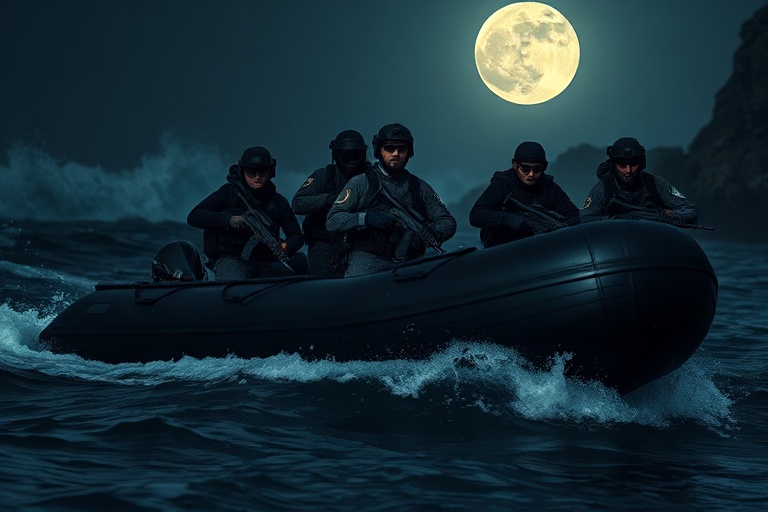
The U.S. Navy SEALs represent the pinnacle of military training and operational capability. Born from the chaos of World War II, this elite special operations force has evolved into a cornerstone of American defense strategy. Their missions—ranging from direct action to counterterrorism and unconventional warfare—demand precision, adaptability, and unwavering discipline. But what exactly makes the SEALs so formidable, and how have they influenced broader military and cultural landscapes?
The Origins and Evolution of the SEALs
The Navy SEALs trace their lineage to three distinct units: the Scouts and Raiders, Naval Combat Demolition Units, and Underwater Demolition Teams, all formed during World War II. These early groups laid the foundation for amphibious reconnaissance and sabotage operations, proving critical in beach landings like Normandy and the Pacific theater. By 1962, President John F. Kennedy formalized the SEALs as a permanent force, recognizing the need for a flexible, highly trained unit capable of operating in any environment.
Their evolution continued through the Vietnam War, where SEALs pioneered unconventional warfare tactics. They adapted to jungle environments, conducting reconnaissance, ambushes, and prisoner snatches with surgical precision. Post-Vietnam, the SEALs expanded their role into counterterrorism, culminating in operations like the 2011 raid that killed Osama bin Laden. Today, they remain at the forefront of global security, responding to emerging threats with unmatched expertise.
Key Milestones in SEAL History
- 1942: Formation of the Amphibious Scout and Raider School, precursor to the SEALs.
- 1962: Official establishment of SEAL Team ONE and SEAL Team TWO under President Kennedy.
- 1980: Failed Operation Eagle Claw during the Iran hostage crisis highlights the need for specialized units like Delta Force and SEALs.
- 2001: SEALs deploy to Afghanistan post-9/11, playing pivotal roles in toppling the Taliban.
- 2011: Operation Neptune Spear, the bin Laden raid, showcases SEAL capabilities to the world.
Training: The Brutal Path to Becoming a SEAL
SEAL training, known as Basic Underwater Demolition/SEAL (BUD/S), is one of the most grueling selection processes in the world. Candidates endure six months of physical and mental challenges designed to push them beyond their limits. The program begins with a three-week screening phase to assess basic swimming, running, and push-up abilities. Those who qualify move into the infamous “Hell Week,” where they endure five and a half days of continuous training with minimal sleep, often in freezing ocean waters.
Beyond Hell Week, candidates face advanced training in land warfare, demolitions, and diving. The SEAL Qualification Training (SQT) phase further refines their skills, including parachute operations, close-quarters combat, and mission planning. Only about 25% of candidates complete the program, a testament to the extreme demands placed on these warriors. The mental resilience required is just as critical as physical prowess, with candidates often facing sleep deprivation, extreme cold, and relentless pressure from instructors.
The SEAL pipeline doesn’t end with graduation. Operators continue to train in specialized areas, including free-fall parachuting, combat diving, and advanced sniper techniques. Their expertise is constantly updated to counter evolving threats, ensuring they remain the military’s most adaptable force.
The SEALs in Modern Warfare and Pop Culture
The SEALs’ reputation has transcended military circles, infiltrating popular culture through books, films, and television. Shows like SEAL Team on CBS have dramatized their operations, blending real-world tactics with Hollywood storytelling. While entertainment often exaggerates their capabilities, these portrayals have also educated the public about the SEALs’ critical role in national security.
Operationally, SEALs remain indispensable in modern conflicts. Their ability to operate in denied areas—whether tracking high-value targets or conducting reconnaissance in hostile territory—gives them a unique edge. In Somalia, for example, SEALs were instrumental in the 1993 Battle of Mogadishu, later immortalized in Black Hawk Down. More recently, they’ve been deployed to counter Russian aggression in Eastern Europe and combat ISIS in the Middle East.
Their influence extends beyond combat. SEALs often serve as advisors to allied forces, sharing counterterrorism strategies and training local militaries. This mentorship role has helped stabilize regions plagued by insurgencies, reducing the need for large-scale U.S. interventions.
Broader Implications: The SEALs’ Impact on Global Security
The SEALs’ existence has reshaped military doctrine, emphasizing speed, precision, and minimal collateral damage. Their operations often serve as a deterrent, signaling U.S. resolve without the need for prolonged engagements. This approach has been particularly effective in counterterrorism, where targeted strikes can dismantle enemy networks with minimal civilian casualties.
However, their high-profile successes also raise ethical questions. The use of elite forces in covert operations sometimes blurs the line between war and assassination, sparking debates about accountability and transparency. The 2017 Yemen raid, which resulted in civilian casualties, drew criticism for its lack of clear objectives. Such incidents underscore the complexities of modern warfare, where the line between victory and controversy is often thin.
Culturally, the SEALs embody the American ideal of perseverance and excellence. Their stories inspire not just military recruits but civilians striving to overcome adversity. Yet, this admiration can sometimes veer into glorification, obscuring the human cost of their missions. The psychological toll on SEALs—including PTSD and suicide rates higher than in conventional forces—highlights the need for better mental health support.
As geopolitical tensions rise, the SEALs’ role will only grow more critical. Whether countering cyber threats, hybrid warfare, or traditional conflicts, their adaptability ensures they remain a linchpin of U.S. defense strategy. The question is no longer whether they will be needed, but how their legacy will evolve in an increasingly uncertain world.
Why the SEALs Matter Today
- Precision Over Power: SEALs prioritize surgical strikes over large-scale engagements, reducing civilian casualties and political fallout.
- Adaptability: Their training prepares them for any environment, from deserts to urban jungles to cyberspace.
- Deterrence: The mere presence of SEALs can dissuade adversaries from escalating conflicts.
- Global Influence: Their expertise is shared with allied forces, strengthening international security partnerships.
- Cultural Symbolism: They represent the pinnacle of American military prowess, inspiring both awe and scrutiny.
The SEALs are more than just warriors; they are a symbol of the relentless pursuit of excellence. Their legacy is built on sacrifice, innovation, and an unyielding commitment to mission success. As the world’s challenges grow more complex, the SEALs will continue to adapt, ensuring they remain the tip of the spear in the defense of freedom.
For those interested in the broader landscape of military special operations, explore our Entertainment section for more on how these elite forces are portrayed in media. Alternatively, dive into our News coverage for the latest updates on global security issues.