seal team
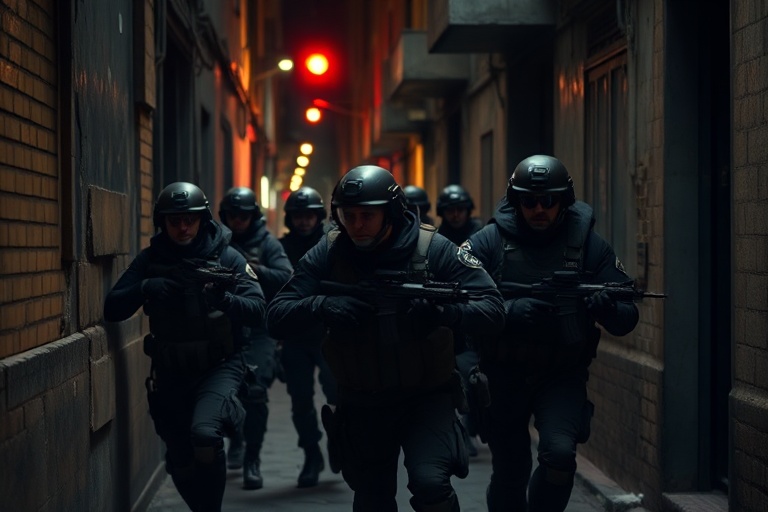
When the term “SEAL Team” is mentioned, it immediately evokes images of precision, discipline, and unmatched skill. These elite units, trained to operate in some of the most hostile environments on Earth, represent the pinnacle of military excellence. But beyond their combat prowess, SEAL Teams—particularly the U.S. Navy SEALs—have become symbols of adaptability, innovation, and global influence. Their missions span from counterterrorism and hostage rescue to unconventional warfare and special reconnaissance, often shaping geopolitical outcomes in ways that remain unseen by the public.
The origins of the SEAL Teams trace back to the early 1960s, a period marked by Cold War tensions and the need for specialized military units. Established in 1962 under President John F. Kennedy, the Navy SEALs were designed to conduct operations in maritime, jungle, and urban environments. The name “SEAL” itself is an acronym for SEa, Air, and Land, reflecting their ability to operate across diverse terrains. This versatility has allowed them to remain relevant through decades of shifting military doctrines and emerging global threats.
The Evolution of SEAL Teams: From Founding to Modern Operations
The SEAL Teams were born out of necessity during the Vietnam War, where their predecessors—the Underwater Demolition Teams (UDTs)—proved invaluable in riverine and coastal operations. By the late 1960s, the SEALs had expanded their role to include direct action missions, reconnaissance, and psychological operations. Their training, known as Basic Underwater Demolition/SEAL (BUD/S), is among the most rigorous in the world, with attrition rates often exceeding 70%. Candidates endure six months of grueling physical and mental challenges, including Hell Week, a five-and-a-half-day stretch with only four hours of sleep.
The post-Vietnam era saw the SEALs refine their tactics, focusing on counterterrorism and hostage rescue. The 1980s and 1990s marked a shift toward precision operations, exemplified by missions like the 1989 invasion of Panama and the 1993 Battle of Mogadishu. However, it was the September 11 attacks in 2001 that redefined their role. The subsequent War on Terror saw SEAL Teams deployed in Afghanistan, Iraq, and other hotspots, often working alongside allied special forces to dismantle terrorist networks.
Today, the SEAL Teams are organized into eight active-duty groups, each specializing in different operational domains. SEAL Team 6, officially known as the Naval Special Warfare Development Group (DEVGRU), is perhaps the most famous, renowned for high-profile missions like the raid that killed Osama bin Laden in 2011. Meanwhile, SEAL Teams 1 through 7 are deployed globally, conducting training exercises and operations in partnership with allied nations. Their training pipeline has also evolved, incorporating lessons from recent conflicts and emerging technologies such as drones and cyber warfare.
A Day in the Life: Training and Preparation for SEAL Operators
The life of a SEAL operator is one of relentless preparation. Training begins at the Naval Special Warfare Preparatory School, where candidates are evaluated on their physical and mental resilience. Those who pass move on to BUD/S, where they learn advanced swimming, diving, land navigation, and small-unit tactics. The program is designed to push candidates to their limits, testing their ability to perform under extreme stress.
Upon graduating BUD/S, SEALs undergo SEAL Qualification Training (SQT), which includes advanced weapons training, demolitions, and mission planning. This phase can last up to 36 weeks, depending on the trainee’s performance. Once qualified, operators are assigned to a SEAL Team and continue training in their specific role, whether as a sniper, communicator, medic, or breacher. Even after assignment, SEALs participate in continuous training exercises, often deploying to remote locations for months at a time.
One of the most critical aspects of SEAL training is the emphasis on teamwork. SEALs operate in small units, often consisting of four to six operators, where trust and cohesion are paramount. This is reinforced through team-building exercises, live-fire drills, and scenario-based training that simulates real-world missions. The goal is to create operators who can think critically, adapt quickly, and rely on their teammates in high-stakes situations.
SEAL Teams in Action: Notable Missions and Their Lasting Impact
The SEAL Teams have been involved in some of the most consequential military operations of the past six decades. One of their earliest successes was Operation Just Cause in Panama in 1989, where SEALs played a key role in capturing dictator Manuel Noriega. The mission demonstrated the SEALs’ ability to conduct rapid, precision strikes in urban environments, a capability that would become a hallmark of their operations.
The 1990s saw the SEALs expand their role in counterterrorism, culminating in their involvement in Somalia during Operation Gothic Serpent. While the mission, later depicted in the film Black Hawk Down, ended in heavy casualties, it provided valuable lessons that shaped future SEAL tactics. The SEALs’ ability to adapt and refine their strategies was evident in the 2000s, particularly during the hunt for high-value targets in Iraq and Afghanistan.
Perhaps the most iconic SEAL mission is the raid on Osama bin Laden’s compound in Abbottabad, Pakistan, in 2011. Codenamed Operation Neptune Spear, the mission involved SEAL Team 6 operators infiltrating the compound via helicopter, neutralizing bin Laden, and extracting critical intelligence. The operation, conducted with minimal collateral damage, showcased the SEALs’ unparalleled precision and stealth capabilities. It also highlighted their role as instruments of national policy, capable of achieving strategic objectives with surgical precision.
Beyond combat operations, SEAL Teams have also been instrumental in humanitarian missions. During the 2004 Indian Ocean tsunami, SEALs were among the first responders, conducting search-and-rescue operations in Indonesia and Thailand. Their ability to operate in extreme conditions and coordinate with international partners underscores their versatility and commitment to service beyond the battlefield.
The Global Reach of SEAL Teams: Partnerships and Influence
The SEAL Teams’ influence extends far beyond the United States. Through programs like the International Maritime Security Construct and joint exercises with allied nations, SEALs work closely with military forces from Europe, Asia, and the Middle East. These partnerships are designed to enhance interoperability, share best practices, and counter shared threats such as terrorism and piracy.
One notable example is the collaboration between U.S. SEALs and Norwegian special forces during the 2018 Trident Juncture exercise, NATO’s largest since the Cold War. The exercise, held in Norway, simulated a large-scale conflict in the Arctic, testing the SEALs’ ability to operate in extreme cold-weather conditions. Such exercises not only strengthen military alliances but also provide SEALs with opportunities to train in diverse environments.
The SEAL Teams also play a critical role in training foreign military units through the Naval Small Craft Instruction and Technical Training School (NAVSCIATTS). Located in Florida, this facility provides specialized instruction to allied special operations forces, equipping them with the skills needed to counter asymmetric threats. Graduates of the program often return to their home countries and apply their training in counterterrorism and counter-narcotics operations.
The global reach of the SEAL Teams is also evident in their involvement in counter-piracy operations off the coast of Somalia. Since the early 2000s, SEALs have been deployed aboard naval vessels to conduct interdiction missions, rescuing hostages and disrupting pirate networks. These operations highlight the SEALs’ ability to project power in maritime environments, a core competency since their inception.
The Future of SEAL Teams: Adapting to New Challenges
As global threats evolve, so too must the SEAL Teams. The rise of cyber warfare, artificial intelligence, and unmanned systems presents new challenges that require innovative solutions. The SEALs are increasingly integrating technology into their operations, from using drones for reconnaissance to employing advanced communication systems for real-time coordination.
One area of focus is the development of the SEAL Operator Designator (SOD) program, which aims to streamline the selection and training process for new candidates. By leveraging data analytics and performance metrics, the Navy hopes to identify individuals with the highest potential for success in the SEAL Teams. This approach reflects a broader trend in military recruitment, where technology is used to enhance human performance.
The SEAL Teams are also expanding their role in space and cyber domains. While still in the early stages, there is growing recognition that future conflicts may extend beyond traditional battlefields. SEALs are being trained to operate in these new domains, ensuring that they remain at the forefront of military innovation. This adaptability is crucial for maintaining the U.S. military’s edge in an increasingly complex security environment.
Another emerging challenge is the proliferation of drones and unmanned aerial systems, which have become tools for both state and non-state actors. The SEAL Teams are investing in counter-drone technologies, including electronic warfare and kinetic solutions, to neutralize these threats. Their ability to stay ahead of technological curve will be a key determinant of their effectiveness in future conflicts.
Conclusion: The Enduring Legacy of SEAL Teams
The SEAL Teams represent the best of what military organizations can achieve: a blend of elite skill, unwavering discipline, and adaptability. From their humble beginnings in the 1960s to their current role as global force multipliers, SEALs have consistently demonstrated their ability to shape outcomes in ways that are often unseen but profoundly impactful. Their missions are not just about combat; they are about deterrence, humanitarian aid, and building partnerships that strengthen global security.
As the world continues to change, the SEAL Teams will undoubtedly face new challenges. Yet, their core values—loyalty, courage, and perseverance—remain unchanged. These values, combined with their relentless pursuit of excellence, ensure that the SEAL Teams will continue to be a cornerstone of military readiness and global stability. For those who aspire to join their ranks, the path is arduous, but the reward is the opportunity to serve at the highest level of military excellence.
To learn more about the history and training of special operations forces, visit our History section. For insights into modern military technology and its impact on warfare, explore our
Similar Posts
kwqc weather
Iowa’s Quad Cities region, served by KWQC-TV, has long relied on local meteorologists to interpret weather patterns that directly impact daily life. From historic floods to sudden temperature swings, the area’s climate has become increasingly unpredictable in recent decades. Understanding these shifts isn’t just about planning for the weekend—it’s about preparing for a future where…
ben ray slam dunk festival
The Ben Ray Slam Dunk Festival has carved out a unique niche in the world of streetball and urban basketball culture. Unlike traditional dunk contests that follow rigid rules, this festival thrives on spontaneity, community, and unscripted creativity. Held annually in various cities across the United States, the event brings together amateur players, professional athletes,…
andrew lewin
By Jane Carter | Published November 15, 2023 Andrew Lewin isn’t just another voice in the crowded field of environmental advocacy. As the host of the Podcasts category at Dave’s Locker, he has carved out a distinct niche by merging rigorous scientific discussion with accessible storytelling. His work focuses on marine conservation, climate change, and…
magic johnson karen bass endorsement
Magic Johnson’s Endorsement of Karen Bass: A Strategic Political Move Magic Johnson’s endorsement of Los Angeles mayoral candidate Karen Bass has sent ripples through California politics. The basketball legend and business mogul announced his support for Bass in a statement released on Tuesday, emphasizing her leadership during a critical moment for the city. Johnson, a…
luckie georgia
Luckie Georgia: The Viral Sensation That Has the World Hooked In the vast, chaotic landscape of the internet, trends come and go faster than a TikTok dance challenge. But every so often, something truly special emerges, capturing the collective imagination and spreading like wildfire across the globe. Enter Luckie Georgia, the enigmatic, meme-worthy figure who…
bobby tambling
By [Your Name] | Published on May 20, 2024 Bobby Tambling’s name resonates with anyone familiar with Chelsea Football Club’s rich history. As a player, he embodied the grit and determination that defined the club during the 1960s and early 1970s. His legacy extends far beyond the pitch, influencing generations of players and shaping Chelsea’s…