The Boys S5E7 Review: A Shocking Turn in Power and Corruption
Season 5 of The Boys has consistently delivered sharp social commentary wrapped in chaotic action, and Episode 7 is no exception. The episode, titled “The Wagon”, strips away the show’s usual layers of irony to reveal raw, unfiltered consequences of power and corruption. What began as a darkly comedic critique of superheroes has evolved into a brutal examination of systemic failure.
This installment forces characters—and viewers—to confront uncomfortable truths. The balance between satire and tragedy teeters precariously, culminating in moments that feel less like television and more like a cautionary tale. The episode doesn’t just advance the plot; it reshapes the moral landscape of the series.
The Fall of a Titan: Homelander’s Descent Into the Abyss
Homelander’s arc in this episode is one of the most disturbing portrayals of a hero’s collapse in modern television. Once a symbol of American invincibility, he is now a hollow shell of rage and paranoia, clinging to delusions of control. The infamous “Wagon” scene—where he forces a group of civilians into a deadly situation—is not just shocking for its violence, but for its psychological weight.
What makes this moment so potent is its realism. Homelander isn’t defeated by a superhero or a bomb. He’s undone by his own inability to accept accountability. The episode frames his behavior as a microcosm of authoritarian decay: the more he demands loyalty, the more he isolates himself, until even his inner circle begins to fracture.
His confrontation with Stormfront’s lingering influence—through flashbacks and hallucinations—suggests a deeper rot. Homelander’s villainy isn’t born from one traumatic event. It’s the result of years of unchecked power, manipulation, and the absence of consequences.
Butcher’s Gambit: Desperation Meets Moral Collapse
Hughie Campbell’s journey in this season has been one of reluctant leadership, but Episode 7 pushes him into morally ambiguous territory. His decision to use compound V to enhance himself is a turning point not just for his character, but for the show’s thematic core.
Hughie has always operated in the shadows of the morally upright, but necessity has blurred his lines. The compound V upgrade isn’t just a power boost—it’s a surrender to the very forces he’s been fighting. This moment echoes classic tragic heroes: the more he tries to do good, the more he becomes what he hates.
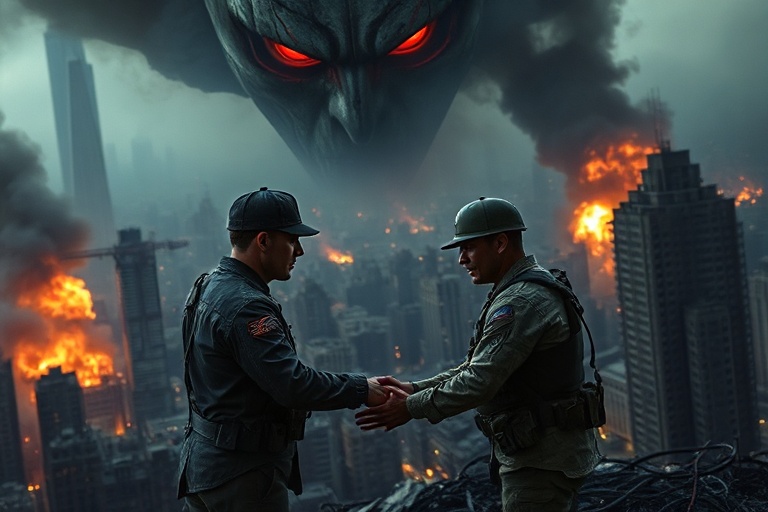
His relationship with Soldier Boy takes on new dimensions in this episode. Soldier Boy, a relic of a bygone era of unquestioned heroism, represents everything Hughie has rejected. Yet, in their tense standoff, there’s an eerie recognition. Both men are products of systems that reward violence and punish vulnerability.
Stormfront’s Shadow: The Ghost of a Villain
Stormfront may be gone, but her influence looms large over Episode 7. Her ideology of “cleansing” the world of the weak isn’t just a backstory—it’s a virus that has infected Homelander and, subtly, even Butcher. The episode uses audio clips and visual callbacks to reinforce this theme, making her absence more haunting than her presence ever was.
What’s chilling is how her rhetoric has seeped into the dialogue of the Supes. Terms like “purity” and “natural order” are now casually tossed around by characters like Soldier Boy, suggesting that fascist thinking has become normalized in this world. The show isn’t warning about a distant dystopia—it’s chronicling how easily democracy erodes under the banner of strength.
Key Moments and Their Broader Implications
The impact of Episode 7 isn’t just in its individual scenes, but in how they interconnect to expose systemic rot. Here are the most significant developments:
- The Wagon Incident: Homelander’s most public act of tyranny yet. This isn’t just violence—it’s a statement. He’s no longer hiding his brutality. He’s embracing it as governance.
- Hughie’s Compound V Injection: A desperate act that blurs the line between hero and monster. It signals that the resistance is losing its moral high ground.
- Soldier Boy’s Return: His presence recontextualizes the entire conflict. He’s not just a villain—he’s a relic of an older, more brutal era of heroism that never truly ended.
- Madelyn Stillwell’s Legacy: Her recorded messages and influence persist, showing how systemic corruption outlives its architects.
These moments aren’t isolated. They form a pattern: power corrupts, resistance becomes complicit, and the cycle of violence continues unabated. The show’s genius lies in making this feel inevitable, yet still tragic.
What This Means for the Season’s Endgame
With only a few episodes left, the stage is set for a collision between forces that have been building for years. Homelander’s descent suggests he may not survive the season—at least not in any recognizable form. His arc is nearing its end, and the show seems intent on delivering a final verdict on the superhero myth.
Meanwhile, Hughie’s transformation raises the stakes for the resistance. If the leader of The Boys becomes as morally compromised as the Supes, what does that say about the possibility of change? The episode implies that systemic corruption is so entrenched that even the rebels risk becoming oppressors.
Soldier Boy’s role remains ambiguous. Is he a catalyst for chaos, or does he represent an older form of order that must be dismantled? His dynamic with Butcher could define the season’s climax, especially as Butcher’s own methods grow increasingly ruthless.
The final confrontation isn’t just about who wins—it’s about whether anyone can escape the cycle of violence that defines this world.
Why This Episode Matters Beyond the Screen
The Boys has always been more than a superhero parody. It’s a mirror held up to American culture, reflecting our obsession with power, celebrity, and the erosion of accountability. Episode 7 sharpens that reflection, making it impossible to look away.
In an era where real-world figures increasingly blur the line between hero and villain, the show’s narrative feels less like fiction and more like prophecy. The Supes aren’t just characters—they’re archetypes of unchecked authority, and Homelander’s descent mirrors the fragility of democratic institutions under pressure.
This season also reflects a cultural moment where trust in institutions—government, media, corporations—is at an all-time low. The Boys doesn’t just critique superheroes; it critiques the entire idea of saviors, whether they wear capes or suits.
The episode’s most haunting line comes when a civilian, pleading for help, is ignored by both the Supes and the authorities. That moment encapsulates the show’s core message: in a world obsessed with power, the powerless are invisible until they’re crushed.
As the season hurtles toward its climax, one thing is clear: The Boys isn’t just telling a story. It’s issuing a warning.
Final Thoughts: Where Do We Go From Here?
Season 5, Episode 7 is a masterclass in tonal control. It balances brutality with pathos, satire with sincerity, and spectacle with substance. The episode’s greatest achievement is making its audience care about characters who are, by any standard, irredeemable.
But the real question isn’t what happens to these characters—it’s what happens to us. As viewers, we’re complicit in their consumption. We cheer, we recoil, we debate. But do we ever stop to ask: What are we normalizing?
The Boys doesn’t offer answers. It offers consequences. And in a world where power goes unchecked, consequences are all that remain.
For more on the cultural impact of The Boys, explore our Entertainment and News sections. Stay tuned for deeper analysis as the season reaches its climax.