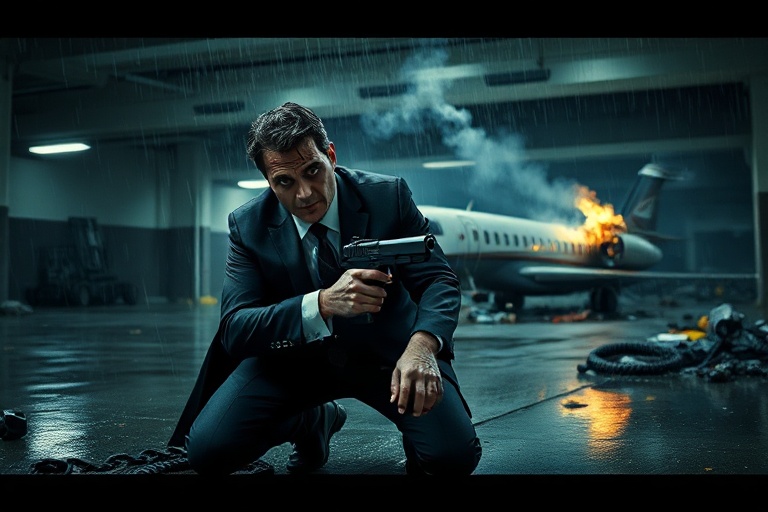
The Boys Season 5 Episode 7: A Global Critique of Power and Corruption
The Boys Season 5 Episode 7: A Global Perspective on Power, Corruption, and Resistance
Episode 7 of The Boys Season 5 delivers a sharp critique of unchecked power, weaving global themes of corruption and resistance into its signature blend of dark humor and visceral action. As the season builds toward its climax, this episode amplifies the show’s signature style—blending superhero satire with real-world parallels that resonate far beyond the screen. From corporate oligarchies to political manipulation, the episode reflects anxieties that transcend borders, making it as much a commentary on global systems as it is a gripping television narrative.
The episode’s opening scene sets the tone immediately, introducing a new player in the power struggle: a shadowy international conglomerate quietly acquiring assets across multiple continents. This isn’t just about Vought anymore—it’s about the consolidation of influence in an era where media, military, and corporate interests are indistinguishable. The show’s creators, Eric Kripke and Evan Goldberg, continue to push boundaries by framing these themes within a superhero framework, forcing audiences to confront uncomfortable truths about authority and accountability.
The Corporate Takeover: A Global Phenomenon
One of the most striking elements of this episode is its portrayal of corporate power as a transnational force. The conglomerate, Omni-Corp International, isn’t just a fictional villain—it mirrors real-world entities like BlackRock, Lockheed Martin, and Meta, which operate with impunity across continents. The episode’s depiction of Omni-Corp’s acquisitions in Africa, Southeast Asia, and Latin America underscores how economic colonization remains a modern reality.
This isn’t just speculative fiction. In many parts of the world, multinational corporations wield more influence than governments. From mining operations in the Congo to tech monopolies in India, these entities shape policies, exploit resources, and suppress dissent—often with minimal oversight. The Boys exaggerates these dynamics for dramatic effect, but the core critique remains grounded in reality. The show’s writers use hyperbole to expose how easily power can be centralized, and how difficult it is to challenge it.
What makes this episode particularly compelling is its focus on the human cost of corporate expansion. The episode includes a harrowing subplot involving a displaced community in Indonesia, where Omni-Corp’s operations have poisoned local water supplies. This storyline isn’t just background noise—it’s a direct indictment of how profit-driven policies devastate lives in the Global South. While the show’s primary setting remains the U.S., its global lens ensures that the conversation about power isn’t limited to one nation’s problems.
The Resistance Takes Shape
Amidst the corporate onslaught, the episode introduces a fledgling resistance movement that could shift the balance of power. Led by a former Vought scientist and a disillusioned Homelander ally, this group represents a rare glimmer of hope in the show’s dystopian landscape. Their formation isn’t just a plot device—it’s a reflection of real-world movements that emerge in response to systemic oppression. Whether it’s labor strikes in South Korea, anti-austerity protests in Europe, or indigenous land defenders in the Amazon, resistance often begins as a scattered, decentralized force before coalescing into something formidable.
The episode’s depiction of this resistance is nuanced. Unlike typical superhero narratives where heroes are clearly defined and morally unambiguous, The Boys presents its rebels as flawed, pragmatic, and sometimes desperate. This approach mirrors global activism, where alliances are often temporary, strategies are improvised, and outcomes are uncertain. The show’s willingness to embrace this ambiguity adds depth to its storytelling and makes the resistance feel more authentic.
One particularly memorable scene involves the group hacking into Omni-Corp’s communications, revealing internal documents that implicate executives in war crimes. This moment parallels real-world whistleblowing, from Edward Snowden’s NSA leaks to the Panama Papers, which exposed the shadowy dealings of the global elite. The episode’s portrayal of information as a weapon underscores a critical truth: in the digital age, transparency is one of the few tools available to the powerless.
Homelander’s Descent: A Mirror to Authoritarian Leaders
No discussion of this episode would be complete without addressing Homelander’s increasingly erratic behavior. His descent into outright tyranny isn’t just a character arc—it’s a commentary on the seductive allure of absolute power. Homelander’s transformation into a full-blown dictator figure reflects a global trend: the rise of strongmen who exploit crises to consolidate authority. From Viktor Orbán in Hungary to Narendra Modi in India, leaders who once promised stability often become the very forces of oppression they claimed to fight.
The episode’s most chilling moment comes when Homelander publicly executes a journalist who dared to question his narrative. This scene is a direct parallel to how authoritarian regimes silence dissent, whether through legal intimidation, state-sponsored violence, or digital censorship. The show’s creators have spoken openly about drawing inspiration from real-world dictatorships, and the parallels are impossible to ignore. Homelander isn’t just a villain—he’s a warning.
What makes this storyline so effective is its psychological depth. Homelander isn’t a mustache-twirling caricature; he’s a product of trauma and privilege, shaped by a system that rewarded his worst instincts. His fall from grace serves as a case study in how power corrupts, and how quickly the veneer of heroism can peel away to reveal something far more monstrous. This isn’t just a superhero story—it’s a psychological thriller with real-world implications.
Cultural Resonance and Global Audience Reception
The Boys has always thrived on its ability to blend American-centric storytelling with universal themes. Season 5, Episode 7 leans into this approach by making its critique of power feel globally relevant. The episode’s themes resonate particularly strongly in regions where corporate exploitation and authoritarianism are live issues. In Latin America, for instance, the show’s portrayal of corporate-backed coups feels eerily familiar. In Southeast Asia, the depiction of environmental destruction aligns with ongoing struggles against mining and deforestation.
Critics have noted that The Boys has found an especially fervent audience in Europe, where audiences are increasingly skeptical of unchecked corporate influence. The show’s satirical take on superhero culture also plays well in markets where American cultural dominance is a point of contention. By framing its critique within a genre traditionally associated with American soft power, The Boys subverts expectations and invites a more critical engagement with its themes.
Social media reactions to this episode reflect its global appeal. Fans in India and Brazil have drawn parallels between Homelander and local political figures, while European viewers have praised the show’s willingness to tackle topics like privatized militaries and media consolidation. The episode’s viral moments—particularly Homelander’s tirade and the resistance’s hacking sequence—have been dissected and shared across language barriers, proving that The Boys has transcended its status as a niche superhero show.
What’s Next: The Stage is Set for a Global Showdown
With just a few episodes remaining in Season 5, the groundwork has been laid for a climactic conflict that feels as much like a geopolitical thriller as it does a superhero saga. The introduction of Omni-Corp International as a multi-national antagonist raises the stakes significantly. No longer is this a fight confined to the U.S.—it’s a battle with implications for the entire world.
The resistance’s growing influence suggests that change is possible, but the episode makes it clear that the fight will be brutal. The show’s creators have hinted that the final arc will explore themes of revolution and systemic collapse, drawing from historical upheavals like the Arab Spring, the fall of the Soviet Union, and the global financial crisis of 2008. If the past is any indication, these transitions are messy, unpredictable, and often bloody.
For fans of the show, this episode delivers exactly what they’ve come to expect: shocking twists, moral ambiguity, and a healthy dose of dark humor. But for global audiences, it offers something more—a mirror held up to the systems that govern their lives. Whether it’s the concentration of corporate power, the erosion of democratic norms, or the rise of authoritarianism, The Boys continues to find new ways to reflect the anxieties of the modern world.
As the season hurtles toward its conclusion, one thing is certain: the stakes have never been higher, and the fight for power has never felt more urgent. The question isn’t just who will win—it’s whether the world depicted in The Boys will remain a dark fantasy, or if it will become a warning we failed to heed in time.