Tucked in the South Atlantic Ocean, roughly halfway between South Africa and South America, lies Tristan da Cunha. This British Overseas Territory is often called the most remote inhabited archipelago on Earth. With a population of just 246 people, it offers a rare glimpse into life on one of the planet’s most isolated communities.
The islands are part of the British Overseas Territory of Saint Helena, Ascension, and Tristan da Cunha. Yet despite their British affiliation, Tristan da Cunha operates with a high degree of autonomy. Its isolation has shaped a society unlike any other—tight-knit, resilient, and deeply connected to the rhythms of the sea and the volcano that looms over their home.
The Geography and History of Tristan da Cunha
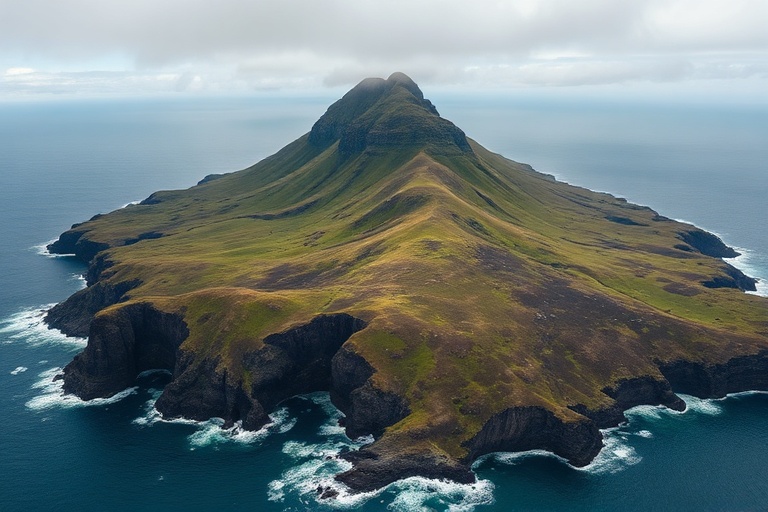
Tristan da Cunha consists of five islands: Tristan, Inaccessible, Nightingale, Gough, and Stoltenhoff. Only Tristan itself is inhabited. The main island, also named Tristan da Cunha, is a volcanic island rising steeply from the ocean floor. Its highest peak, Queen Mary’s Peak, reaches 2,062 meters (6,765 feet) and remains active, last erupting in 1961.
The islands were first discovered in 1506 by Portuguese explorer Tristão da Cunha, though the main island was not landed upon until 1643. For centuries, it served as a navigational landmark for ships rounding the Cape of Good Hope. Its permanent settlement began in 1816 when a British garrison was established to prevent French use of the island during Napoleon’s imprisonment on St. Helena.
After the garrison left in 1817, a small community grew around the settlement founded by William Glass, a Scottish corporal, and his family. Over time, the island became a haven for shipwreck survivors and a base for sealers and whalers. Today, the descendants of those original settlers still live on the island, preserving a unique cultural identity.
Key Facts About Tristan da Cunha
- Population: Approximately 246 people, all living in the settlement of Edinburgh of the Seven Seas.
- Language: English is the official language, with some local dialects influenced by 19th-century English and Scottish settlers.
- Economy: Relies on fishing (especially lobster), farming, and some tourism. There are no airports—access is only by boat.
- Governance: Operates under a local council with a British-appointed administrator. The island has its own constitution.
- Infrastructure: Limited electricity, no roads (only dirt paths), and a single store owned by the island government.
- Communication: Internet access is slow and limited to a single satellite link; mail comes via a ship that arrives eight times a year.
Life on the World’s Most Isolated Island
Every aspect of life on Tristan da Cunha is dictated by its isolation. The community is self-sustaining, with everyone playing a role in daily survival. There are no grocery stores—residents grow their own potatoes, raise sheep and chickens, and fish for lobster, which is exported and forms the backbone of the economy.
The island has one school, one hospital, and a single pub. The Tristan da Cunha Government runs the island’s operations, including the sale of postage stamps—one of the island’s few sources of income. The community holds regular social events, including fishing competitions, football matches, and the annual “Pig Roast,” a tradition that dates back generations.
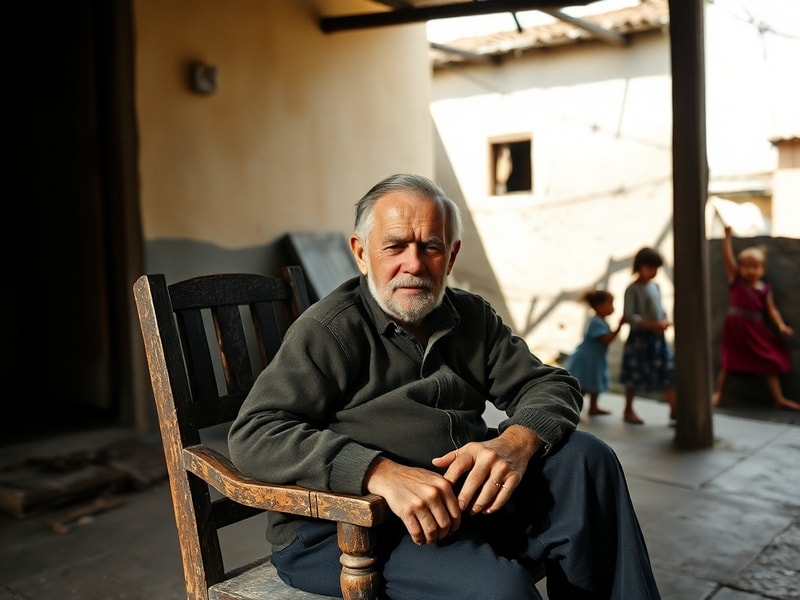
Despite the challenges, residents describe their home with pride. “We are all family here,” said one islander in a 2022 interview. “We depend on each other. If someone is sick, the whole island knows. If there’s a birth, the whole island celebrates.” This sense of communal responsibility is both a necessity and a defining feature of Tristan life.
Challenges and the Future of Tristan da Cunha
The island faces significant challenges. Natural disasters, including volcanic eruptions and severe storms, threaten the community. In 1961, a volcanic eruption forced the entire population to evacuate to England for two years. Though they returned, the memory remains a stark reminder of vulnerability.
Climate change also poses a risk. Rising sea levels and increased storm activity could erode coastal areas, including the only settlement. The island’s isolation makes evacuation difficult, and infrastructure upgrades are costly and logistically complex.
Yet Tristan da Cunha is not without opportunity. The island’s remoteness has preserved its ecosystem, making it a haven for wildlife. Gough Island, part of the territory, is a UNESCO World Heritage Site due to its pristine environment and role as a breeding ground for endangered seabirds like the Tristan albatross.
Ecotourism is slowly growing. A handful of adventurous travelers visit each year, arriving by ship after a six-day voyage from Cape Town. These visitors bring rare income, but the community must carefully balance development with preservation.
Broader Implications: What Tristan da Cunha Teaches Us
Tristan da Cunha offers more than just a travel curiosity—it serves as a case study in resilience, self-governance, and human adaptability. In an era of globalization, where connectivity is often taken for granted, Tristan stands as a counterpoint: a society that thrives not despite its isolation, but because of it.
Its model of communal living, shared responsibility, and environmental stewardship provides lessons for sustainable communities worldwide. The island’s ability to maintain its identity across centuries, despite minimal outside influence, highlights the strength of local culture in the face of global homogenization.
Moreover, Tristan da Cunha raises questions about sovereignty and resilience in extreme environments. As climate change intensifies and sea levels rise, other remote communities may face similar challenges. Tristan’s experience in managing limited resources, adapting to environmental threats, and maintaining social cohesion could offer valuable insights for policymakers and scientists.
Visiting Tristan da Cunha: A Journey to the Edge of the World
Getting to Tristan da Cunha is no small feat. The only regular access is via the RMS St Helena, a cargo and passenger ship that sails from Cape Town eight times a year. The voyage takes six days each way, crossing one of the roughest stretches of ocean in the world—the Southern Ocean.
Tourism is tightly controlled. Visitors must apply in advance, and trips are limited to a few weeks per year to avoid overwhelming the community. Once there, guests are accommodated in guesthouses and treated as temporary members of the community. They are expected to respect local customs, help with chores, and participate in island life.
For those who make the journey, the rewards are profound. To stand on the slopes of Queen Mary’s Peak, to witness the night sky unobstructed by light pollution, and to experience a society built on mutual trust is to encounter a world that feels untouched by modernity. It is a reminder of humanity’s capacity to adapt, survive, and even thrive, in the most unlikely of places.
Tristan da Cunha is not just a destination—it is a testament to the enduring spirit of human connection, even at the edge of the world.
For those interested in exploring more remote or unique destinations, visit Dave’s Locker Travel for curated guides and firsthand accounts of off-the-beaten-path adventures.