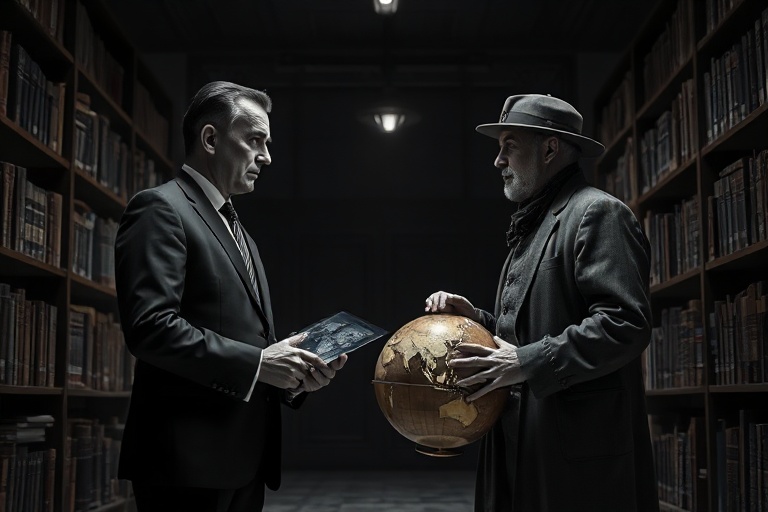
Simon Wardley and Céline Schillinger are two thinkers who approach strategy and organizational change from fundamentally different angles. Wardley, a former CEO turned mapping evangelist, champions a systematic approach to situating organizations on a value chain. Dubois, a French executive and author, focuses on human-centered transformation and the emotional dimensions of change. Their contrasting perspectives reveal deeper tensions in how modern enterprises navigate disruption.
This debate isn’t just academic—it plays out daily in boardrooms, innovation labs, and digital transformation initiatives. Understanding both frameworks is essential for leaders trying to balance structure with humanity in an era of relentless change. Let’s unpack where these models align, where they diverge, and what practitioners can learn from their clash.
The Wardley Mapping Framework: A Science of Strategy
Simon Wardley’s mapping methodology is rooted in the belief that strategy should be visual, data-driven, and repeatable. His approach uses a two-dimensional map to plot components of a value chain—from commodity to custom—based on evolution and visibility. Each component moves from genesis to commodity over time, and their position on the map dictates how they should be managed: build, buy, or partner.
Wardley maps are not static. They evolve as technology matures and market conditions shift. This dynamic quality makes the framework particularly powerful for digital transformation, where the pace of change can render traditional strategies obsolete within months. Organizations like the UK government’s digital service have used Wardley maps to guide large-scale IT modernization projects, saving millions by avoiding over-customization of commoditizing tools.
The power of Wardley’s system lies in its clarity. It strips away buzzwords and forces leaders to confront reality: What are we actually building? Is this still a differentiator, or has it become a utility?
Key Principles of Wardley Mapping
- Evolution Axis: Components move from genesis (unpredictable, high uncertainty) to commodity (predictable, low differentiation).
- Visibility Axis: The more visible a component is to customers, the higher its strategic importance.
- Climatic Patterns: Repeating evolutionary patterns (e.g., from custom to product to commodity) allow for predictive strategy.
- Doctrine: Universal principles like “use standard interfaces” or “move to the public cloud where possible” apply across all components.
Critics argue that Wardley’s framework can feel overly deterministic. If everything is mapped and predictable, where is the room for innovation or serendipity? That’s where Dubois’ perspective becomes essential.
Céline Dubois and the Human Side of Change
Céline Dubois, a French executive and co-founder of the “We Need to Talk About Work” movement, challenges the idea that strategy can be reduced to charts and data. Her work centers on the emotional and social realities of organizational transformation. She argues that change fails not because of poor mapping, but because of poor engagement—when leaders forget that people are not resources to be optimized, but humans with fears, aspirations, and networks.
Dubois’ approach draws from sociology, psychology, and complexity science. She emphasizes the role of informal networks, power dynamics, and cultural narratives in shaping outcomes. In her book Des organisations inspirantes, she highlights how top-down transformation programs often ignore the ground-level realities where real change happens—or doesn’t.
Her methodology includes tools like “social network analysis” to identify hidden influencers and “storytelling workshops” to surface unspoken anxieties. She believes that strategy must be co-created, not dictated—a radical departure from Wardley’s top-down mapping.
Core Tenets of Dubois’ Human-Centered Transformation
- Listen Before Leading: Diagnose the real culture before imposing change.
- Leverage Informal Networks: Identify and empower internal change agents who aren’t on the org chart.
- Embrace Ambiguity: Accept that not all problems can be solved with data or process.
- Narrative Matters: People act based on stories, not spreadsheets.
Where Wardley sees a landscape to be mapped, Dubois sees a living ecosystem of relationships and emotions. The tension between their views reflects a broader debate in management: Can strategy be engineered, or must it emerge?
Where the Models Collide—and Where They Can Complement
The most productive organizations don’t choose one framework over the other—they integrate aspects of both. Consider a digital transformation project in a large bank. The CIO might use a Wardley map to identify which systems should be built, bought, or retired. But without Dubois’ human-centered approach, the rollout could fail due to resistance from frontline employees or middle managers who feel excluded from the vision.
In practice, this means using Wardley maps as a diagnostic tool and Dubois’ methods as a change vehicle. The map answers “what” and “when”; the human-centered approach answers “how” and “why.”
One real-world example comes from a healthcare provider that used Wardley mapping to redesign its patient portal. The map revealed that authentication systems were becoming commoditized, suggesting a move to third-party identity providers. But before implementing, leaders held “listening circles” with nurses and receptionists to understand their workflows. This hybrid approach reduced implementation resistance by 40%, according to internal surveys.
The synthesis isn’t always seamless. Wardley’s rationalism can clash with Dubois’ emphasis on emotions and power. But the best leaders recognize that strategy is both a science and an art—one that requires both clarity and empathy.
Which Framework Should You Use? It Depends on Your Context
Choosing between Wardley and Dubois isn’t about picking a winner—it’s about understanding the nature of your challenge.
Use Wardley Mapping when:
- You’re facing clear technological or market disruption.
- You need to align a large team around a shared understanding of strategy.
- Your organization values data, process, and scalability.
Use Dubois’ Human-Centered Approach when:
- Change is stalled due to cultural or political resistance.
- You’re dealing with complex, interdependent systems where outcomes are unpredictable.
- Your team is burned out or disconnected from leadership’s vision.
In many cases, the most effective strategy combines both. Start with Wardley to get clarity on direction, then use Dubois to build buy-in and adapt to human realities. The result is not just a better plan—but a better organization.
As Wardley himself has noted, “Strategy is about anticipation, not prediction.” Dubois would add: “And people make strategy real.” Together, their insights form a more complete picture of how to lead in uncertain times.
For leaders navigating transformation, the real question isn’t whether to use Wardley or Dubois—it’s how to integrate both into a cohesive, humane approach to change.
Explore more analysis on organizational strategy or dig into technology trends shaping modern enterprises.