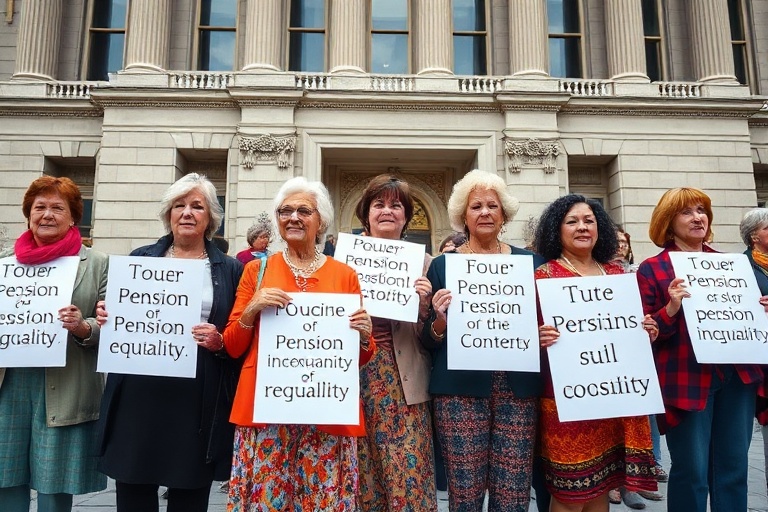
Women Against State Pension Inequality: The Fight for Fair Retirement
For decades, the state pension system in the United Kingdom has disproportionately affected women, leaving many facing financial insecurity in retirement. The issue stems from a combination of historical employment gaps, lower earnings, and policy decisions that have failed to account for the realities of women’s working lives. While reforms have been introduced, campaigners argue they do not go far enough to correct past injustices.
The disparity is stark. According to the Department for Work and Pensions, women receive an average state pension of £183.85 per week, compared to £218.18 for men. This gap reflects broader economic inequalities, including the gender pay gap, career breaks for caregiving, and part-time work—all of which reduce pension contributions over time.
The Roots of the Problem: Policy and Precedent
One of the most contentious issues is the increase in the state pension age, which has disproportionately impacted women born in the 1950s. The Pensions Act 1995 accelerated the equalization of the state pension age from 60 for women and 65 for men to 65 for both. Subsequent legislation further raised the age to 66, with plans to reach 67 by 2028.
Critics argue that this change was implemented without adequate notice or support for women who had planned their retirement based on the original rules. A 2020 report by the House of Commons Work and Pensions Committee highlighted that many women affected by the changes had little time to adjust their financial plans, leading to financial hardship.
The issue gained significant traction in 2015 when the Women Against State Pension Inequality (WASPI) campaign emerged. WASPI has since become a vocal advocate for women born in the 1950s who argue that the rapid changes to the pension age left them without sufficient time to prepare.
Key Arguments of the WASPI Campaign
- Lack of fair notice: Many women received little to no warning of the changes, with some only learning about the new rules a few years before their intended retirement date.
- Financial disadvantage: Women in this demographic often relied on state pensions as their primary income source, leaving them with fewer options to supplement their retirement funds.
- Career and caregiving penalties: Women are more likely to have taken career breaks or worked part-time due to caregiving responsibilities, reducing their National Insurance contributions and, consequently, their pension entitlements.
- Inadequate transitional support: Campaigners argue that the government has failed to provide sufficient financial assistance or phased adjustments to mitigate the impact of the changes.
The Broader Implications of Pension Inequality
The consequences of state pension inequality extend beyond individual financial struggles. They highlight systemic issues in how retirement policies are designed and implemented. Pension systems, by their nature, are intended to provide security in old age, but when they fail to account for the realities of women’s lives, they perpetuate existing inequalities.
One of the most concerning aspects is the intergenerational impact. Women who retire with inadequate pensions may rely on younger family members for support, placing additional strain on already stretched resources. This can also discourage younger women from saving for retirement, perpetuating a cycle of financial insecurity.
Moreover, the issue raises broader questions about gender and economic policy. Pension systems are often designed based on traditional employment patterns, which assume continuous, full-time work—a model that does not reflect the realities of many women’s careers. This structural bias underscores the need for policy reforms that are more inclusive and adaptive.
Comparative Perspectives: Pension Inequality Beyond the UK
While the UK’s state pension inequality has gained significant attention, it is not unique. Many countries grapple with similar issues, where pension systems are built on outdated assumptions about work and caregiving. For example:
- Australia: The age pension age for women has been gradually increasing from 60 to 65, mirroring the UK’s reforms. However, advocacy groups have raised concerns about the impact on low-income women and those in precarious employment.
- Canada: The Canada Pension Plan (CPP) has faced criticism for not adequately addressing the gender pension gap, particularly for women who take career breaks or work part-time.
- Germany: The German pension system, which is based on lifetime earnings, disproportionately disadvantages women who have taken time out of the workforce for caregiving.
These examples demonstrate that pension inequality is a global issue, requiring systemic solutions rather than isolated policy tweaks.
What’s Being Done—and What More Can Be Done?
In response to the WASPI campaign and growing public pressure, the UK government has taken some steps to address the issue. In 2021, the Department for Work and Pensions announced a £1.1 billion support package for women born in the 1950s. This included transitional arrangements and additional financial assistance, though critics argue it falls short of fully compensating for the losses incurred.
Campaigners continue to push for more comprehensive solutions, including:
- Retrospective compensation: Calls for a review of pension payments made to women affected by the state pension age changes, with proposals for lump-sum payments or increased weekly allowances.
- Flexible retirement options: Expanding opportunities for partial retirement or phased exits from the workforce, allowing women to supplement their income while easing into retirement.
- Caregiving credits: Increased recognition of unpaid caregiving work in pension calculations, ensuring that women who take career breaks are not penalized in retirement.
- Financial education and support: Providing better guidance and resources for women to navigate pension systems and plan for retirement, particularly those with irregular employment histories.
The debate also extends to the role of private pensions and workplace schemes. While these can provide additional security, they are not accessible to everyone, particularly women in low-paid or part-time roles. Strengthening these systems and ensuring they are more inclusive is critical to addressing the broader issue of pension inequality.
A Call for Systemic Change
The fight for fair state pensions is not just about financial compensation—it is about justice. Women who worked hard, paid their taxes, and contributed to society deserve to retire with dignity. The current system has failed to deliver that promise for far too many.
As the population ages and the cost of living rises, the urgency of this issue grows. Policymakers must recognize that pension systems are not just financial mechanisms; they are social contracts that reflect our values and priorities. Addressing pension inequality requires a holistic approach that considers gender, economic security, and intergenerational fairness.
For women affected by state pension inequality, the fight continues. Campaigns like WASPI have brought much-needed attention to the issue, but lasting change will require sustained advocacy and political will. The goal is clear: a pension system that works for everyone, regardless of gender or employment history.
Until then, the struggle for fair retirement remains a defining challenge of our time.
For more insights into financial and social justice issues, explore our News and Analysis sections.