Andrew McCutchen: How a Pirate Legend Rewrote Pittsburgh Baseball
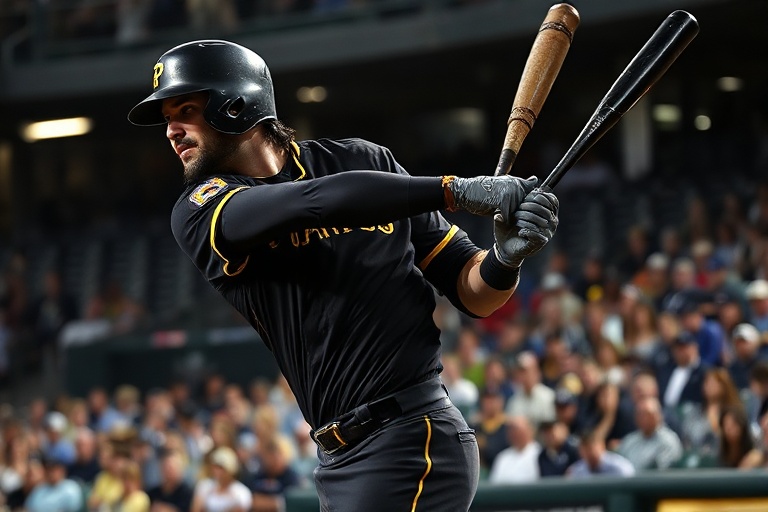
Andrew McCutchen’s name echoes through Pittsburgh’s history like the crack of a bat in the late afternoon sun at PNC Park. For a decade, he wasn’t just a baseball player—he was the heartbeat of the Pittsburgh Pirates, a franchise that had long struggled to recapture its glory days. McCutchen didn’t just play in Pittsburgh; he restored pride to a city that loves its underdogs, transforming a team mired in losing seasons into one of baseball’s most entertaining squads.
Drafted 11th overall in 2005, McCutchen arrived in the majors in 2009 after a rapid rise through the minors. The Pirates were in the midst of a 20-year playoff drought, and expectations were modest at best. But from the moment he stepped onto the field, it was clear Pittsburgh had something special. His blend of power, speed, and infectious enthusiasm redefined what it meant to be a Pirate.
The Rise of a Star in Pittsburgh
McCutchen’s early years in Pittsburgh were marked by steady improvement. In 2010, he batted .286 with 16 home runs and 56 RBIs, earning his first All-Star selection. But it was 2011 that announced his arrival. That season, he slashed .295/.386/.509 with 23 homers and 89 RBIs, finishing fourth in National League MVP voting.
The 2012 season was his breakout year. McCutchen led the NL in hits (194), runs (107), and OPS (.972), while batting .327 with 31 homers and 96 RBIs. He won the NL MVP award, becoming the first Pirate to earn the honor since Barry Bonds in 1992. His performance wasn’t just statistically impressive—it was electrifying. Fans packed PNC Park night after night, chanting his name as he danced around the bases after home runs, his infectious grin never far from his face.
McCutchen wasn’t just a great player; he was a cultural icon in Pittsburgh. During his prime, he became a symbol of the city’s resilience. Pittsburgh had long been defined by its blue-collar work ethic, and McCutchen embodied that spirit. He played with joy, even as the Pirates struggled to sustain success beyond the regular season. His leadership kept the franchise relevant during a difficult era, and his ability to connect with fans transcended the game.
From Playoff Heartbreak to Free Agency
The Pirates finally ended their playoff drought in 2013, ending a 21-year streak. McCutchen was at the forefront, leading Pittsburgh to three straight playoff appearances from 2013 to 2015. Though the Pirates fell short each time, McCutchen’s presence gave fans hope that sustained success was possible.
In 2013, he batted .317 with 28 homers and 84 RBIs, finishing second in MVP voting. The following year, he hit .314 with 25 homers and 89 RBIs, helping Pittsburgh win the NL Wild Card. The Pirates lost to the eventual World Series champion San Francisco Giants in the Division Series, but McCutchen’s performance—including a go-ahead single in Game 1—cemented his legacy as one of the game’s most clutch players.
By 2015, McCutchen was entering his prime years. He batted .292 with 23 homers and 96 RBIs, but the Pirates missed the playoffs. It was a turning point. The team’s core began to age, and the front office faced tough decisions about retooling. In 2018, after nine seasons in Pittsburgh, McCutchen left as a free agent, signing with the San Francisco Giants. The move was emotional for fans, who had watched him grow from a promising rookie into a franchise legend.
A Legacy Beyond the Box Score
McCutchen’s impact extended far beyond his offensive numbers. He was a five-time All-Star, four-time Silver Slugger winner, and the 2012 NL MVP. His career slash line of .288/.373/.479 and 281 home runs speak to his consistency. But his influence was measured just as much in intangibles.
He was a vocal leader in the clubhouse, known for his ability to lift teammates during tough stretches. His community involvement, including his “Cutch’s Crew” foundation, which supports underserved youth, solidified his reputation as a role model. In Pittsburgh, he wasn’t just a baseball player—he was a pillar of the community.
His return to Pittsburgh in 2019 as a member of the rival Milwaukee Brewers was emotional. Fans gave him a standing ovation, a testament to the bond he had forged with the city. Though his time in Pittsburgh had ended, his legacy was secure. He had given the Pirates something rare: a golden era of baseball, even if it didn’t culminate in a championship.
The Modern Game and McCutchen’s Influence
Even after leaving Pittsburgh, McCutchen remained a respected figure in baseball. He played for the Giants, Phillies, and Brewers, adapting his game as he aged. In 2020, he signed with the Brewers and continued to produce, batting .255 with 16 homers in a shortened season. His ability to adjust, whether by cutting down on strikeouts or focusing on contact hitting, showed his professionalism.
In 2023, McCutchen announced his retirement after 15 major league seasons. His final career numbers—.288 batting average, 281 homers, 1,097 RBIs, and 201 stolen bases—paint the picture of a complete player. But his true legacy lies in how he played the game. He brought energy to every at-bat, every defensive play, and every interaction with fans.
For younger players, McCutchen’s career offers a blueprint for longevity and leadership. His ability to remain relevant for over a decade, even as the game evolved, speaks to his adaptability. Modern baseball often prioritizes analytics and specialization, but McCutchen proved that intangibles—joy, passion, and connection—still matter.
A Pirate Forever
In Pittsburgh, McCutchen’s legacy is immortalized. His number 22 was retired by the Pirates in 2023, joining an elite group of franchise legends. Statues and murals across the city celebrate his contributions, and his name is synonymous with the resurgence of Pirates baseball in the 2010s.
For fans who grew up watching him, McCutchen represents a bridge between eras. He carried on the tradition of Pittsburgh greats like Roberto Clemente and Willie Stargell, while embodying the city’s spirit of perseverance. His story is one of triumph over adversity, not just on the field, but in the hearts of those who cheered for him.
As baseball continues to evolve, players like McCutchen remind us of the human element in the game. He wasn’t just a star—he was a storyteller, a leader, and a symbol of hope. In a sport often defined by statistics and transactions, his legacy is a reminder that greatness is measured in moments, memories, and the connections we forge.
For Pittsburgh, Andrew McCutchen will always be “Cutch”—the player who made the Pirates fun again, who restored pride to a storied franchise, and who left an indelible mark on the city he loved. His journey from a small-town kid in Florida to a franchise icon is a testament to the power of baseball to inspire, unite, and endure.