ascension day
Ascension Day: A Global Tradition with Deep Historical Roots
Ascension Day, observed 40 days after Easter, marks the Christian belief in Jesus Christ’s ascent into heaven. While primarily a religious observance, its cultural and historical significance extends far beyond theological boundaries. From Europe to the Americas, this day takes on different forms—sometimes solemn, sometimes celebratory—reflecting the diverse ways communities integrate faith into their identities.
The date varies each year, falling on a Thursday between late April and early June. This year, Ascension Day will be celebrated on May 9th. For many, it’s a public holiday, while others observe it quietly through prayer or reflection. But how did this observance evolve, and what does it mean in different parts of the world?
The Biblical and Historical Origins of Ascension Day
The roots of Ascension Day trace back to the New Testament, specifically the Gospel of Luke and the Acts of the Apostles. According to scripture, Jesus gathered his disciples on a hill near Jerusalem, blessed them, and then ascended into the sky. This moment is seen as the fulfillment of divine promise—the transition of Jesus from earthly ministry to heavenly authority.
By the 4th century, Christian communities began formalizing the celebration. Early church leaders, including St. Augustine, emphasized the theological importance of the Ascension, linking it to the promise of Christ’s return. Over time, the observance became more structured, with processions, prayers, and liturgical readings becoming standard practice in many denominations.
In medieval Europe, Ascension Day took on additional layers of meaning. Kings and nobles often used the occasion to reinforce their divine right to rule, drawing parallels between earthly authority and Christ’s heavenly sovereignty. This blending of religion and governance left a lasting imprint on European traditions.
Cultural Variations: How Different Countries Observe Ascension Day
While Ascension Day remains a Christian holiday at its core, its expression varies widely across cultures. In some regions, it’s a day of quiet reverence; in others, it’s a vibrant public celebration. Here’s how a few countries mark the occasion:
- Germany: Known as Christi Himmelfahrt, Ascension Day is a public holiday. In some areas, it’s combined with Father’s Day celebrations, where groups of men embark on hiking trips carrying wagons filled with beer and food. This tradition, called Vatertag, has become more secular over time but still ties back to the religious observance.
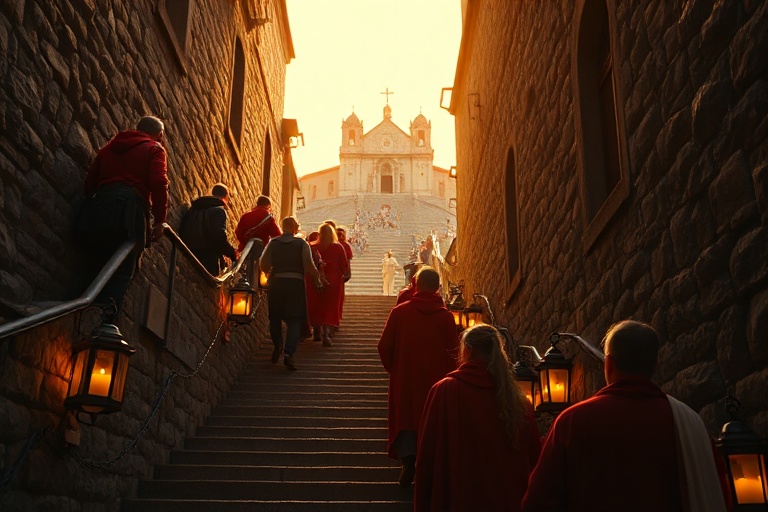
- Netherlands: The Dutch celebrate with outdoor processions and special church services. In Amsterdam, the day often coincides with the start of the city’s cultural festivals, blending religious and civic pride.
- Indonesia: With a significant Christian minority, Ascension Day is observed in churches across the archipelago. In cities like Jakarta and Manado, services are held in both Indonesian and local languages, reflecting the country’s linguistic diversity.
- United States: While not a federal holiday, Ascension Day is marked in many churches, particularly among Protestant and Catholic congregations. Some communities host special concerts or community meals to honor the occasion.
- Ethiopia: The Ethiopian Orthodox Tewahedo Church celebrates Ascension Day with three days of fasting and prayer. The observance is tied to the ancient Ge’ez calendar, making the date slightly different from the Western Christian observance.
These variations highlight how Ascension Day adapts to local customs while retaining its spiritual essence. Whether through pilgrimages, feasts, or quiet reflection, the day serves as a reminder of faith’s enduring presence in daily life.
The Secular and Social Dimensions of Ascension Day
In increasingly secular societies, Ascension Day has taken on new meanings. For some, it’s an opportunity to reconnect with historical traditions, even if they no longer hold religious beliefs. Others see it as a chance to celebrate community, nature, or even local folklore. In Germany, for example, the Vatertag tradition has evolved into a day of camaraderie, often drawing criticism for its association with excessive alcohol consumption but also praised for fostering social bonds.
In parts of Latin America, Ascension Day blends with indigenous traditions. In Mexico, some communities incorporate pre-Hispanic rituals into the celebration, creating a syncretic blend of beliefs. Similarly, in the Philippines, processions feature statues of the Virgin Mary and Jesus, often carried through towns in elaborate floats—a practice that merges Catholic devotion with local artistic expression.
Beyond its religious and cultural dimensions, Ascension Day also intersects with modern societal trends. In recent years, there’s been a growing interest in “heritage tourism,” where travelers seek out historical and religious sites to experience traditions firsthand. Destinations like Jerusalem’s Mount of Olives, traditionally linked to the Ascension, see increased visitation during this period. This trend reflects a broader desire to connect with history in an era of digital disconnection.
For cultural enthusiasts, Ascension Day offers a lens into how faith and tradition shape identity. It’s a day that reminds us that history isn’t static—it’s alive in the rituals we preserve, the stories we tell, and the communities we build.
Why Ascension Day Matters Today
In a world often divided by differences, Ascension Day serves as a unifying symbol for many. It’s a day that transcends denominations, languages, and borders, offering a shared narrative of hope and transcendence. For believers, it’s a reaffirmation of faith; for others, it’s a moment to appreciate the cultural tapestry that defines human experience.
The observance also invites reflection on the role of tradition in modern life. As societies grow more diverse and secular, holidays like Ascension Day challenge us to consider how we preserve meaning in an ever-changing world. Do we cling to rituals out of habit, or do we find new ways to invest them with relevance? The answer may lie in the stories we choose to carry forward.
For those interested in exploring the intersection of faith and culture further, historical analysis provides valuable insights into how traditions evolve. Whether through art, literature, or travel, there’s always more to uncover about the traditions that shape us.
A Final Thought
Ascension Day is more than a date on the calendar. It’s a bridge between the sacred and the secular, the ancient and the modern. As communities around the world mark the occasion in their own ways, the day reminds us that tradition is not a relic of the past—it’s a living, breathing part of who we are. Whether through prayer, feasting, or quiet reflection, Ascension Day invites us to look beyond the ordinary and consider the mysteries that connect us all.