Blockade: How Modern Powers Use Economic and Cyber Siege Tactics
Blockades have long served as a potent instrument of coercion in international relations, yet their use has intensified in recent decades. From ancient naval sieges to modern economic sanctions, blockades remain a favored strategy for nations seeking to exert pressure without direct military confrontation. Their effectiveness lies in their ability to strangle economies, disrupt supply chains, and force concessions through suffocation rather than outright war. Understanding the mechanics and implications of blockades requires examining their historical roots, contemporary applications, and the broader geopolitical shifts they signal.
The Historical Weight of Blockades
Blockades are as old as warfare itself. The ancient Greeks and Romans employed naval blockades to starve out enemy cities, a tactic that proved decisive in conflicts such as the Peloponnesian War. By the 19th century, blockades evolved into a formalized tool of statecraft, codified in international law through declarations like the 1856 Declaration of Paris. The two World Wars saw blockades reach unprecedented scale, with Britain’s naval blockade of Germany during World War I contributing significantly to the Central Powers’ collapse. These historical precedents underscore blockades’ dual nature: they are both weapons of war and instruments of economic pressure, blurring the line between conflict and coercion.
In the Cold War era, blockades took on a new form—economic strangulation. The U.S.-led embargo against Cuba, initiated in 1960, became one of the most enduring blockades of the 20th century, designed to destabilize Fidel Castro’s regime through economic isolation. While the embargo failed to topple the Cuban government, it devastated the island’s economy, displacing generations and reshaping its societal fabric. This demonstrates a critical paradox of blockades: their success is measured not only in immediate concessions but also in the long-term scars they leave on civilian populations.
Modern Blockades: Tools of Economic Warfare
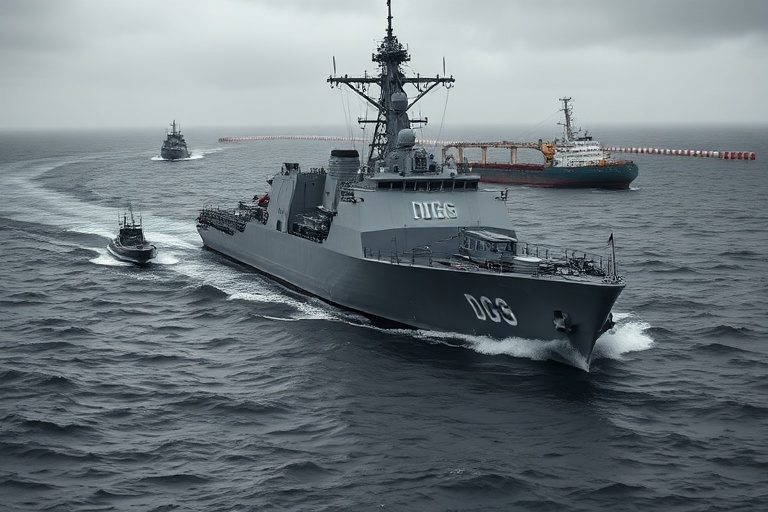
Today, blockades are no longer confined to naval sieges. Economic blockades, cyber blockades, and even digital information blockades have emerged as dominant forms of modern coercion. The most visible contemporary example is Russia’s blockade of Ukraine’s ports following its 2022 invasion. By seizing and blockading key maritime routes, Russia sought to cripple Ukraine’s agricultural exports—its primary source of foreign revenue—while simultaneously tightening its grip on occupied territories. The blockade disrupted global food supplies, triggering food price spikes and exacerbating shortages in vulnerable nations across Africa and the Middle East.
Blockades now extend beyond physical domains. Cyber blockades, such as internet shutdowns or DNS-level censorship, have become common tools for authoritarian regimes to suppress dissent and control information flows. During the 2020 Belarusian protests, the government imposed nationwide internet blackouts to disrupt protest coordination. Similarly, digital blockades—such as payment processing bans or app store removals—have been weaponized in geopolitical disputes, as seen in U.S. sanctions against Huawei and other Chinese tech firms. These digital blockades reveal how modern coercion operates not just through force but through control over data, commerce, and communication.
Key Characteristics of Modern Blockades
- Multi-domain application: Blockades now span naval, aerial, cyber, and economic spheres, making them more versatile and harder to counter.
- Civilian impact: Modern blockades disproportionately target civilian infrastructure, from hospitals to food supplies, raising ethical and legal concerns.
- Proxy effects: Blockades often ripple beyond their intended targets, destabilizing regional economies and creating humanitarian crises.
- Legal ambiguity: International law offers limited clarity on blockades in non-war contexts, such as economic sanctions or cyber operations.
- Asymmetric utility: Weaker states and non-state actors increasingly adopt blockade tactics, leveling the playing field against stronger adversaries.
Geopolitical Shifts and the Rise of Blockade Diplomacy
The resurgence of blockades reflects broader shifts in global power structures. As traditional warfare becomes costlier and riskier, states are turning to economic and informational tools to achieve strategic objectives. The U.S.-China trade war, which escalated into tariffs and technology bans, exemplifies this trend. While not a traditional blockade, the strategy mirrors the same logic: inflict economic pain to force concessions. Similarly, Iran’s long-standing blockade of Israeli-affiliated shipping in the Red Sea highlights how regional powers leverage maritime choke points to project influence.
Blockades also serve as a litmus test for international solidarity—or the lack thereof. When Russia blockaded Ukrainian ports, global responses varied dramatically. While NATO nations imposed sanctions, countries like Turkey and China maintained trade relations with Russia, complicating the blockade’s effectiveness. This fragmentation reveals a fractured world order where blockades, despite their brutality, often fail to achieve their intended political goals due to geopolitical fissures.
Moreover, blockades are increasingly used as bargaining chips in broader negotiations. The 2023 grain deal negotiations between Ukraine, Russia, and Turkey hinged on the lifting of Russia’s naval blockade—a reminder that blockades are not just ends in themselves but also instruments in larger diplomatic games. This instrumentalization underscores their role as both weapons and leverage, complicating efforts to regulate or condemn their use.
Ethical and Legal Challenges
The use of blockades raises profound ethical questions. International humanitarian law, enshrined in the Geneva Conventions, prohibits the starvation of civilians as a method of warfare. Yet modern blockades, particularly economic ones, often skirt these protections by targeting dual-use infrastructure—ports, banks, or energy grids—that serve both military and civilian functions. The humanitarian crises in Yemen and Gaza, exacerbated by blockades, highlight the tension between military strategy and humanitarian imperatives.
Legal frameworks struggle to keep pace with the evolution of blockades. The 1909 Declaration of London, which outlined rules for naval blockades, has little relevance in today’s cyber and economic warfare landscape. The United Nations Charter’s prohibition on the use of force does not explicitly address economic coercion, leaving a legal gray zone. This ambiguity emboldens states to deploy blockades with minimal accountability, further eroding the norms that once governed wartime conduct.
Civil society organizations have increasingly called for stronger regulations on blockades, particularly in economic and cyber forms. The 2023 UN resolution on the humanitarian impact of unilateral coercive measures marked a tentative step toward addressing these concerns. However, enforcement remains elusive, as powerful states often veto or ignore such resolutions when they conflict with their strategic interests.
Conclusion: The Future of Blockades in a Fragmented World
Blockades are far more than relics of a bygone era—they are evolving, adapting, and proliferating in response to the shifting dynamics of global power. Their growing prevalence reflects a world where direct conflict is increasingly costly, and coercion through economic and informational means is more feasible. Yet their use comes at a steep humanitarian and ethical cost, one that the international community has yet to fully reckon with.
As blockades become more sophisticated—blending cyberattacks with traditional embargoes—the need for robust legal and ethical frameworks grows urgent. The international community must confront difficult questions: Where should the line be drawn between legitimate coercion and illegal warfare? How can civilian suffering be mitigated in an era where blockades target entire economies? And what mechanisms can hold states accountable when blockades spill across borders, destabilizing regions and economies?
One thing is clear: blockades are not fading into obscurity. They are becoming a staple of modern statecraft, a tool for the strong to pressure the weak, and a tactic for the desperate to level the playing field. In a world where power is increasingly wielded through economic strangulation and digital isolation, understanding blockades is no longer optional—it is essential.
For further reading on related topics, explore our News and Analysis sections, where we dissect the forces shaping global conflicts and their broader implications.