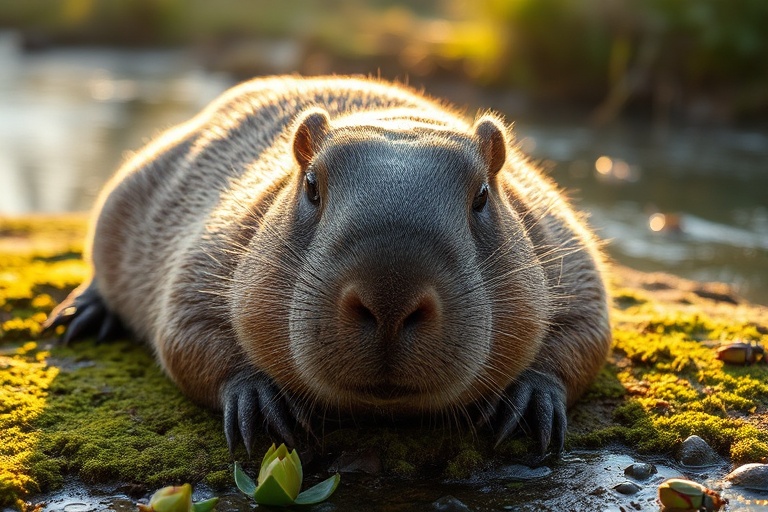
The capybara, known scientifically as Hydrochoerus hydrochaeris, is the world’s largest living rodent. Native to South America, these semi-aquatic mammals have captured attention for their gentle demeanor and unusual social habits. Unlike their smaller rodent cousins, capybaras grow up to 4.3 feet long and weigh as much as 150 pounds, making them a unique presence in both wild and captive environments.
These animals thrive near rivers, lakes, and swamps, where their webbed feet and dense, water-resistant fur help them navigate aquatic habitats with ease. Their eyes, ears, and nostrils are positioned high on their heads, allowing them to remain mostly submerged while keeping watch for predators. This adaptation is vital in a region where jaguars, caimans, and anacondas pose constant threats.
The Social Lives of Capybaras
Capybaras are highly social creatures, often forming groups of 10 to 20 individuals. These herds consist of a dominant male, several females, and their offspring. Their social structure revolves around cooperation, grooming, and shared vigilance against predators. Living in such close-knit communities helps them avoid danger while fostering strong bonds through vocalizations and physical touch.
- Communication: Capybaras use a mix of barks, whistles, and purrs to convey different messages. They also communicate through scent marking, which helps maintain group cohesion.
- Parenting: Females within the group take turns caring for young capybaras, a behavior known as alloparenting. This increases the survival rate of offspring by ensuring constant supervision.
- Hierarchy: Dominant males assert their status through body language and occasional conflicts, but aggression is rare. Most disputes are settled through posturing rather than physical confrontation.
This level of social complexity is rare among rodents and has intrigued researchers studying animal behavior. Their ability to coexist peacefully with other species, including birds and even crocodiles, further highlights their adaptability.
Capybaras in Culture and Captivity
In recent years, capybaras have gained popularity beyond their native habitats, becoming social media stars due to their calm and approachable nature. Zoos and wildlife sanctuaries worldwide have reported increased visitor interest, particularly in interactive exhibits where capybaras are allowed to roam freely among other animals.
In Japan, capybara cafes have emerged as a unique trend, where visitors can relax alongside these gentle giants. These establishments emphasize the animals’ therapeutic presence, drawing parallels to the calming effects of therapy animals. However, ethical concerns have been raised regarding the welfare of capybaras in such settings, particularly when they are kept in confined or unnatural environments for extended periods.
In their native countries, capybaras have long been hunted for their meat and hide, though conservation efforts have helped stabilize populations in many areas. Legal protections and habitat preservation remain critical to ensuring their long-term survival.
Why Capybaras Are Ecologically Important
Capybaras play a crucial role in their ecosystems. As herbivores, they graze on aquatic plants, which helps maintain the health of wetlands and prevents overgrowth that could disrupt water flow. Their feeding habits also create clearings that benefit other species, from fish to birds.
Additionally, capybaras serve as prey for larger predators, making them a key link in the food chain. Their presence supports the balance of predator and prey populations, contributing to the overall biodiversity of their habitats.
Conservationists point out that protecting capybaras means safeguarding entire ecosystems. Wetlands, in particular, are vital for carbon sequestration and flood control, making these rodents indirect contributors to environmental stability.
Capybaras as Pets: A Controversial Choice
While capybaras are undeniably charismatic, they are not typical pets. Their size, social needs, and specialized care requirements make them challenging to keep in domestic settings. In many regions, owning a capybara requires special permits due to their classification as exotic animals.
- Legal Considerations: Laws vary widely, with some U.S. states and European countries allowing capybaras as pets under strict conditions. Others ban them outright.
- Space Requirements: Capybaras need ample space to roam, access to water, and a diet consisting primarily of fresh grasses and vegetables. A single capybara requires a minimum of 1,000 square feet of outdoor space.
- Social Needs: They thrive on companionship and can become depressed or destructive when left alone. Potential owners must be prepared to provide constant interaction or adopt multiple capybaras.
- Veterinary Care: Few veterinarians specialize in exotic rodents, making routine and emergency care difficult to obtain. Prospective owners should research local exotic animal experts before committing.
For those who meet these requirements, capybaras can form deep bonds with humans. Their intelligence and adaptability allow them to learn commands and even respond to their names. However, their long lifespan—up to 12 years in captivity—demands a lifelong commitment.
Looking Ahead: The Future of Capybaras
The future of capybaras depends on balancing human interests with conservation needs. As deforestation and urban expansion encroach on their habitats, protecting these gentle giants becomes increasingly urgent. Organizations like the World Wildlife Fund and local South American initiatives are working to establish protected corridors and sustainable hunting practices.
Public awareness also plays a role. By supporting ethical wildlife tourism and avoiding the exotic pet trade unless fully prepared, individuals can contribute to the preservation of capybaras and their ecosystems. Their story is one of resilience, social intelligence, and ecological importance—a reminder of the intricate connections that bind all living things.
The capybara’s rise from a quiet swamp-dweller to a global symbol of calm and coexistence is a testament to their unique place in the natural world. Whether observed in the wild, admired in a zoo, or discussed in classrooms, these rodents continue to fascinate and inspire.
For more insights into wildlife conservation and exotic animals, visit Dave’s Locker Animals Section.