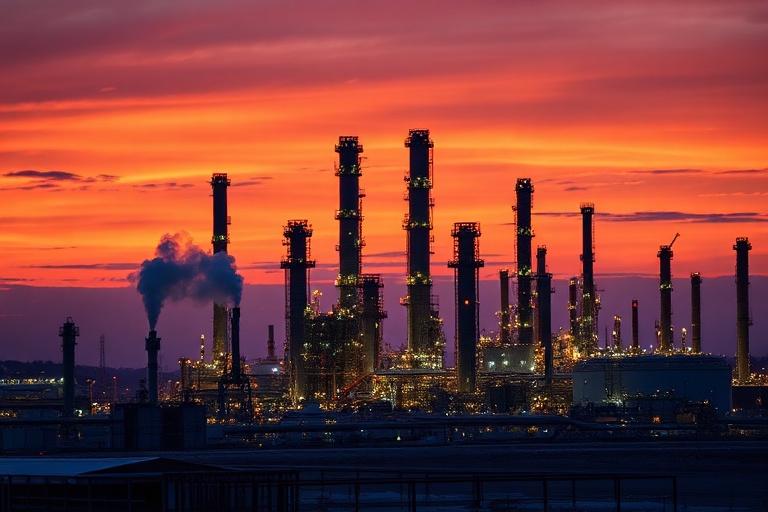
chalmette refinery
The Chalmette Refinery: A Cornerstone of Louisiana’s Industrial Legacy
The Chalmette Refinery, located just east of New Orleans in St. Bernard Parish, has long stood as a symbol of both economic resilience and environmental scrutiny in the American South. With roots tracing back to the early 20th century, the facility has evolved from a modest operation into one of the largest and most complex refineries on the Gulf Coast—a region synonymous with petroleum processing and industrial might.
Its story is not merely one of fuel production; it reflects broader themes of industrialization, environmental regulation, and the delicate balance between economic progress and ecological responsibility. As global energy demands shift and climate concerns intensify, the Chalmette Refinery remains a focal point in discussions about the future of refining in America.
A Brief History: From Humble Beginnings to Industrial Giant
The Chalmette Refinery’s origins date to 1909, when the Chalmette Petroleum Company built a small facility to process crude oil drawn from nearby fields. The site’s strategic location near the Mississippi River and the Gulf of Mexico soon made it a prime location for expansion. By the 1920s, the refinery had grown under the ownership of Standard Oil of New Jersey—later ExxonMobil—becoming a key node in one of the world’s most extensive energy networks.
During World War II, the refinery played a critical role in fueling the Allied war effort, producing high-octane aviation gasoline and other essential petroleum products. Post-war industrialization further solidified its place in the American energy landscape, as demand for gasoline and petrochemicals surged across the nation.
In 2015, the facility was acquired by PBF Energy, a New Jersey-based independent refiner, which invested heavily in modernization and efficiency upgrades. Today, the Chalmette Refinery operates as a 195,000-barrel-per-day complex, producing gasoline, diesel, jet fuel, and petrochemical feedstocks that supply markets across the southeastern United States.
The Refinery’s Role in the Gulf Coast Energy Ecosystem
The Gulf Coast is often called the “energy capital of the world,” and the Chalmette Refinery is a vital part of that ecosystem. It is situated within a dense network of pipelines, ports, and refineries that collectively handle nearly half of the nation’s refining capacity. The Mississippi River provides critical water access for transporting crude oil and refined products, while the nearby Port of New Orleans serves as a major hub for exports to Latin America, Europe, and beyond.
The refinery also contributes significantly to the local economy. It employs hundreds of workers directly and supports thousands more through ancillary industries—from logistics and shipping to retail and services. In a region still recovering from Hurricane Katrina in 2005 and the BP oil spill in 2010, industrial facilities like Chalmette represent both economic lifelines and potential vulnerabilities.
Yet, its presence is not without controversy. The refinery is located in an area designated as a “cancer alley” due to elevated health risks associated with industrial pollution. Communities in St. Bernard Parish and neighboring Orleans Parish have long raised concerns about air quality, emissions, and long-term health impacts—especially among children and the elderly.
Key Products and Outputs from the Chalmette Refinery
- Gasoline (including reformulated blends for environmental compliance)
- Diesel fuel and heating oil
- Jet fuel for Louis Armstrong New Orleans International Airport
- Petrochemical feedstocks used in plastics and synthetic materials
- Sulfur and other byproducts used in industrial applications
Environmental Challenges and Regulatory Pressures
The Chalmette Refinery has faced numerous environmental enforcement actions over the years. In 2020, the U.S. Environmental Protection Agency (EPA) cited the facility for multiple violations, including unauthorized releases of benzene and other hazardous air pollutants. These incidents have drawn scrutiny from environmental groups and prompted calls for stricter oversight.
In response, PBF Energy has implemented various mitigation measures, including flare gas recovery systems, leak detection programs, and investments in cleaner technologies. The company has also participated in voluntary reporting initiatives and community engagement efforts to address public concerns.
Yet challenges remain. Louisiana’s regulatory framework has historically favored industrial development, often at the expense of environmental and public health protections. Recent policy shifts—including the state’s embrace of carbon capture and hydrogen projects—may offer new pathways for refineries like Chalmette to transition toward lower-emission operations. However, skepticism persists about the pace and scale of such transformations.
A Global Perspective: Energy Transition and the Future of Refining
As the world moves toward decarbonization, the long-term viability of large-scale refineries is increasingly debated. The International Energy Agency (IEA) has projected that global oil demand could peak by 2030, driven by electric vehicle adoption, renewable energy growth, and climate policies. This shift poses existential questions for traditional refineries like Chalmette.
Some analysts suggest that refineries can adapt by pivoting to produce lower-carbon fuels such as renewable diesel or sustainable aviation fuel (SAF). Others argue that the most sustainable path is a managed decline, with just transition plans for workers and communities. In Louisiana, where fossil fuel dependence runs deep, this transition is particularly fraught with economic and social implications.
The Chalmette Refinery’s future may hinge on its ability to diversify. In 2023, PBF Energy announced plans to convert a portion of the facility into a renewable diesel plant, leveraging soybean oil and other bio-based feedstocks. This move aligns with broader industry trends and could help the refinery remain competitive in a changing energy market.
Community Voices and Cultural Impact
For many residents of St. Bernard Parish, the refinery is both a source of pride and a cause for concern. The facility has been a fixture in local life for generations, shaping the region’s identity and economy. Yet, for others, it represents a looming health threat and a symbol of environmental injustice.
Community organizations have been vocal in advocating for stronger protections and greater transparency. Groups like the Louisiana Bucket Brigade and Healthy Gulf have used data monitoring, public testimony, and legal action to push for accountability. Their efforts highlight the intersection of environmental justice, civic engagement, and public health—a dynamic increasingly visible in energy-producing regions worldwide.
The refinery’s cultural footprint extends beyond its immediate surroundings. It has been referenced in local music, literature, and art, often as a backdrop to stories of resilience and transformation. In this sense, the Chalmette Refinery is not just an industrial site—it is a cultural artifact, reflecting the complex relationship between people, place, and progress.
Conclusion: Balancing Legacy and Innovation
The Chalmette Refinery embodies the contradictions of modern industrial society. It is a testament to human ingenuity and economic ambition, yet it is also a reminder of the environmental and social costs of unchecked growth. As the energy transition accelerates, its future will depend not only on technological adaptation but on broader societal choices about sustainability, equity, and resilience.
One thing is certain: the story of the Chalmette Refinery is far from over. Whether it evolves into a cleaner, more diversified industrial hub—or gradually phases out as the energy landscape shifts—its legacy will continue to shape the Gulf Coast and the nation’s energy future.