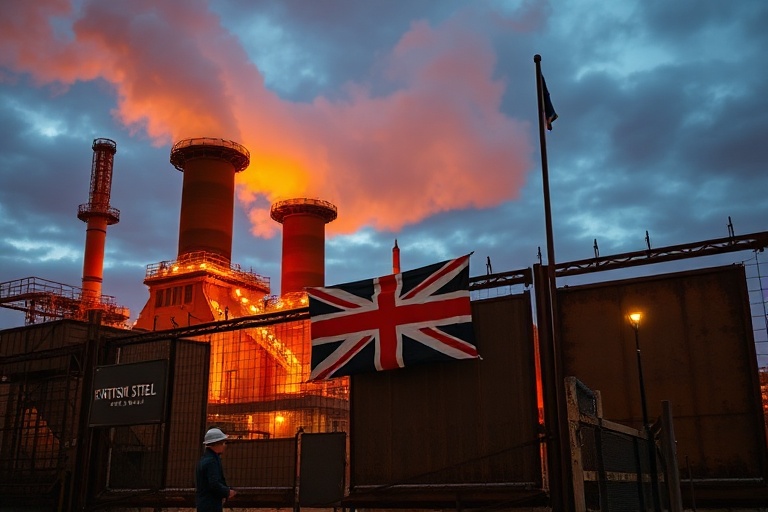
In a move that has sent ripples through global manufacturing circles, Chinese state-backed entities have issued a stark warning about the potential nationalization of British Steel. The warning, delivered through official channels in Beijing, suggests that if the UK government proceeds with plans to take full control of the struggling steel producer, it could trigger severe consequences for trade relations and industrial stability.
British Steel, one of the UK’s oldest steel manufacturers, has faced financial turmoil for years. Its precarious position has prompted repeated calls for government intervention—most recently in the form of nationalization. While the UK government has not confirmed any such decision, the Chinese warning underscores the geopolitical stakes involved in industrial policy.
The Context Behind the Warning
British Steel has been a cornerstone of UK manufacturing since the 17th century, but decades of global competition, high energy costs, and fluctuating demand have left it vulnerable. In 2019, the company entered liquidation before being rescued by Chinese-owned Jingye Group. Despite this lifeline, British Steel continues to struggle with profitability and debt.
Speculation about nationalization intensified after Labour leader Keir Starmer suggested that a future Labour government might consider taking the company into public ownership. This possibility has alarmed Chinese investors and officials, who view such a move as a violation of investment agreements and a signal of growing economic protectionism in the West.
The Chinese warning is not an empty threat. Beijing has demonstrated in other sectors—such as semiconductors and telecommunications—that it is willing to retaliate against policies it perceives as hostile. The steel industry, already strained by overcapacity and trade disputes, could become another flashpoint in the broader US-China trade war.
Key Factors Driving the Tension
- Investment Agreements: Jingye Group invested heavily in British Steel under the assumption that its ownership would be respected. Nationalization could be seen as expropriation, violating the UK’s obligations under international trade law.
- Trade Dependencies: The UK imports significant quantities of steel from China. Disruptions in supply chains due to political intervention could raise costs for British manufacturers.
- Geopolitical Signals: The warning may reflect broader frustration in Beijing over Western industrial policies that restrict Chinese investment in strategic sectors.
- Market Reactions: Steel prices and investor confidence could become volatile if the nationalization debate escalates, particularly in industries reliant on stable supply chains.
Broader Implications for Global Steel Markets
The potential nationalization of British Steel is not just a UK domestic issue—it has the potential to reshape global steel markets. Steel is a critical input for construction, automotive, and infrastructure projects. Any disruption in its supply could have cascading effects on economies still recovering from the pandemic and energy crises.
China, the world’s largest steel producer, has already signaled its displeasure. Industry analysts warn that Chinese retaliation could include:
- Increased tariffs on UK steel imports, making British products less competitive in Asian markets.
- Restrictions on technology transfers, which could hinder UK steelmakers’ ability to modernize their facilities.
- Diplomatic pressure through international forums such as the World Trade Organization (WTO).
These measures would disproportionately affect UK exporters, particularly those in the automotive and aerospace sectors, which rely on steel imports for component manufacturing. The automotive industry, already grappling with supply chain disruptions and the transition to electric vehicles, could face further delays and cost increases.
What Happens Next?
For now, the UK government has remained tight-lipped about nationalization plans. However, the mere suggestion of such a move has already sparked debate among policymakers, economists, and industry leaders. Some argue that nationalization is a necessary step to protect jobs and strategic industries, while others warn of the economic and diplomatic fallout.
One thing is clear: the decision will not be made in a vacuum. The UK’s relationship with China is already strained over issues such as human rights, cybersecurity, and Hong Kong. Adding an industrial dispute to the mix could further complicate negotiations on trade deals, climate agreements, and security partnerships.
For British Steel, the immediate future hinges on whether it can secure additional funding or restructuring support. Without it, the company risks another collapse, which could leave thousands of workers unemployed and send shockwaves through the UK’s industrial heartlands.
Possible Outcomes
- Compromise: The UK government could negotiate a joint ownership model, allowing both public and private stakeholders to share control. This approach would balance economic and strategic interests.
- Chinese Retaliation: If nationalization proceeds, China may impose trade barriers or reduce investment in other UK sectors, such as energy or technology.
- Market Correction: Steel prices could stabilize if the uncertainty subsides, allowing British Steel to regain its footing under private ownership.
- Industry Consolidation: A collapse or sale of British Steel could lead to further consolidation in the global steel market, with larger firms absorbing its assets.
The stakes are high, not just for British Steel, but for the broader principles of international investment and industrial policy. As nations navigate the challenges of deglobalization and supply chain resilience, the case of British Steel serves as a cautionary tale about the unintended consequences of government intervention.
Conclusion: A Test for UK Industrial Policy
The Chinese warning over British Steel’s potential nationalization is more than a diplomatic spat—it is a test of how the UK balances economic pragmatism with geopolitical realities. In an era where industrial policy is increasingly intertwined with national security, decisions about steel production are no longer just about jobs and profits. They are about sovereignty, alliances, and the future of global trade.
For British Steel, the path forward remains uncertain. But for policymakers, the message is clear: the choices made today will shape the industrial landscape for decades to come. Whether through negotiation, compromise, or confrontation, the outcome will reverberate far beyond the factory gates.
As the debate unfolds, one thing is certain—industry observers, investors, and workers alike will be watching closely. The fate of British Steel may well set a precedent for how nations navigate the delicate balance between protecting domestic industries and honoring international commitments.
For more analysis on global trade and industrial policy, visit Dave’s Locker News or explore our Analysis section for deeper insights into economic trends.