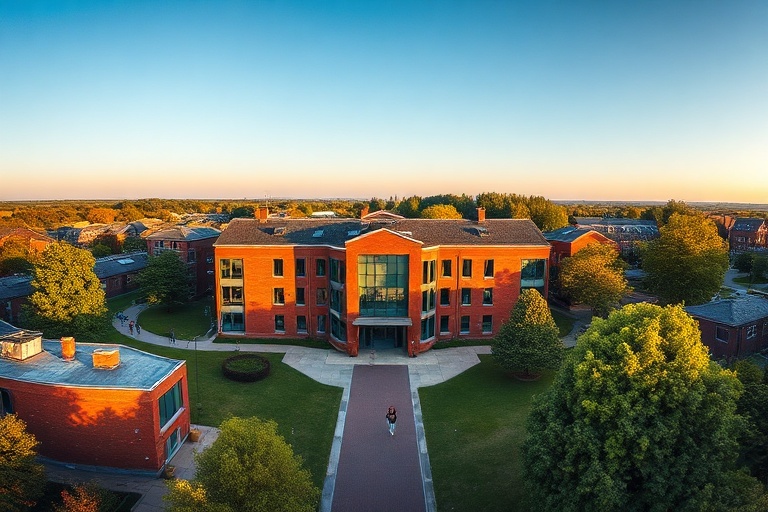
Nestled in the English countryside, Cranfield University stands as one of the UK’s most specialized institutions, focusing exclusively on postgraduate education and research in technology and management. Founded in 1946 as the College of Aeronautics, it has since expanded into a hub for innovation across aerospace, defense, energy, and environmental science. Unlike traditional universities, Cranfield operates with a clear mission: to bridge the gap between academia and industry through practical, applied research.
What sets Cranfield apart is its unique model. The university doesn’t offer undergraduate degrees, instead concentrating on master’s and doctoral programs tailored for professionals seeking to advance their careers. Its close ties with industries—particularly in aerospace, automotive, and defense—ensure that research directly addresses real-world challenges. This approach has made Cranfield a trusted partner for organizations like Rolls-Royce, BAE Systems, and the European Space Agency.
Academic Excellence and Industry Integration
Cranfield’s academic programs are designed with a single goal: to produce graduates who are immediately valuable to employers. The university’s reputation in engineering and management is well-earned, with programs consistently ranked among the best in the UK. For instance, its Technology and Education categories on Dave’s Locker highlight Cranfield’s influence in shaping the next generation of engineers and business leaders.
The university’s strong industry connections are evident in its facilities. Cranfield’s campus includes advanced laboratories, wind tunnels, and even an airport—features that are rare for a university of its size. These resources enable students to work on projects with direct industry applications, from designing next-generation aircraft to developing sustainable energy solutions. The emphasis on hands-on learning ensures that Cranfield graduates are not just academically proficient but also industry-ready.
Key Programs and Research Areas
Cranfield offers a range of specialized programs across several key areas:
- Aerospace Engineering: Home to Europe’s largest university-based propulsion test facility, Cranfield’s aerospace programs are among the most respected globally.
- Defense and Security: The university collaborates with NATO, the UK Ministry of Defence, and private contractors on cutting-edge research in cybersecurity and autonomous systems.
- Energy and Sustainability: With a focus on renewable energy and carbon reduction, Cranfield is at the forefront of research into green technologies.
- Management and Business: Its MBA and executive education programs are highly regarded for blending technical expertise with leadership skills.
These programs are not just about theoretical knowledge. Cranfield’s approach ensures that students engage in research that has immediate practical applications. For example, its work in unmanned aerial vehicles (UAVs) has contributed to advancements in both civilian and military sectors. Similarly, its energy research has influenced policies and technologies aimed at reducing carbon emissions.
The Broader Implications of Cranfield’s Model
Cranfield’s success raises important questions about the future of higher education. In an era where universities are often criticized for prioritizing theoretical research over practical outcomes, Cranfield’s model offers a compelling alternative. By focusing exclusively on postgraduate education and maintaining close ties with industry, it demonstrates how institutions can align their goals with the needs of the job market.
This approach has broader implications for the global education landscape. As industries evolve at an unprecedented pace, the demand for specialized, industry-aligned education will only grow. Cranfield’s model suggests that universities can play a crucial role in workforce development by fostering direct collaboration between academia and industry. This not only benefits students but also ensures that research is grounded in real-world challenges.
Moreover, Cranfield’s emphasis on sustainability and innovation positions it as a leader in addressing some of the world’s most pressing issues. Its research into green energy, for instance, has the potential to influence global policies and corporate practices. By prioritizing applied research, Cranfield is not just educating students—it’s shaping the future of industries and technologies that will define the 21st century.
Challenges and Opportunities
Despite its strengths, Cranfield faces challenges common to specialized institutions. Its narrow focus on postgraduate education can limit diversity in student backgrounds and research perspectives. Additionally, the high cost of its programs may deter some potential students, particularly those from less affluent backgrounds. However, Cranfield’s strong industry partnerships often mitigate these challenges by providing scholarships and sponsorships.
Looking ahead, Cranfield has significant opportunities to expand its influence. Its growing reputation in emerging fields like artificial intelligence and autonomous systems could position it as a leader in these areas. Additionally, its global partnerships—such as those with universities in the US, China, and India—offer avenues for increased collaboration and innovation.
The university’s commitment to sustainability also aligns with global trends. As climate change becomes an increasingly urgent issue, Cranfield’s research into renewable energy and carbon reduction could play a pivotal role in shaping policies and technologies. This not only enhances its reputation but also ensures its continued relevance in a rapidly changing world.
A Model for the Future?
Cranfield University’s story is one of specialization and impact. By focusing exclusively on postgraduate education and maintaining deep industry ties, it has carved out a unique niche in the higher education landscape. Its success demonstrates that universities can thrive by prioritizing practical, industry-aligned research while still maintaining academic rigor.
For students and professionals seeking advanced education that directly translates to career success, Cranfield offers a compelling model. For universities considering a shift toward more specialized, industry-focused programs, Cranfield provides a blueprint for how to achieve excellence without diluting academic standards.
As the world grapples with rapid technological change and global challenges, institutions like Cranfield will become increasingly important. They bridge the gap between academia and industry, ensuring that research is not just theoretical but also practical and impactful. In doing so, they help shape the future of both education and industry.
For those looking to understand how higher education can evolve to meet the demands of the modern world, Cranfield University is a case study worth examining. Its blend of academic excellence, industry integration, and forward-thinking research offers a glimpse into the future of postgraduate education.