Cyril Ramaphosa: South Africa’s Resilient Leader at a Crossroads
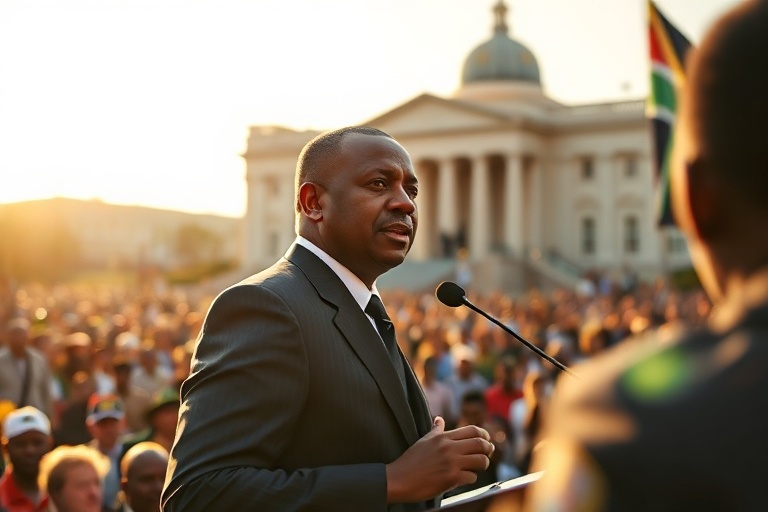
Cyril Ramaphosa stands as one of South Africa’s most consequential political figures in the post-apartheid era. Since assuming the presidency in 2018, he has navigated a complex landscape marked by economic stagnation, corruption scandals, and social unrest. His leadership style—a blend of reformist ambition and cautious pragmatism—has drawn both praise and criticism. As South Africa grapples with deepening inequality and energy crises, Ramaphosa’s decisions carry weight not just for his nation, but for the broader African continent.
The Path to Power: From Labor Leader to Statehouse
Ramaphosa’s political journey began long before his presidency. Born in 1952 in Johannesburg’s Soweto township, he became involved in activism during his university years. His early career saw him rise as a prominent labor organizer, leading the National Union of Mineworkers (NUM) during the 1980s—a period of intense struggle against apartheid. His role in negotiating with mining corporations earned him respect as a skilled negotiator, a trait that would define his later political career.
After apartheid’s end, Ramaphosa transitioned into politics, serving as the chair of the Constitutional Assembly that drafted South Africa’s post-apartheid constitution. His legal expertise and political acumen positioned him as a key figure in the African National Congress (ANC), where he became deputy president under Jacob Zuma in 2014. The transition to the presidency came unexpectedly in 2018 when Zuma resigned amid corruption allegations. Ramaphosa’s ascent was seen as a chance to restore integrity to the ANC and the South African government.
Key Milestones in Ramaphosa’s Rise
- 1982: Elected as the first general secretary of the NUM, leading major strikes that reshaped labor rights in South Africa.
- 1994: Served in the first post-apartheid parliament and played a critical role in drafting the new constitution.
- 2014: Became deputy president under Jacob Zuma, positioning himself as a reformist counterweight within the ANC.
- 2018: Assumed the presidency after Zuma’s resignation, inheriting a government plagued by corruption and economic decline.
Presidency Under Pressure: Economic Reforms and Scandals
Ramaphosa’s presidency has been defined by a push for economic reform, yet progress has been uneven. One of his signature initiatives was the creation of an anti-corruption investigative unit, the SIU Special Tribunal, aimed at recovering stolen state funds. The establishment of the State Capture Commission, which investigated corruption under Zuma’s administration, marked a significant step toward accountability. However, critics argue that prosecutions have been slow, leaving many South Africans skeptical about the depth of change.
The COVID-19 pandemic further exposed the fragility of South Africa’s economy. While Ramaphosa implemented strict lockdowns early in the crisis, the economic fallout disproportionately affected the poor. Unemployment soared to over 34% in 2021, one of the highest rates globally, and power outages from the beleaguered state utility Eskom became a near-daily reality. The president’s attempts to stabilize the energy grid through private sector partnerships have yielded mixed results, with progress in renewable energy counterbalanced by ongoing infrastructure failures.
Economic Challenges Facing Ramaphosa
- Energy Crisis: Eskom’s inability to meet demand has crippled businesses and households, stifling economic growth.
- Unemployment: Youth unemployment exceeds 60%, fueling social unrest and migration pressures.
- Debt Load: South Africa’s national debt has ballooned, limiting fiscal flexibility for social programs.
- Investor Confidence: While Ramaphosa has courted foreign investment, policy uncertainty and corruption concerns deter long-term commitments.
Controversies and Criticisms: Can Ramaphosa Regain Trust?
No South African leader in recent memory has faced as many controversies as Ramaphosa—yet none have risen to power with such high expectations. In 2021, his reputation took a significant hit when allegations surfaced regarding a $4 million stash of cash found at a game farm linked to him. While Ramaphosa denied wrongdoing and claimed the money was proceeds from the sale of his cattle, the scandal fueled perceptions of elite corruption within the ANC. The matter was eventually referred to the Public Protector, though no criminal charges were filed.
Beyond this, Ramaphosa has faced criticism for his handling of the July 2021 unrest, which left over 300 people dead and caused billions in damages. The violence, sparked by the imprisonment of former president Jacob Zuma, exposed deep divisions within the ANC and highlighted the volatility of South Africa’s political climate. While Ramaphosa condemned the unrest and deployed the military to restore order, many questioned whether his government had adequately prepared for such a crisis.
Despite these challenges, Ramaphosa remains a unifying figure within the ANC, often credited with preventing the party from fracturing further. His leadership during the pandemic, including securing vaccines through the African Vaccine Acquisition Trust, demonstrated a commitment to regional solidarity. Yet, the question lingers: can he reconcile his reformist rhetoric with the entrenched interests that continue to undermine progress?
The Road Ahead: Can Ramaphosa Deliver Change?
As South Africa approaches its next election cycle, Ramaphosa’s legacy hangs in the balance. His government has made strides in some areas, such as the expansion of renewable energy projects and the introduction of a basic income grant pilot program to address poverty. However, structural issues—corruption, unemployment, and infrastructure decay—persist, demanding bolder solutions.
One area where Ramaphosa has shown promise is in foreign policy. South Africa’s role in mediating conflicts on the continent, including in Sudan and the Democratic Republic of Congo, has reinforced its position as a diplomatic leader. Domestically, his administration has sought to revitalize key sectors like mining and agriculture, though results remain incremental. The success of his second term, if he wins re-election, may hinge on his ability to deliver tangible economic relief to a population growing increasingly impatient.
For Ramaphosa, the stakes are clear: South Africa cannot afford another decade of stagnation. His leadership will be judged not just on his intentions, but on the tangible improvements in the lives of ordinary citizens. Whether he can bridge the gap between promise and delivery may well determine the future trajectory of Africa’s most industrialized economy.
What’s Next for South Africa Under Ramaphosa?
- Election 2024: The ANC’s dominance is under threat, with opposition parties gaining ground. Ramaphosa’s ability to retain power will depend on addressing voter disillusionment.
- Energy Transition: The government aims to decommission coal plants and expand renewables, but implementation remains uneven.
- Land Reform: A contentious issue, Ramaphosa’s government has promised to accelerate land redistribution, but progress has been slow and fraught with legal challenges.
- Social Unrest: With inequality at record highs, the risk of protests and instability remains a persistent threat.
For those seeking deeper analysis of South Africa’s political landscape, our Politics section offers comprehensive coverage of regional dynamics and leadership transitions. Meanwhile, our Analysis section provides expert perspectives on the economic and social forces shaping the nation’s future.
Cyril Ramaphosa’s presidency is a study in contrasts—marked by high ideals and harsh realities. His challenge is not just to lead a nation through crisis, but to redefine what leadership looks like in an era where trust in institutions is increasingly fragile. The outcome of his efforts will resonate far beyond South Africa’s borders, offering lessons for democracies worldwide grappling with similar dilemmas.