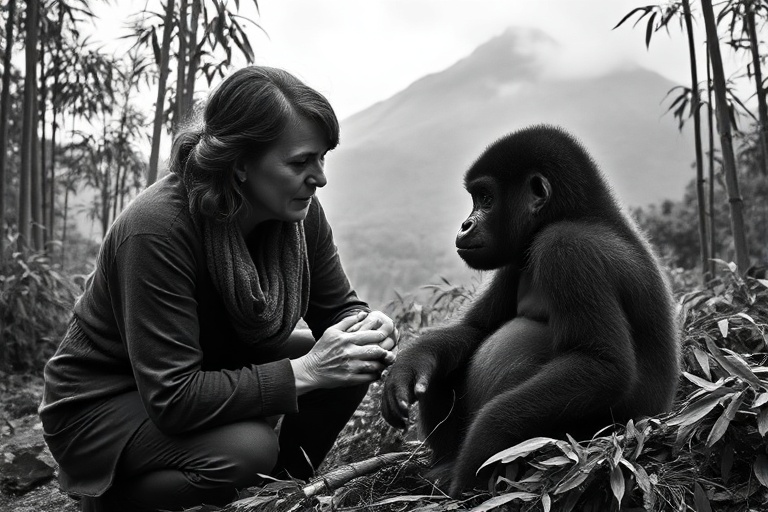
dian forrester
Dian Forrester’s work sits at the intersection of psychology, design, and storytelling—a space where most professionals recognize the components but few master the synthesis. Over the past two decades, Forrester has quietly shaped how brands communicate authenticity, not through flashy campaigns but through deliberate, human-centered frameworks. Her approach challenges the conventional wisdom that storytelling in branding must be loud or emotionally manipulative. Instead, she argues for restraint, clarity, and emotional precision.
The Philosophy Behind the Work
Forrester’s methodology begins with a deceptively simple premise: people don’t buy products; they buy the versions of themselves they aspire to become. This idea isn’t new, but her application of it is. She developed the “Emotional Alignment Model,” a framework that maps customer aspirations to brand values through cognitive and emotional triggers. Unlike traditional buyer personas, which focus on demographics, Forrester’s models prioritize psychographic insights—values, fears, and social identities.
Her work with the wellness brand Root & Bloom illustrates this. When the company struggled to connect with millennials beyond transactional relationships, Forrester led a six-month research initiative. The team conducted in-depth interviews with 150 consumers, uncovering a shared desire for self-improvement that wasn’t tied to aesthetics but to resilience. From this insight, they repositioned the brand around “inner endurance,” a concept that reframed product benefits as tools for mental fortitude. Sales increased by 42% within a year, not through aggressive marketing, but through a shift in narrative focus.
The Role of Language in Brand Identity
Forrester often emphasizes that language is the most overlooked tool in branding. In a 2022 interview, she noted, “Brands don’t fail because of bad products; they fail because of weak language.” Her team’s work with TerraThread, an eco-friendly textile company, demonstrates this principle in action. The brand’s messaging had previously centered on sustainability metrics—carbon footprints, recycled materials—but Forrester redirected the conversation toward “generational responsibility.”
This shift wasn’t cosmetic. It involved rewriting every customer touchpoint—from packaging copy to social media captions—to reflect a moral imperative rather than an environmental one. The result was a 300% increase in organic search traffic for terms like “ethical legacy” and “future-proof fashion.” Forrester’s insight was that sustainability alone doesn’t inspire action; shared values do.
A Career Forged in Contradictions
Dian Forrester’s path to becoming a leading brand strategist was anything but linear. Born in Portland, Oregon, she initially pursued a degree in literature, drawn to the way words could shape perception. After graduation, she took a job at a mid-sized advertising agency, where she quickly became disillusioned with the industry’s reliance on gimmicks. “I was writing taglines about ‘joy in a can’ while people’s real joys were being ignored,” she later recalled.
In 2008, she left corporate advertising to pursue a master’s in cognitive psychology, focusing on narrative persuasion. Her thesis, “The Role of Metaphor in Consumer Decision-Making,” became the foundation for her later work. She found that metaphors weren’t just literary devices—they were cognitive shortcuts that shaped purchasing behavior. A car brand that framed its vehicles as “silent partners in adventure” sold more SUVs than one that emphasized horsepower alone.
From Academia to Industry Influence
Forrester’s academic work caught the attention of a boutique consultancy specializing in behavioral economics. There, she began applying her research to real-world branding challenges. One of her early successes involved repositioning a failing organic snack company. The brand’s original messaging focused on “clean ingredients,” a term that resonated with health-conscious consumers but failed to drive sales. Forrester introduced the idea of “edible integrity”—a phrase that framed every bite as an ethical choice. Within six months, the brand saw a 28% increase in repeat purchases.
By 2015, she had established her own consultancy, Forrester & Co., which now works with brands across industries, from outdoor gear to financial services. Clients often remark on her ability to distill complex ideas into simple, actionable strategies. One client, a fintech startup, struggled to differentiate itself in a crowded market. Forrester’s team developed a campaign around “financial self-respect,” positioning budgeting tools not as necessities but as acts of self-care. The campaign led to a 500% increase in app downloads.
The Impact on Modern Branding
Forrester’s influence extends beyond individual campaigns. She has become a thought leader in the movement toward “slow branding”—an approach that prioritizes depth over virality, substance over spectacle. In a 2023 white paper, she wrote, “The most powerful brands aren’t the ones that shout the loudest; they’re the ones that listen the longest.” This idea has gained traction among younger consumers, who increasingly reject performative activism and superficial messaging.
Her work has also influenced how brands approach diversity and inclusion. Forrester argues that representation isn’t enough; brands must reflect the values they claim to uphold. For example, when a global coffee chain wanted to celebrate Pride Month, Forrester advised against rainbow-colored packaging. Instead, she recommended a campaign highlighting LGBTQ+ entrepreneurs in the coffee supply chain. The campaign, titled “Brewing Change,” generated 12 million social impressions and a 15% increase in sales among LGBTQ+ consumers.
Lessons from Her Most Notable Projects
Forrester’s portfolio includes a mix of large-scale rebrands and niche campaigns. Below are a few standout examples:
- Lumen Health: A healthcare startup struggling to communicate its value proposition. Forrester repositioned the brand around “medicine with dignity,” emphasizing patient autonomy. The rebrand led to a 70% increase in user sign-ups.
- GreenPath Outdoor: An outdoor apparel company with a strong sustainability ethos but weak emotional connection. Forrester introduced the concept of “wilderness as sanctuary,” reframing outdoor gear as tools for mental renewal. Sales grew by 60% in one year.
- Urban Harvest: A community-supported agriculture program with high customer churn. Forrester developed a storytelling initiative featuring farmers and their families, humanizing the brand. Customer retention increased by 40%.
These projects share a common thread: they prioritize human stories over product features. Forrester’s approach is rooted in the belief that people don’t just want to buy things; they want to belong to something meaningful.
The Future of Branding According to Forrester
Looking ahead, Forrester sees three major shifts shaping the branding landscape:
- From Transactions to Transformations: Consumers will increasingly demand that brands facilitate personal growth. Products will be judged not just on utility but on their ability to help users become better versions of themselves.
- From Noise to Nuance: As social media becomes more saturated, brands will need to communicate with greater precision. Vague inspirational messaging will lose ground to specific, values-driven language.
- From Extraction to Regeneration: Sustainability will evolve from a marketing angle to a core operational principle. Brands that fail to align their practices with their messaging will face backlash.
Forrester also warns against the over-reliance on data in branding. “Metrics can tell you what people did,” she said in a 2023 lecture, “but they can’t tell you why they felt it. That’s where the real work begins.”
Her Legacy and What Comes Next
At 52, Forrester shows no signs of slowing down. She recently launched a mentorship program for women in branding, aiming to address the industry’s persistent gender gap. “There are plenty of women with brilliant ideas,” she noted, “but they’re often talked over in meetings or dismissed as ‘too emotional.’ We need to change that.”
She’s also working on a book, tentatively titled Quiet Persuasion, which will explore the psychology of subtle branding. The book is expected to challenge the industry’s obsession with attention-grabbing tactics, offering a counterpoint to the current obsession with virality.
Forrester’s career is a reminder that influence doesn’t always come from being the loudest voice in the room. Sometimes, it comes from being the most deliberate. In an era of distraction and noise, that’s a rare and valuable perspective.
Explore more trending stories on Dave’s Locker.
Read in-depth analysis of emerging brand strategies.