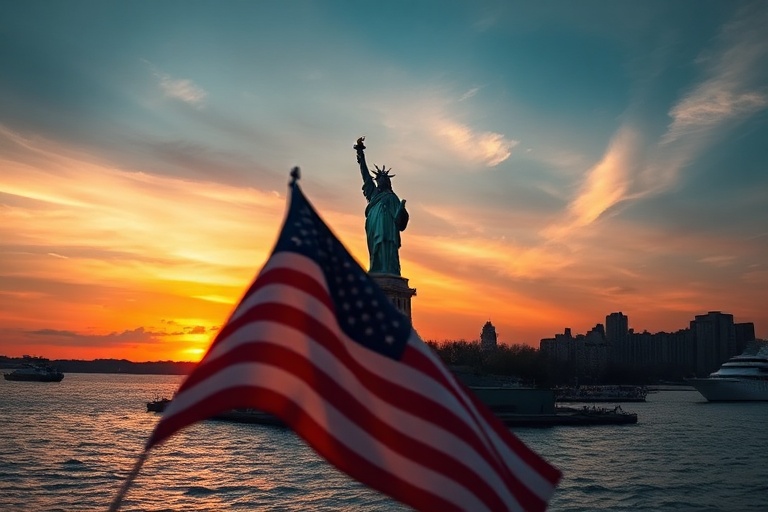
Estados Unidos—the United States—remains one of the most influential, scrutinized, and debated nations on Earth. Its reach extends far beyond its borders, shaping global politics, economics, and culture. Yet, beneath the surface of its iconic skylines and political rhetoric lies a nation wrestling with deep internal divisions, remarkable innovation, and enduring contradictions. Understanding Estados Unidos requires more than a glance at its headlines; it demands a closer look at its geography, demographics, and the forces that define its identity.
The Geography of Opportunity and Division
From the frozen tundras of Alaska to the sun-drenched beaches of Hawaii, Estados Unidos spans a breathtaking 3.8 million square miles. This vastness creates not only natural wonders but also stark disparities in opportunity and infrastructure. The West Coast, home to Silicon Valley and Hollywood, thrives as a hub of technology and entertainment, while rural areas in the Midwest and Appalachia often struggle with economic stagnation and limited access to healthcare.
The country’s geography also shapes its cultural identity. The Northeast, with cities like New York and Boston, has long been a magnet for immigrants and a center of finance and education. The South, rich in history and tradition, grapples with legacies of inequality while also fostering vibrant communities in cities like Atlanta and New Orleans. Meanwhile, the Southwest’s proximity to Mexico has created a unique cultural blend that defines states like Texas and Arizona.
These regional differences are more than just academic observations. They influence everything from voting patterns to economic policy, making Estados Unidos a patchwork of competing interests and identities.
The People: Diversity as Strength and Challenge
Estados Unidos has always been a nation of immigrants, and its demographic makeup reflects that history. According to the U.S. Census Bureau, the country’s population is projected to become majority-minority by 2045, with Hispanic, Black, and Asian communities driving much of this growth. This diversity is a source of strength, fueling creativity, entrepreneurship, and cultural dynamism. Cities like Los Angeles and Miami are global examples of multicultural coexistence, where languages, cuisines, and traditions coexist in vibrant harmony.
Yet, this diversity also presents challenges. Immigration remains a contentious issue, with debates over border security, citizenship pathways, and integration policies dominating political discourse. The legacy of systemic racism continues to cast a long shadow, with disparities in wealth, education, and criminal justice disproportionately affecting communities of color. Organizations like Dave’s Locker Culture often highlight these issues, framing them within broader conversations about equity and justice.
Language, too, is a flashpoint. While English is the de facto national language, Spanish is the second most spoken language in the U.S., with over 41 million speakers. This linguistic diversity enriches the nation but also sparks debates over bilingual education, workplace policies, and national identity.
Key Demographic Trends in Estados Unidos
- Population Growth: The U.S. population is aging, with the median age rising from 37.2 in 2010 to 38.5 in 2022. Meanwhile, younger generations, including Millennials and Gen Z, now make up over 40% of the electorate.
- Urbanization: Over 80% of Americans live in urban areas, with cities like New York, Chicago, and Houston serving as economic and cultural engines. This concentration of people and resources amplifies both opportunity and inequality.
- Religious Shifts: While Christianity remains the dominant religion, affiliation is declining, particularly among younger generations. Meanwhile, the number of religiously unaffiliated Americans—often called “nones”—has grown significantly.
Economy: Innovation and Inequality
Estados Unidos boasts the largest economy in the world, with a GDP of over $25 trillion. Its economic model, built on free-market principles, has fostered unparalleled innovation in industries like technology, finance, and entertainment. Silicon Valley, home to tech giants like Apple, Google, and Meta, continues to set the pace for global innovation, while Wall Street remains the epicenter of global finance.
Yet, this prosperity is unevenly distributed. The top 1% of Americans hold more wealth than the bottom 90% combined, and wage growth has stagnated for many middle-class families. The gig economy, while offering flexibility, often lacks the stability and benefits of traditional employment. Meanwhile, the rise of automation and artificial intelligence threatens to disrupt entire industries, raising questions about the future of work.
Trade policy is another critical aspect of Estados Unidos’ economic identity. The U.S. is both the world’s largest importer and exporter, and its trade relationships—with China, Mexico, and the European Union—are central to global economic stability. The recent shift toward “friendshoring” and supply chain reshoring reflects a desire to reduce dependence on geopolitical rivals while bolstering domestic industries.
Politics: A Nation Divided
Few topics in Estados Unidos are as polarizing as its political landscape. The country operates under a two-party system dominated by Democrats and Republicans, but the ideological divide between the two has widened into a chasm. Issues like healthcare, gun control, and climate change often split along party lines, with little room for compromise.
The 2020 presidential election, which saw Joe Biden defeat incumbent Donald Trump, highlighted the intensity of these divisions. The aftermath of the election, including the January 6th Capitol riot, underscored the fragility of American democracy and the erosion of shared civic trust. Polls consistently show that Americans are deeply divided on fundamental questions about governance, identity, and the role of government in society.
Local politics further complicate this picture. States like California and New York lean heavily Democratic, implementing progressive policies on healthcare, minimum wage, and environmental regulation. Meanwhile, states like Texas and Florida, governed by Republican leadership, prioritize deregulation, low taxes, and restrictions on social policies. This patchwork of state-level governance creates a laboratory of policy experiments, with varying degrees of success.
Key Political Issues Facing Estados Unidos
- Healthcare: The U.S. spends more on healthcare per capita than any other nation, yet millions remain uninsured. Debates over Medicare for All, prescription drug prices, and the Affordable Care Act continue to rage.
- Gun Violence: Mass shootings have become tragically common, with over 600 incidents recorded in 2023 alone. Calls for stricter gun control laws face stiff opposition from gun rights advocates.
- Climate Change: Estados Unidos is the second-largest emitter of greenhouse gases. While the Biden administration has pushed for renewable energy investments, political resistance and industry lobbying remain significant hurdles.
- Supreme Court Dynamics: The Court’s conservative supermajority has reshaped American law, from overturning Roe v. Wade to expanding religious freedoms. Its decisions often spark national debates about the balance of power.
The Global Role of Estados Unidos
As the world’s sole superpower, Estados Unidos plays an outsized role in global affairs. Its military, the largest in the world, maintains a presence in over 750 bases across 80 countries. Its diplomatic influence, though sometimes diminished under recent administrations, remains a cornerstone of international alliances like NATO and the G7.
Culturally, the U.S. exerts a global influence that is unmatched. Hollywood films dominate global box offices, while American music—from jazz to hip-hop—shapes youth culture worldwide. The spread of American fast food, fashion, and technology has created a phenomenon often called “Americanization,” though it is increasingly met with resistance and adaptation in local contexts.
Yet, this global role is not without controversy. Estados Unidos’ interventions in foreign conflicts, its support for authoritarian regimes during the Cold War, and its handling of issues like Guantanamo Bay and drone strikes have drawn criticism. Meanwhile, the rise of China and other global powers is challenging America’s dominance, prompting debates about the future of U.S. leadership.
Conclusion: A Nation in Flux
Estados Unidos is a nation of contradictions—a land of boundless opportunity and deep-seated inequality, of innovation and nostalgia, of global influence and internal strife. Its future will be shaped by how it navigates its demographic shifts, economic challenges, and political divisions. The choices made today will determine whether Estados Unidos remains a beacon of democracy and progress or succumbs to the fractures that threaten its cohesion.
For those seeking to understand this complex nation, the key lies not in simplistic narratives but in a willingness to engage with its contradictions. Whether through the lens of economics, politics, or culture, Estados Unidos demands nuance and curiosity. As it continues to evolve, the world will watch closely—because what happens in Estados Unidos rarely stays in Estados Unidos.
For further exploration of cultural and societal trends in Estados Unidos, visit Dave’s Locker Culture.