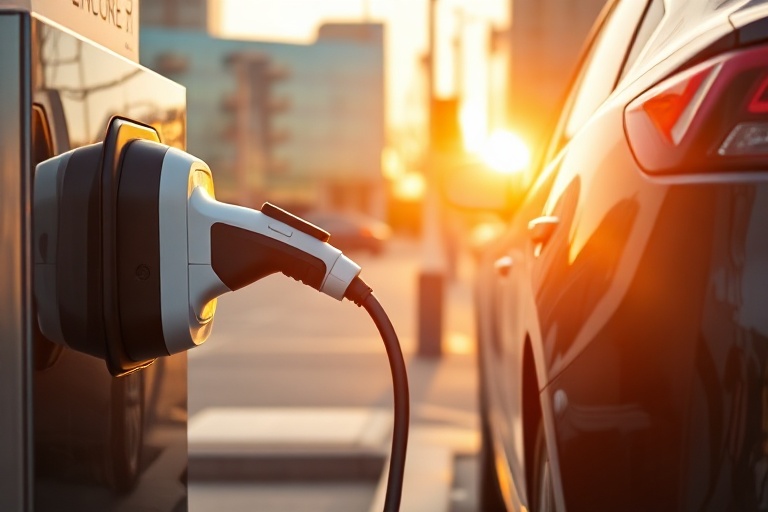
ev charging points
EV Charging Points: A Global Race to Power the Future
Across continents, the hum of combustion engines is slowly giving way to the quiet whir of electric motors. Yet this quiet revolution depends on an invisible network—one that stretches from the neon-lit streets of Tokyo to the winding roads of Patagonia. The electric vehicle (EV) charging point is no longer a novelty; it is the backbone of a mobility shift that is reshaping economies, landscapes, and daily routines.
This transition is not uniform. In some cities, charging stations are as ubiquitous as parking meters. In others, they remain scarce, creating barriers that slow adoption. The story of EV charging is not merely technical—it is cultural, political, and deeply human.
The State of Charging Infrastructure: A Patchwork of Progress
As of 2024, over 4 million public EV charging points exist globally, according to the International Energy Agency (IEA). But distribution is uneven. China leads with over 2 million units, largely due to aggressive state-led expansion and incentives for both manufacturers and consumers. The European Union follows, driven by its 2035 ban on new internal combustion engine sales. Meanwhile, the United States lags behind in public infrastructure, despite being home to Tesla’s Supercharger network.
Where infrastructure is sparse, so is trust. In rural India and parts of sub-Saharan Africa, EV adoption remains minimal—not because of lack of interest, but because of unreliable electricity and sparse charging networks. Even in wealthier nations like Australia, drivers in remote regions face “charging deserts,” forcing long detours or reliance on home charging.
This disparity reflects deeper inequalities. Urban centers benefit from dense, high-power fast-charging hubs, while rural and low-income areas are often left behind. Governments and private companies are responding—some with subsidies, others with pilot programs—but progress remains slow in the most underserved regions.
Technology and Trends: Speed, Convenience, and Smart Integration
The modern EV charging point is a marvel of miniaturized power. Gone are the days of slow trickle chargers. Today’s fastest units deliver up to 350 kW—enough to add 200 miles of range in 15 minutes. These ultra-fast chargers are concentrated along highway corridors, enabling long-distance travel without hours-long stops.
But speed is only part of the equation. User experience has become central. Many charging networks now offer apps that show real-time availability, pricing, and even reservation options. Some integrate with navigation systems, rerouting drivers around congested or occupied stations. In Europe, the “Roaming” initiative allows drivers to use different charging networks with a single app—a small step toward seamless mobility.
Wireless charging is also gaining ground. Pilot programs in cities like Oslo and Detroit are testing inductive pads embedded in roads, allowing EVs to charge while parked or even driving. This technology could reduce the need for large charging stations and integrate power into urban infrastructure.
Yet challenges persist. Compatibility remains an issue. While most new EVs use the CCS (Combined Charging System) standard, Tesla’s North American and Chinese networks use proprietary connectors. Global standardization efforts are underway, but fragmentation slows adoption in some markets.
Cultural Shifts: From Niche to Normal
Charging points have moved from the fringes of alternative energy to the heart of urban design. In Amsterdam, charging stations double as public art. In Seoul, they’re integrated into smart benches that offer Wi-Fi and phone charging. In Berlin, repurposed gas stations now host clusters of rapid chargers, relics of the fossil fuel era reborn as clean energy hubs.
This transformation reflects a broader cultural shift. In countries like Norway—where over 80% of new cars sold are electric—charging is as routine as refueling once was. Children grow up seeing charging cables next to bicycles. Elders recall the last petrol station they visited. The ritual of “filling up” has been redefined.
But cultural resistance remains. In some communities, charging points are seen as eyesores or safety hazards. Others associate them with long waits or technical failures. Education and experience are slowly changing perceptions, but misinformation still lingers.
In China, where EV ownership is skyrocketing, charging has become a social activity. Shopping malls, hotels, and even temples offer free charging as a customer perk. The act of plugging in is now tied to convenience, status, and environmental virtue.
Policy and Profit: Who Builds the Future?
The expansion of EV charging is not just a market phenomenon—it is a policy-driven one. In the European Union, the Alternative Fuels Infrastructure Regulation (AFIR) mandates that every 60 km along major roads must have a charging point by 2025. In the U.S., the $7.5 billion National Electric Vehicle Infrastructure (NEVI) program aims to create a coast-to-coast network by 2030.
But policy alone cannot scale infrastructure fast enough. Private investment is crucial. Oil giants like Shell and BP have pivoted toward charging, acquiring networks and rebranding gas stations. Automakers such as Tesla, BMW, and Ford are building their own networks to support their vehicles and generate revenue.
Yet profitability remains elusive. Many charging operators struggle with high upfront costs, maintenance, and low utilization in rural areas. Some rely on government grants or partnerships with utilities to break even. In dense cities, competition is fierce, driving down prices and innovation.
This creates a paradox: the places that need charging most may not be the most profitable to serve. As a result, public-private partnerships are becoming the norm. Cities provide land and permits; companies install and operate the equipment; utilities supply the power. It’s a fragile balance—one that requires long-term vision and short-term cooperation.
What’s Next: Toward a Fully Charged World
The next decade will determine whether EV charging becomes truly ubiquitous—or remains a luxury for the connected few. Several trends are likely to shape the future:
- Battery swapping: Especially in two- and three-wheeler markets like India and Southeast Asia, where swapping stations can recharge a vehicle in minutes without waiting for a charge. Companies like NIO in China are pioneering this model for passenger cars.
- Vehicle-to-grid (V2G): EVs could become mobile energy storage units, feeding power back into the grid during peak demand. Pilot projects in the UK and Japan are testing this concept, turning cars into assets rather than liabilities.
- Solar-powered chargers: Off-grid and remote areas are turning to photovoltaic chargers, reducing reliance on the main grid. In Australia, solar-powered highway stations are being trialed in outback regions.
- Regulation and standardization: Governments are pushing for unified payment systems, open data standards, and interoperable networks to prevent market fragmentation.
Ultimately, the success of EV charging hinges not just on technology, but on equity. The goal should not be to replicate the inequalities of the fossil fuel era, but to build a system that serves all communities—urban and rural, rich and poor, early adopters and skeptics alike.
A Call for Collective Action
No single entity can power the electric future. It requires collaboration between governments, automakers, energy providers, urban planners, and citizens. In cities like Amsterdam and Shenzhen, this collaboration is already visible. In others, it is still aspirational.
As we stand on the cusp of a mobility revolution, the charging point is more than a plug in the wall. It is a symbol of change—a small, everyday object that carries the weight of climate action, technological progress, and social justice.
For those who still see EVs as a distant dream, consider this: every charging point installed today is a vote for the world we want tomorrow. And the world is charging ahead.
—