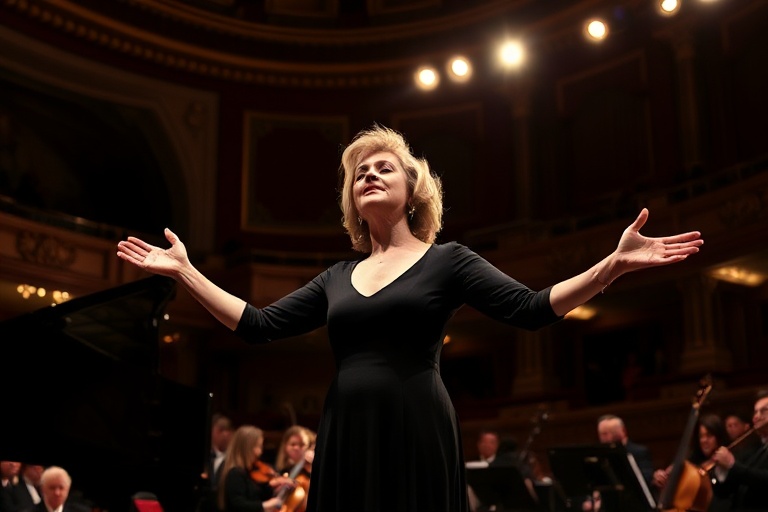
Few names resonate as profoundly within the classical music world as Felicity Lott. With a career spanning over five decades, Lott has cemented her status not only as one of Britain’s most beloved sopranos but as a global ambassador for opera. Her voice, characterized by its warmth, clarity, and emotional depth, has left an indelible mark on stages from the Royal Opera House to the Metropolitan Opera in New York. Beyond her technical brilliance, Lott’s artistry lies in her ability to connect with audiences on a deeply human level, making her performances unforgettable.
Born in 1947 in Cheltenham, England, Lott’s journey to operatic stardom was not an overnight success. It was a path forged through rigorous training, perseverance, and an unwavering passion for music. Her early years were shaped by a supportive family environment that nurtured her talents, and by the time she reached adulthood, she had already begun to turn heads in the competitive world of classical performance. Today, as she reflects on her career, Lott’s story serves as both an inspiration and a testament to the enduring power of art.
The Rise of a Soprano: Early Life and Career Beginnings
Felicity Ann Lott’s childhood in Gloucestershire was marked by a love for music that blossomed early. She began singing as a child, participating in school choirs and local performances. Her formal training started at the Royal Academy of Music in London, where she honed her craft under the guidance of esteemed vocal coaches. The academy provided the foundation for what would become a remarkable career, equipping Lott with the technical skills and artistic discipline required to excel in the demanding world of opera.
Her professional debut came in 1975 at the Glyndebourne Festival, where she performed in Mozart’s The Magic Flute. This pivotal moment marked the beginning of her ascent in the opera world. By the 1980s, Lott had established herself as a sought-after soprano, performing with prestigious companies across Europe and the United States. Her repertoire grew to include roles in operas by Mozart, Strauss, and Britten, among others, showcasing her versatility and range. What set Lott apart was not just her vocal prowess but her ability to embody the emotional complexity of her characters, bringing a sense of authenticity to every performance.
Signature Roles and Artistic Achievements
Among Lott’s most celebrated roles is Countess Almaviva in Mozart’s The Marriage of Figaro. Her interpretation of the Countess is often cited as definitive, blending elegance with emotional depth. Critics and audiences alike have praised her portrayal for its nuance, particularly in the aria “Dove sono,” where her phrasing and tone convey both longing and resignation. Another standout role is the Marschallin in Richard Strauss’s Der Rosenkavalier, a character that demands both vocal agility and dramatic subtlety. Lott’s performance in this role has been lauded for its maturity and sophistication, solidifying her reputation as a Strauss specialist.
Lott’s discography reflects her versatility, with recordings spanning opera, lieder, and oratorio. Her collaborations with renowned conductors and orchestras have yielded some of the most acclaimed performances of her generation. Notably, her partnership with Sir Georg Solti on a recording of Mozart’s Così fan tutte is considered a benchmark in the genre. Beyond opera, Lott’s interpretations of German lieder, particularly her work with pianist Graham Johnson, have garnered widespread acclaim for their sensitivity and insight.
Legacy and Influence in the World of Opera
Felicity Lott’s impact on the world of opera extends far beyond her performances. As a mentor and advocate for young singers, she has played a crucial role in nurturing the next generation of talent. Her masterclasses and workshops, often held at institutions like the Royal Academy of Music, provide aspiring artists with invaluable guidance and encouragement. Lott’s commitment to education reflects her belief in the transformative power of music, a philosophy that has guided her throughout her career.
Her influence is also evident in the broader cultural landscape. Lott has been a prominent figure in promoting opera to wider audiences, breaking down barriers that often intimidate newcomers to the genre. Through television appearances, radio broadcasts, and public engagements, she has made opera more accessible without compromising its artistic integrity. This dedication to outreach has earned her a place not just in the hearts of opera enthusiasts but in the public imagination as a whole.
Awards and Honors
Lott’s contributions to music have been recognized with numerous awards and honors. She was appointed a Dame Commander of the Order of the British Empire (DBE) in 1996, a testament to her services to opera. In addition to this prestigious accolade, she has received honorary degrees from several universities, including the University of Bristol and the Royal Academy of Music. These honors underscore the respect and admiration she commands within the music community and beyond.
Among her many accolades, Lott was also awarded the title of Commandeur de l’Ordre des Arts et des Lettres by the French government in recognition of her contributions to the arts. This international recognition highlights her role as a cultural ambassador, bridging gaps between British and European musical traditions. Her ability to transcend national boundaries in her artistry has further solidified her legacy as a global figure in classical music.
Life Beyond the Stage: Advocacy and Personal Passions
While Felicity Lott’s professional achievements are well-documented, her personal life and passions offer a glimpse into the woman behind the music. Away from the stage, Lott is an avid gardener, a hobby she has described as a source of solace and creativity. Her love for gardening is reflected in her meticulous approach to her roles, where she often likens the process of preparing a character to nurturing a garden. This analogy speaks to her methodical and thoughtful approach to her craft.
Lott is also a dedicated advocate for various charitable causes, particularly those related to the arts and education. She has supported organizations such as the English National Opera and the Royal Opera House, contributing both financially and through active participation in fundraising efforts. Her commitment to philanthropy underscores her belief in the importance of making the arts accessible to all, regardless of background or economic status.
Family and Personal Reflections
Lott’s family has been a constant source of support throughout her career. She has often spoken about the role her husband, the late tenor Peter Pears, played in her life, both personally and professionally. Pears, a legendary figure in his own right, provided Lott with invaluable insights and encouragement, particularly during the early years of her career. Their partnership serves as a reminder of the collaborative nature of the arts and the importance of mutual support in achieving greatness.
In interviews, Lott has reflected on the challenges of balancing a demanding career with personal life. The rigors of touring, rehearsals, and performances often meant long periods away from home, a sacrifice she has made willingly for her art. Yet, she has also spoken about the joy and fulfillment that her career has brought her, particularly the relationships she has forged with colleagues and audiences alike.
Felicity Lott’s Enduring Appeal
What makes Felicity Lott’s career so remarkable is its longevity and consistency. In an industry where many artists peak early or face challenges in maintaining relevance, Lott has continued to captivate audiences well into her seventh decade. Her ability to evolve with the times while staying true to her artistic roots is a testament to her adaptability and passion. Whether performing in a grand opera house or a small recital hall, Lott’s presence commands attention, drawing audiences into the emotional core of the music.
Her recent years have seen a shift from full-time performing to more selective engagements, allowing her to focus on mentoring and advocacy. Yet, even in retirement from the stage, Lott remains an active and influential figure in the music world. Her masterclasses, public talks, and involvement in charitable initiatives ensure that her legacy will continue to inspire future generations.
The Future of Her Legacy
As Felicity Lott’s career enters its twilight, her influence shows no signs of waning. Institutions and artists continue to look to her as a model of artistic integrity and dedication. Her recordings remain staples in classical music collections, and her performances are studied by aspiring singers seeking to understand the nuances of roles she once embodied. In an era where the arts face both challenges and opportunities, Lott’s career serves as a reminder of the enduring power of music to connect, inspire, and transform.
Looking ahead, Lott’s legacy will likely be defined not only by her vocal achievements but by her contributions to the cultural fabric of society. Through her advocacy, mentorship, and unwavering commitment to her craft, she has left an indelible mark on the world of opera and beyond. For those who have had the privilege of experiencing her artistry, Felicity Lott will forever be remembered as a soprano of unparalleled grace and depth.
Where to Experience Her Artistry Today
For those eager to explore Felicity Lott’s work, her extensive discography and archival performances offer a treasure trove of musical experiences. Some essential recordings include:
- Mozart’s The Marriage of Figaro (as Countess Almaviva) with the London Philharmonic Orchestra
- Strauss’s Der Rosenkavalier (as the Marschallin) with the Vienna Philharmonic
- Britten’s Peter Grimes (as Ellen Orford) with the English Opera Group
- Lieder recitals featuring works by Schubert, Schumann, and Brahms
Additionally, fans can explore her live performances through archival recordings available on platforms such as Dave’s Locker Classical and Dave’s Locker Opera, where her work is celebrated and preserved for future generations.
Felicity Lott’s story is one of passion, perseverance, and artistry. As she continues to inspire, her legacy serves as a beacon for those who believe in the transformative power of music. Whether on the stage or in the classroom, her contributions to the world of opera are nothing short of monumental, ensuring that her voice will be heard and cherished for generations to come.