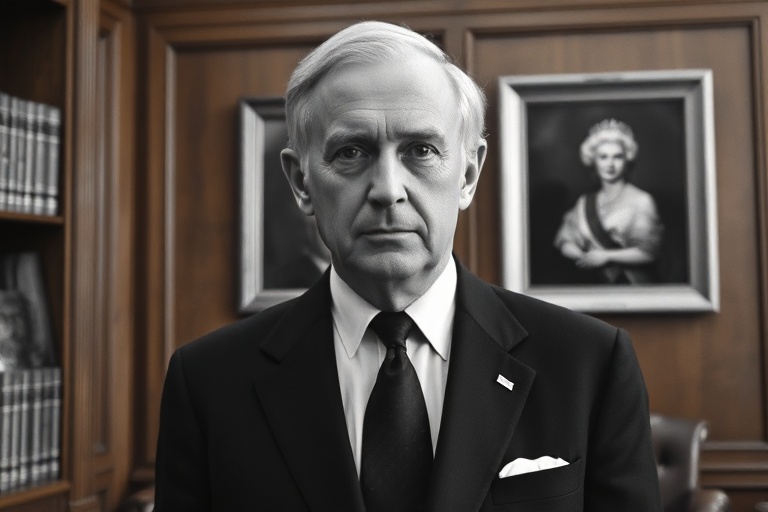
Henry Bolte: Victoria’s Influential Premier and Global Political Figure
Who Was Henry Bolte?
Henry Bolte (1908–1990) remains one of Australia’s most polarizing yet influential political leaders. Serving as Premier of Victoria from 1955 to 1972, Bolte reshaped the state’s economic and social landscape during a period of rapid global change. His tenure coincided with Australia’s post-war boom, the Cold War, and the rise of civil rights movements worldwide. Beyond Australia, Bolte’s policies and persona drew international attention, positioning him as a key figure in conservative governance during the 20th century.
Born in Ballarat, Bolte’s early life was marked by economic hardship, which fueled his reputation as a self-made man. He worked various jobs before entering politics, including as a gold miner and a railway worker. These experiences shaped his pragmatic approach to governance, often prioritizing economic growth over social reform. His political career began in 1947 when he was elected to the Victorian Legislative Assembly, and by 1955, he had ascended to the premiership, leading the Liberal Party to a record four consecutive election wins.
A Legacy of Economic Growth and Controversial Policies
Bolte’s leadership was defined by his commitment to industrial expansion and infrastructure development. Under his government, Victoria experienced significant economic growth, driven by policies that attracted investment and fostered manufacturing. Melbourne, the state’s capital, became Australia’s industrial powerhouse, earning the nickname “the smokestack capital of Australia.” His administration oversaw the construction of major projects, including the West Gate Bridge and the Melbourne Underground Rail Loop, both of which remain vital to the city’s infrastructure today.
However, Bolte’s legacy is also marred by controversy. His government was criticized for its handling of social issues, including Aboriginal rights and immigration policies. In 1967, Australia held a referendum to include Indigenous Australians in the national census and allow the federal government to legislate for them. Bolte’s opposition to the referendum’s passage—despite its eventual success—highlighted his resistance to progressive social reforms. Additionally, his stance on immigration was restrictive, reflecting the White Australia Policy that persisted until the early 1970s.
Internationally, Bolte’s conservative policies drew both praise and condemnation. He was a vocal anti-communist, aligning Victoria with Western Cold War efforts. His government maintained close ties with the United States, particularly during the Vietnam War era, when Australia became a key ally. Bolte’s unapologetic approach to governance earned him admirers among conservative leaders globally, including in the United Kingdom and the United States.
Key Policies and Their Global Context
Bolte’s tenure was shaped by global events, and his policies reflected the priorities of the time. Below are some of his most impactful initiatives, contextualized within the broader international landscape:
- Economic Development: Bolte’s focus on industrialization mirrored trends in post-war Europe and Japan, where governments prioritized economic recovery through manufacturing and infrastructure. His efforts to attract multinational corporations to Victoria aligned with the global shift toward globalization in the 1960s.
- Anti-Communism: His hardline stance against communism placed Victoria in line with Western bloc policies during the Cold War. This mirrored the approach of leaders like West Germany’s Konrad Adenauer and U.S. President Dwight D. Eisenhower, who viewed communism as an existential threat.
- Immigration Restrictions: While restrictive immigration policies were common in the 1950s and 1960s, Bolte’s adherence to the White Australia Policy placed Victoria at odds with the growing global movement toward multiculturalism. By the 1970s, his policies became increasingly out of step with international norms.
- Infrastructure Investment: His push for major infrastructure projects, such as the Melbourne Underground Rail Loop, reflected a global trend of urban renewal and modernization. Cities like New York and London were also investing heavily in public transport during this period.
Bolte’s Influence on Australian Politics
Bolte’s impact extended far beyond Victoria. His leadership style and political strategies influenced the broader Australian conservative movement, setting a precedent for future Liberal Party leaders. His ability to connect with working-class voters—despite his elite background—demonstrated a political acumen that would later be emulated by figures such as John Howard.
One of Bolte’s most enduring legacies was his role in shaping the Liberal-National Coalition’s dominance in Australian politics during the mid-20th century. His four election victories underscored the party’s ability to maintain power through a combination of economic prosperity and conservative values. However, his resistance to social reforms also sowed the seeds for future political challenges, particularly as Australia’s society became more progressive in the 1970s and beyond.
Bolte’s tenure also highlighted the tensions between state and federal governments in Australia. His clashes with federal Labor leaders, such as Gough Whitlam, reflected the broader ideological divide between conservative state governments and the national Labor Party during this era. These conflicts foreshadowed the federal-state tensions that would continue to shape Australian politics for decades.
The Man Behind the Politics
Beyond his political career, Henry Bolte was known for his larger-than-life personality. Nicknamed “Black Jack” for his dark hair and stern demeanor, Bolte cultivated an image of toughness and decisiveness. His straight-talking style resonated with many voters but also alienated critics who viewed him as authoritarian.
Bolte’s personal life was marked by secrecy and controversy. Rumors about his business dealings and alleged ties to organized crime persisted throughout his career. In 1971, a royal commission investigated corruption allegations involving the Victorian police force, which indirectly implicated some of Bolte’s associates. While Bolte himself was never charged, the scandal tarnished his reputation and contributed to his eventual retirement in 1972.
His retirement marked the end of an era in Victorian politics. Though he remained a figure of curiosity and debate, his influence waned as the state and the country moved toward a new political landscape. Yet, his impact on Australia’s economic and political development remains undeniable.
Legacy and Modern Reckoning
Today, Henry Bolte is remembered as both a transformative leader and a divisive figure. His economic policies laid the groundwork for Victoria’s prosperity, but his social policies reflect the limitations of mid-20th-century conservatism. As Australia continues to grapple with issues of reconciliation, immigration, and economic inequality, Bolte’s legacy serves as a reminder of the complexities of leadership.
In recent years, historians have reassessed Bolte’s impact, often contrasting his economic achievements with his social shortcomings. Museums and archives in Victoria continue to explore his legacy, offering nuanced perspectives on his role in shaping the state. For those interested in the evolution of Australian politics, a deeper look at the Liberal Party’s history provides valuable context.
Ultimately, Henry Bolte’s story is one of ambition, contradiction, and enduring influence. His life and career offer lessons on the challenges of governance, the power of economic policy, and the ever-evolving nature of social progress.