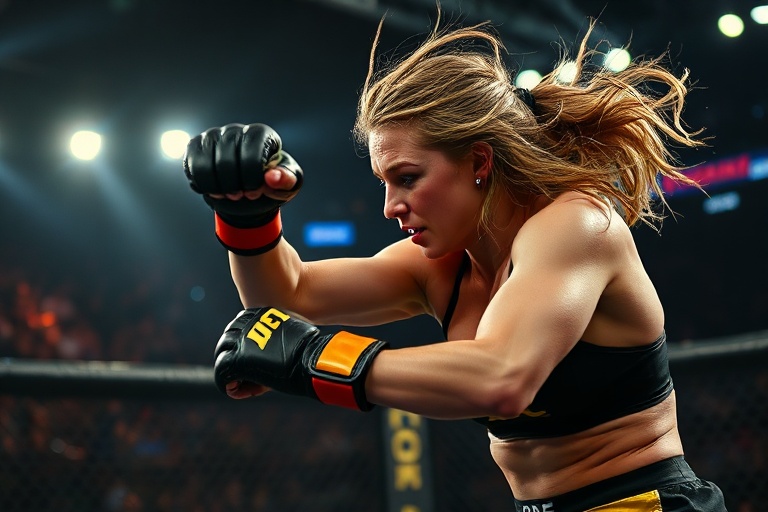
Ronda Rousey: From Olympic Judo to Global Wrestling Icon
Ronda Rousey’s career trajectory reads like a blueprint for what happens when raw talent meets relentless ambition. Born in Riverside, California, in 1987, Rousey’s early life was shaped by adversity. Her father, a judo instructor, died in a car accident when she was three, leaving her mother to raise her and her siblings alone. The tragedy could have been a setback, but for Rousey, it became the catalyst for an extraordinary journey. By age 11, she was training in judo, and by 15, she had already earned her black belt. Her path to the Olympics was swift—she qualified for the 2008 Beijing Games at just 21 years old, becoming the first American woman to win a judo medal in 12 years.
The transition from judo to mixed martial arts (MMA) in 2010 was not just a career shift; it was a cultural earthquake. Rousey brought the precision and intensity of judo into the UFC, where she quickly became the face of women’s MMA. Her signature move, the armbar, became synonymous with dominance. Between 2012 and 2015, she reigned as the UFC Women’s Bantamweight Champion, defending her title six times. But Rousey’s influence extended far beyond the octagon. She became a symbol of female empowerment in sports, challenging the long-held notion that women’s athletics were secondary to men’s.
The Cultural Shift: How Rousey Redefined Women’s Sports
Before Ronda Rousey, women in combat sports were often sidelined or treated as novelty acts. Her arrival in the UFC changed that. Rousey’s combination of skill, charisma, and unapologetic confidence made her a household name. She was the first female fighter to headline a UFC pay-per-view event, and her fights drew millions of viewers. Her 2015 knockout of Beth Correia in just 34 seconds remains one of the most-watched women’s MMA fights in history.
Rousey’s impact wasn’t limited to the UFC. She played a pivotal role in the WWE’s decision to invest in its women’s division. When she debuted in 2018, she brought mainstream attention to the company’s women’s roster, helping to elevate stars like Charlotte Flair and Becky Lynch. Her wrestling persona, a blend of intensity and vulnerability, resonated with fans worldwide. In an era where women’s sports were often undervalued, Rousey’s success proved that female athletes could command the same level of respect and attention as their male counterparts.
The cultural ripple effect of Rousey’s career extended into broader conversations about gender and athleticism. She openly discussed the challenges of being a woman in combat sports, from unequal pay to media scrutiny. Her willingness to speak out against these issues helped pave the way for future generations of female athletes. Rousey’s legacy in this regard is not just about her victories but about the systemic changes she helped inspire.
A Global Perspective: Rousey’s Influence Beyond North America
While Rousey’s fame was undeniable in the United States, her influence reached far beyond its borders. In Japan, where judo is deeply ingrained in the culture, Rousey was celebrated as a prodigy who had mastered the sport before transitioning to MMA. Her 2012 fight against Sarah Kaufman in Japan drew a massive audience, further solidifying her status as an international star.
In Europe, Rousey’s rise coincided with a growing interest in women’s MMA. Promotions like Invicta FC and Cage Warriors began showcasing female fighters more prominently, inspired in part by Rousey’s success. Her fights were broadcast in countries where combat sports were already popular, such as Brazil and the United Kingdom, introducing new audiences to the thrill of women’s MMA.
Rousey’s global appeal was also tied to her relatability. She was more than just an athlete; she was a storyteller. Her interviews, where she spoke candidly about her struggles with mental health and body image, resonated with fans worldwide. In an era where social media allowed athletes to connect directly with their audiences, Rousey’s authenticity made her a global icon.
The Business of Being Ronda Rousey
Rousey’s career was not just about fighting; it was also about building a brand. She leveraged her fame to secure lucrative endorsement deals with companies like Nike, Monster Energy, and MetroPCS. Her partnerships extended beyond traditional sports brands, including appearances in films like Furious 7 and Mile 22. These ventures demonstrated her versatility and appeal beyond the sports world.
Her move to the WWE in 2018 was a calculated business decision as much as it was a career move. The WWE had been struggling to attract younger audiences, and Rousey’s star power provided a much-needed boost. Her debut at WrestleMania 34 was one of the most-watched moments in WWE history, proving that her crossover appeal was as strong as ever. The WWE’s investment in its women’s division, often referred to as the “Women’s Evolution,” was accelerated by Rousey’s involvement, leading to a new era of women’s wrestling.
Rousey’s business acumen extended to her role as an investor. She has backed several startups, including the women’s sports platform Sports Engine, which focuses on providing resources for female athletes. Her involvement in these ventures highlights her commitment to using her platform to create opportunities for others.
Controversies and Challenges: The Other Side of Rousey’s Story
Despite her success, Rousey’s career has not been without controversy. Her UFC tenure was marked by criticism of her trash-talking and perceived arrogance, with some fans and commentators labeling her as “too aggressive” or “unlikable.” These criticisms often reflected broader societal biases about women who assert themselves in male-dominated spaces.
Her 2015 knockout loss to Holly Holm marked a turning point in her career. The defeat was a rare setback that exposed vulnerabilities many fans had not seen before. Rousey’s emotional reaction post-fight, including a tearful interview where she admitted to considering quitting, humanized her in ways that her previous victories had not. The loss also sparked debates about the pressures female athletes face when their careers are so closely tied to their public personas.
Rousey’s WWE career was not without its own challenges. Her initial push as a dominant heel (villain) character was met with mixed reactions, with some fans feeling that her in-ring skills did not translate seamlessly to professional wrestling. However, her eventual turn to a fan favorite and her WrestleMania main-event status proved that she could adapt and thrive in a new environment.
Legacy and the Future of Women in Combat Sports
Ronda Rousey’s legacy is multifaceted. She is a trailblazer who shattered glass ceilings in combat sports, a cultural icon who redefined what it means to be a female athlete, and a businesswoman who leveraged her fame to create new opportunities. Her impact on judo, MMA, and wrestling is undeniable, but her influence extends even further—into the broader conversation about gender equality in sports.
As women’s sports continue to grow, Rousey’s career serves as a blueprint for what is possible. Her success has inspired a new generation of female athletes to pursue their dreams, regardless of the obstacles they may face. Organizations like the Sports and Entertainment Women’s Association have cited Rousey as a key figure in their efforts to promote gender diversity in sports media and leadership.
Looking ahead, Rousey’s role in the sports world may evolve. She has expressed interest in coaching and mentoring young athletes, a natural progression for someone who has already achieved so much. Her story is far from over, but her place in history is secure. Ronda Rousey did not just break barriers—she rebuilt them, creating a foundation for the next generation of female athletes to build upon.
The fight for equality in sports is ongoing, but Rousey’s contributions have made it a little easier for those who follow in her footsteps. Her legacy is a reminder that greatness is not just about winning—it’s about changing the game.