The New Deal, launched by President Franklin D. Roosevelt in 1933, remains one of the most ambitious and debated economic recovery programs in American history. Born out of the devastation of the Great Depression, it introduced sweeping reforms that redefined the role of government in the economy. Nearly a century later, its legacy continues to influence conversations about social welfare, financial regulation, and public investment.
Roosevelt’s administration responded to widespread unemployment, bank failures, and collapsing industries by creating jobs, stabilizing markets, and establishing safety nets. Programs like the Civilian Conservation Corps (CCC) and the Works Progress Administration (WPA) put millions to work, while the Social Security Act of 1935 laid the foundation for modern retirement and unemployment benefits. These initiatives didn’t just address immediate crises—they reshaped public expectations about the government’s responsibility to protect citizens.
The Core Components of the New Deal
The New Deal unfolded in two major phases: the First New Deal (1933–1935) and the Second New Deal (1935–1938). Each phase introduced policies that targeted different aspects of the economic collapse. The First New Deal focused on immediate relief and recovery, while the Second New Deal emphasized long-term reform and social justice.
Key programs and policies included:
- Banking Reforms: The Glass-Steagall Act separated commercial and investment banking, creating the Federal Deposit Insurance Corporation (FDIC) to protect depositors’ savings. This restored confidence in a crippled financial system.
- Job Creation: The Civil Works Administration (CWA) and later the WPA employed over 8 million people in public works projects, from building roads to painting murals. These projects left a lasting physical and cultural footprint across the country.
- Agricultural Support: The Agricultural Adjustment Act (AAA) aimed to raise crop prices by paying farmers to reduce production, though it faced criticism for benefiting large landowners over sharecroppers.
- Social Security: The Social Security Act established federal unemployment insurance and old-age pensions, creating a system that still supports millions of Americans today.
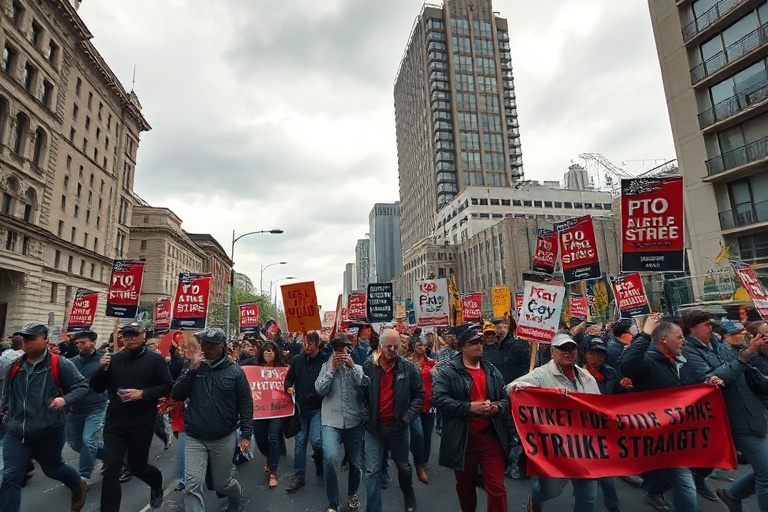
- Labor Rights: The National Labor Relations Act (Wagner Act) guaranteed workers the right to unionize and bargain collectively, fundamentally altering the balance of power between labor and capital.
These policies didn’t always work perfectly. Some programs were hastily designed and later dismantled, while others faced legal challenges. Yet collectively, they represented an unprecedented expansion of federal authority into economic and social life.
Broader Implications: How the New Deal Changed America
The New Deal’s most enduring impact may be cultural rather than economic. Before the 1930s, many Americans viewed poverty as a personal failure. The New Deal shifted that narrative, framing economic hardship as a systemic issue requiring collective solutions. This shift laid the groundwork for the post-World War II welfare state and the modern American social safety net.
Critics argue that the New Deal prolonged the Depression by stifling private enterprise with excessive regulation. Supporters counter that without these interventions, the suffering of the 1930s would have been far worse. The truth likely lies somewhere in between. What’s undeniable is that the New Deal set a precedent for government intervention during crises, a model later replicated during the 2008 financial crisis and the COVID-19 pandemic.
The New Deal also reshaped the political landscape. It solidified the Democratic Party’s dominance for decades and gave rise to a new coalition of urban workers, minorities, and Southern Democrats. This coalition would shape American politics well into the 1960s. Meanwhile, the Republican Party’s opposition to the New Deal’s expansion of federal power laid the ideological groundwork for the modern conservative movement.
Lessons for Today: The New Deal in a Modern Context
In an era of rising inequality and climate change, many policymakers and activists look to the New Deal as a model for large-scale public investment. Programs like the Green New Deal draw direct inspiration from Roosevelt’s approach, proposing a federal jobs guarantee and massive infrastructure spending to combat both economic stagnation and environmental degradation.
Yet the New Deal’s legacy is complex. While it reduced poverty and unemployment during the 1930s, it excluded many groups, particularly Black Americans and agricultural workers, from its benefits. Southern Democrats ensured that New Deal programs often reinforced racial hierarchies, such as in the administration of the AAA, which disproportionately displaced Black sharecroppers. This exclusionary aspect of the New Deal serves as a cautionary tale about the limits of progressive policy without explicit anti-discrimination measures.
Today, debates about universal basic income, Medicare for All, and a federal jobs guarantee echo the same tensions that defined the New Deal era. Should economic relief be targeted or universal? How much should the government intervene in markets? These questions remain as contentious now as they were in the 1930s.
Conclusion: A Blueprint for Recovery or a Cautionary Tale?
The New Deal was neither a perfect solution nor a complete failure. It was a bold experiment in using government power to address economic catastrophe, one that saved millions from destitution and redefined the relationship between citizens and their government. Its successes and shortcomings offer valuable lessons for contemporary policymakers grappling with similar challenges.
As the United States faces new crises—climate change, technological disruption, and widening inequality—the New Deal’s legacy reminds us that government can be a force for good, but only if wielded with care and foresight. Whether it serves as a blueprint or a cautionary tale depends on how we choose to apply its lessons today.
For those interested in exploring similar themes, visit our Analysis and Politics sections for deeper coverage of economic policy and historical trends.