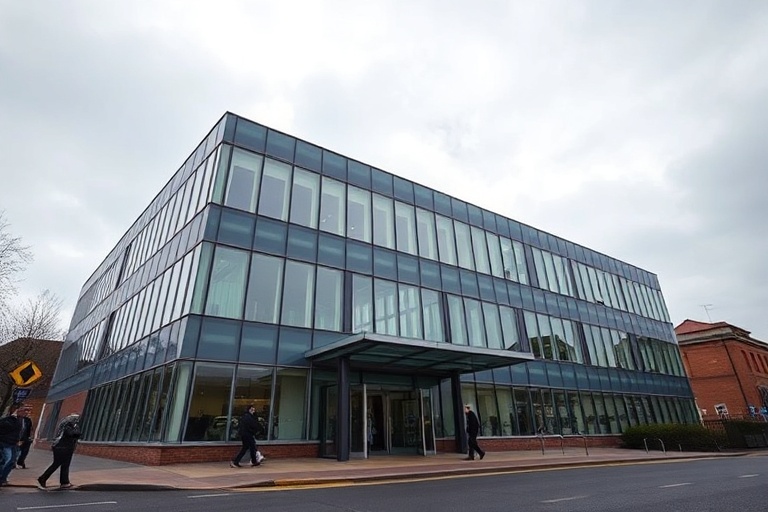
Inside Worcestershire County Council: Governance, Challenges, and Global Lessons
Worcestershire County Council: Balancing Tradition and Modern Governance
Worcestershire County Council stands as a key player in England’s local government landscape, overseeing a region known for its rich history, agricultural heritage, and growing urban centers. With responsibilities ranging from education to infrastructure, the council operates at the intersection of rural preservation and urban development—a challenge mirrored in counties worldwide where tradition clashes with progress.
Its role becomes even more significant when viewed through a global lens. Local governments everywhere are grappling with similar pressures: rising populations, budget constraints, and the need to maintain community identity amid rapid change. Worcestershire’s approach offers a case study in how mid-tier local authorities can adapt without losing their character.
The Structure and Scope of Governance
The council consists of 57 elected councillors representing 102 wards across six districts: Worcester, Malvern Hills, Wyre Forest, Bromsgrove, Redditch, and Wychavon. Each district reflects distinct economic and social profiles—from the industrial heritage of Redditch to the affluent, rural charm of Malvern Hills. This diversity demands nuanced policy-making, where solutions must be tailored to local needs yet integrated into a cohesive county-wide strategy.
Governance is structured across several key committees, including:
- Children and Families – Managing schools, social care, and early years services.
- Adult Social Care and Health – Supporting an aging population with rising care demands.
- Highways and Infrastructure – Overseeing road maintenance, public transport, and flood defenses.
- Economic Growth and Regeneration – Promoting business development and housing projects.
This committee system mirrors structures found in other European local governments, such as Germany’s Kreis districts or France’s départements, where regional authorities balance central oversight with local autonomy. Worcestershire’s model has evolved over decades, reflecting broader trends in decentralization and public-sector reform across the developed world.
Education and Social Services: A Global Parallel
One of the council’s most visible responsibilities is education. Worcestershire operates or oversees 250 schools, from historic grammar schools to modern academies. Recent years have seen a shift toward academy status and multi-academy trusts—moves criticized by some for eroding local democratic control but defended by others as necessary for improving standards.
This debate is not unique to England. In the United States, similar tensions arise between charter schools and traditional public systems. In Sweden, the introduction of friskolor (independent schools) sparked comparable controversies over equity and accountability. Worcestershire’s experience highlights a global tension: how to modernize education systems without sacrificing accessibility or community trust.
The council’s adult social care services face parallel challenges. With an aging population and rising demand, Worcestershire has invested in integrated care systems, partnering with NHS trusts and voluntary organizations. This mirrors approaches in Japan, where municipalities are pioneering community-based elder care models, and in Nordic countries, where universal social services are being adapted to cope with demographic shifts.
Economic Development: From Industry to Innovation
Worcestershire’s economy has transformed dramatically. Once dominated by manufacturing—particularly in automotive and metalwork—the county has pivoted toward advanced engineering, cybersecurity, and agri-tech. The Worcestershire Local Enterprise Partnership (LEP) plays a central role, supporting startups and attracting investment in sectors like robotics and digital innovation.
This evolution reflects a broader global trend: the decline of traditional industries and the rise of knowledge-based economies. Cities like Detroit and Turin have undergone similar transitions, often with mixed success. Worcestershire’s relative success can be attributed to targeted investment in skills and infrastructure, particularly through the county’s science and technology parks.
Yet challenges remain. Rural depopulation in some areas contrasts sharply with housing pressures in towns like Worcester and Redditch. The council has responded with mixed-use development plans and affordable housing initiatives, echoing strategies seen in rural counties across Europe and North America. The tension between conserving green belts and meeting housing demand is a universal one, seen in debates over zoning laws from the UK to Australia.
Climate Action and Environmental Stewardship
Worcestershire has committed to becoming carbon-neutral by 2050, aligning with the UK’s national target. Initiatives include tree-planting schemes, renewable energy projects, and sustainable transport plans. The council’s Worcestershire Green Infrastructure Strategy aims to enhance biodiversity while supporting flood resilience—a dual-purpose approach increasingly adopted by local governments worldwide.
This dual focus on climate adaptation and biodiversity is echoed in cities like Copenhagen, which integrates green spaces into urban planning, and in rural regions like Bavaria, where farmers are incentivized to adopt regenerative practices. Worcestershire’s rural identity gives it a unique opportunity to lead in landscape-level conservation, balancing agricultural productivity with ecological health.
However, progress is uneven. Some communities resist wind turbines or solar farms due to visual impact concerns, while others push for faster action. This reflects a global pattern: public support for climate action often wanes when it affects local landscapes or livelihoods. Worcestershire’s experience underscores the need for inclusive dialogue and community-led solutions.
Conclusion: A Model of Adaptive Local Governance
Worcestershire County Council exemplifies how mid-sized local authorities can navigate complex, interconnected challenges. Its ability to balance tradition with innovation—whether in education, economic development, or environmental stewardship—offers lessons for regions facing similar pressures. The council’s journey reflects a broader global shift: the increasing importance of local governance in an era of centralization and climate crisis.
As populations age, economies diversify, and environmental demands grow, the role of county councils like Worcestershire’s will only expand. Their success hinges not on grand gestures, but on steady, inclusive, and adaptive governance. In that sense, Worcestershire is not just managing a region—it’s contributing to a global conversation about the future of local democracy.
For those interested in how local governance intersects with broader social trends, exploring related topics like local policy innovations or global urban development can provide further context.