kirklees council
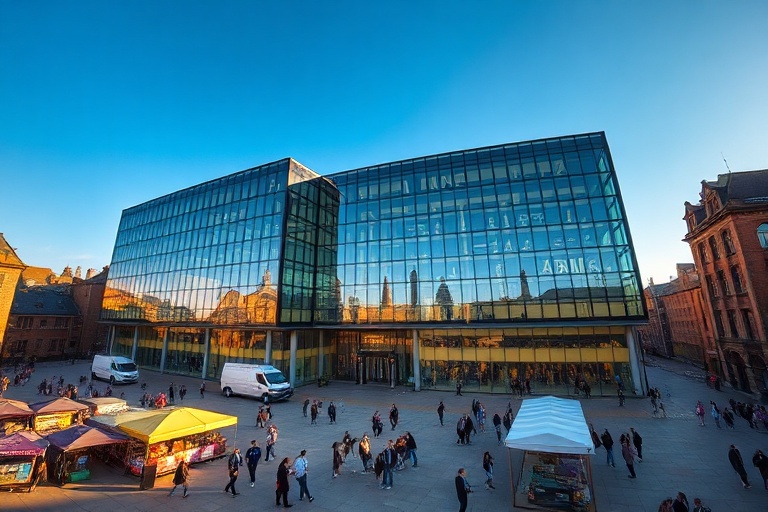
Local governance in the UK faces increasing scrutiny as communities demand more transparency and efficiency from their representatives. Kirklees Council, covering a diverse area in West Yorkshire, stands at the intersection of these challenges, balancing urban development with rural preservation. With over 430,000 residents, its decisions ripple through schools, transportation, and economic initiatives across towns like Huddersfield, Dewsbury, and Batley.
The Structure and Responsibilities of Kirklees Council
Kirklees Council operates as a metropolitan district council, meaning it shares power with the West Yorkshire Combined Authority while retaining control over local services. Its responsibilities span education, housing, waste management, and social care—each requiring careful allocation of a £500 million annual budget. The council’s 69 councillors, elected every four years, represent wards that reflect the area’s economic and cultural diversity.
Among its most visible functions is education. Kirklees manages 124 primary schools and 20 secondary schools, where performance metrics often spark debate. Recent Ofsted reports highlighted improvements in some schools, yet attainment gaps persist between affluent and deprived areas. Housing remains another flashpoint, with demand for affordable homes outstripping supply amid rising property prices.
Key Areas of Governance
- Transportation: Overseeing bus services and road maintenance, with recent investments in cycling infrastructure.
- Economic Development: Attracting businesses to regenerate former textile mill towns.
- Social Care: Providing elderly and disability services amid funding constraints.
- Environmental Initiatives: Rolling out carbon reduction plans to meet UK net-zero targets.
The council’s approach blends top-down policy with grassroots engagement. Public consultations on issues like the Clean Air Zone and the Spen Valley Greenway project drew thousands of responses, illustrating how local voices shape decisions.
Recent Controversies and Challenges
No local authority operates without controversy. Kirklees Council has faced criticism over several high-profile issues in recent years. One persistent challenge is financial sustainability. Like many councils, Kirklees grapples with reduced central government funding, forcing difficult choices between cutting services or raising council tax. In 2023, a proposed 4.99% tax hike sparked protests from residents wary of further austerity.
Another contentious topic is the council’s handling of child safeguarding. A 2021 Ofsted inspection rated children’s services as “inadequate,” prompting an improvement plan that is still being implemented. The case of a vulnerable teenager in Dewsbury, whose death in 2022 was linked to failures in social care, intensified calls for systemic reform. These incidents underscore the human cost of underfunding in public services.
Urban development has also divided opinion. Plans to redevelop the Ravensknowle Park area in Huddersfield drew opposition from heritage groups concerned about encroachment on green spaces. Meanwhile, the council’s partnership with private developers to build 1,000 new homes by 2025 faces scrutiny over affordability and displacement risks.
Community Response and Activism
Residents are not passive recipients of council policy. Grassroots movements have emerged to challenge decisions and propose alternatives. The Save Huddersfield Library campaign successfully blocked proposed closures in 2021, while the Batley and Spen Anti-Racism Group has pressured the council to address hate crime more robustly.
One notable example is the work of the Kirklees Citizens’ Assembly on Climate Change. Formed in 2020, this group of randomly selected residents produced a report on local decarbonization, influencing the council’s Climate Emergency Action Plan. Their recommendations—such as retrofitting social housing and expanding community energy schemes—demonstrate how participatory democracy can shape policy.
Local media has played a role too. The Huddersfield Examiner and Batley & Birstall News frequently report on council meetings, exposing inconsistencies in decision-making. Social media platforms like Facebook groups have become hubs for debate, though they also amplify misinformation and polarize opinions.
Looking Ahead: The Future of Local Governance in Kirklees
Kirklees Council’s trajectory will be shaped by three key forces: financial pressures, political realignment, and technological adaptation. The upcoming 2024 local elections could shift the balance of power, with opposition parties advocating for greater devolution of funding and decision-making to the community level.
Technology offers both opportunities and risks. The council’s digital transformation initiative aims to streamline services, from online planning applications to AI-driven waste collection routes. Yet concerns about data privacy and digital exclusion persist, particularly among elderly residents who rely on face-to-face support.
Perhaps the most pressing question is whether Kirklees can reconcile its urban-rural divide. Towns like Cleckheaton and Holmfirth boast strong local identities, while areas of Dewsbury face higher deprivation. The council’s Community Initiatives page highlights projects bridging these gaps, from food banks to youth clubs. Yet without sustained investment, such efforts risk being mere band-aids for systemic inequities.
For Kirklees to thrive, it must embrace a model of governance that prioritizes collaboration over hierarchy. This means not only listening to residents but empowering them to co-design solutions. Whether through participatory budgeting or citizen assemblies, the future of local governance may well be defined by how effectively councils like Kirklees can decentralize power.
What Comes Next?
- May 2024: Local elections that could reshape the council’s political landscape.
- 2025: Completion of the Spen Valley Greenway, a 12-mile walking and cycling route.
- 2026: Full implementation of the revised children’s social care plan.
- 2030: Target for reducing council carbon emissions by 50%.
The story of Kirklees Council is not unique, but it is instructive. In an era of political fragmentation and economic uncertainty, its challenges reflect broader struggles within local governance across the UK. Yet within these challenges lie opportunities—for innovation, for community-building, and for redefining what local democracy can achieve.
For those invested in the future of West Yorkshire, Kirklees offers a case study worth watching. Its successes and failures will resonate far beyond its borders.
For more on local governance and community initiatives, explore Community Initiatives and Political Analysis on Dave’s Locker.