Leeds City Council Election Results: A Shift in Local Politics
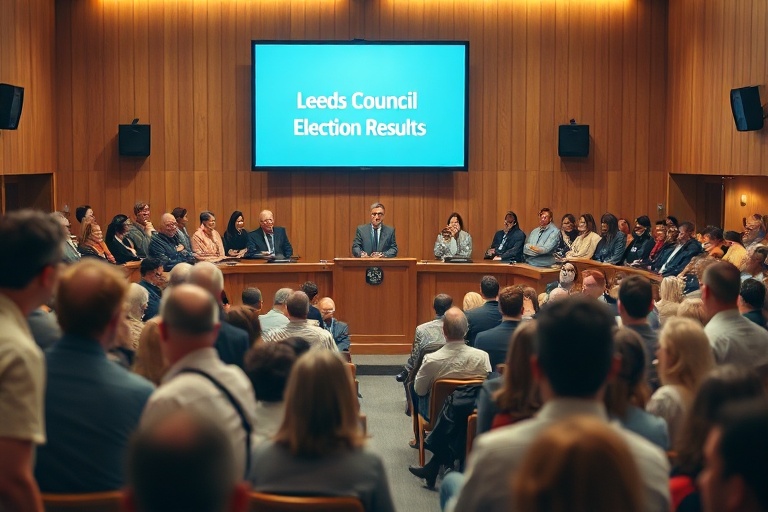
Last week’s Leeds City Council elections delivered results that will reshape the political landscape of England’s third-largest city. With a turnout of 34.7%, voters made their preferences clear, flipping several wards and signaling evolving priorities across diverse communities. The outcome reflects broader national trends while highlighting Leeds’ unique identity as a cultural and economic hub.
Labour retained control of the council, but not without challenges. The party lost ground in key marginal wards, particularly in areas with younger populations and growing multicultural demographics. Meanwhile, the Conservatives made modest gains, capitalizing on traditional strongholds. The Green Party and Liberal Democrats also saw incremental progress, though neither achieved a breakthrough. This fragmented result underscores a city in transition, where political allegiances are no longer static.
Key Results and Ward-Level Shifts
The most notable changes occurred in wards like Headingley and Hyde Park, where student-heavy populations and progressive voters reshaped the electoral map. Labour held these seats, but with reduced majorities, suggesting growing dissatisfaction even among core supporters. In contrast, the Conservatives strengthened their grip on affluent suburbs such as Alwoodley and Adel, where economic concerns outweigh cultural issues.
Turnout varied dramatically across Leeds. Inner-city wards like Beeston and Gipton recorded participation rates below 30%, while suburban areas like Otley and Wetherby exceeded 40%. This disparity mirrors global patterns, where urban disengagement contrasts with suburban activism—a trend observed in cities from Berlin to Boston.
Below are the top five wards by voter turnout:
- Wetherby: 43.2%
- Otley and Yeadon: 41.8%
- Alwoodley: 40.5%
- Pudsey: 39.7%
- Morley North: 38.9%
These figures reveal a city divided not just politically, but geographically. While suburban Leeds leans conservative, the urban core remains a Labour stronghold, with pockets of Green and Lib Dem influence. This split complicates governance, as competing priorities clash between housing affordability, transport infrastructure, and economic development.
National Context: How Leeds Reflects Broader Trends
Leeds’ election results align with wider shifts in UK local politics. The Conservative Party’s gains in suburban areas reflect a national strategy to reclaim “red wall” communities, while Labour’s struggles in urban wards echo challenges in cities like Manchester and Birmingham. The Greens’ incremental progress, meanwhile, mirrors their growing presence in university towns and affluent neighborhoods.
Culturally, Leeds stands out as a microcosm of modern Britain. Its diverse population—with significant South Asian, Eastern European, and African communities—demands policies that address integration, education, and employment. The council’s ability to balance these needs will determine its future relevance. As cities worldwide grapple with similar challenges, Leeds’ experiment in local democracy offers lessons for urban governance from Sydney to San Francisco.
One striking example is the rise of the Yorkshire Party, which, while not winning seats, gained traction in wards like Rothwell and Morley. This regionalist movement taps into frustrations over Westminster’s neglect of northern England—a sentiment that resonates globally, from Catalonia’s independence movement to Quebec’s sovereignty debates.
What Comes Next for Leeds?
The new council faces immediate challenges. Budget constraints, housing shortages, and transport delays top the agenda, but political fragmentation could stall progress. Labour’s reduced majority means compromise will be essential, particularly with the Greens and Lib Dems holding the balance in key committees.
For residents, the election’s outcome brings both uncertainty and opportunity. Will the council prioritize green initiatives in response to climate protests? Can it address the cost-of-living crisis affecting working-class families? These questions will define Leeds’ next four years.
One thing is certain: the city’s political dynamics are evolving. As Leeds positions itself as a cultural and economic powerhouse—home to the British Asian Trust, the Leeds International Piano Competition, and a thriving sports scene—its governance must reflect the diversity and ambition of its people.
Conclusion: A City at a Crossroads
Leeds’ election results reveal a city in flux, where traditional loyalties are weakening and new coalitions are forming. Labour’s continued leadership offers stability, but the reduced majority signals a need for reinvention. The Greens’ rise and the Yorkshire Party’s challenge highlight growing demands for progressive and regionalist policies.
As Leeds navigates these changes, its experience offers insights for cities worldwide. In an era of political polarization, local governance remains a battleground for competing visions. Whether Leeds can unite its fragmented communities will determine its future prosperity—and serve as a case study for urban democracy globally.