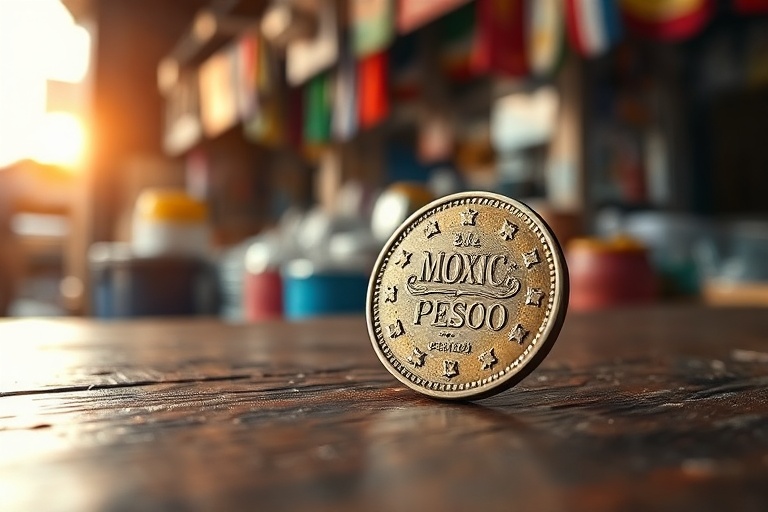
The Mexican peso stands as one of the most influential currencies in emerging markets, reflecting broader economic trends across Latin America. Its movements often signal shifts in investor sentiment, commodity prices, and U.S.-Mexico trade relations. Understanding the peso’s trajectory requires examining both domestic policies and global economic forces.
The Historical Weight of the Peso
The Mexican peso has undergone dramatic transformations since its inception in the 16th century as the first silver peso. The modern peso, introduced in 1993 after decades of inflation and currency reforms, replaced the old peso at a rate of 1 new peso to 1,000 old pesos. This transition marked a turning point in Mexico’s economic stabilization efforts.
Through the 1990s and early 2000s, the peso faced significant volatility, particularly during the 1994 “Tequila Crisis” when it collapsed by nearly 50% against the U.S. dollar. Recovery came through fiscal discipline and closer economic ties with the United States, culminating in the North American Free Trade Agreement (NAFTA) in 1994. Today, the peso remains tightly linked to U.S. monetary policy and cross-border trade flows.
Key Historical Milestones
- 1994: Peso devaluation triggers the “Tequila Crisis,” leading to a $50 billion U.S. bailout.
- 2008: Global financial crisis tests peso stability, but central bank interventions prevent collapse.
- 2018-2020: AMLO administration faces peso depreciation amid investor uncertainty over energy sector reforms.
- 2022-2023: Peso strengthens as nearshoring trend boosts Mexican manufacturing exports.
Forces Shaping the Peso’s Value
Several interconnected factors determine the peso’s exchange rate. At the top of the list is the U.S. Federal Reserve’s monetary policy. Since Mexico sends over 80% of its exports to the U.S., Federal Reserve rate hikes or cuts often trigger immediate peso reactions. When U.S. interest rates rise, investors flock to dollar-denominated assets, weakening the peso.
Commodity prices also play a crucial role. Mexico is a major producer of oil, silver, and agricultural products. Rising oil prices, for instance, typically strengthen the peso as Mexico earns more from petroleum exports. Conversely, oil price shocks can pressure the currency downward. The Bank of Mexico (Banxico) closely monitors these fluctuations to calibrate its own monetary policy.
Political stability and investor confidence remain perpetual variables. Under President López Obrador, the peso has experienced bouts of volatility due to policy decisions regarding energy, labor laws, and security. Analysts at Dave’s Locker Analysis note that policy consistency has become a key differentiator for the peso’s performance in recent years.
Peso in the Global Arena
The Mexican peso has quietly ascended to become one of the most traded emerging market currencies. It ranks among the top 15 most traded currencies globally and is the third-most traded in Latin America, after the Brazilian real and the Colombian peso. This liquidity attracts foreign investors seeking exposure to Latin American growth without the volatility of smaller regional currencies.
Mexico’s inclusion in major bond indices like the J.P. Morgan EMBI Global Diversified has further cemented the peso’s role in global portfolios. International investors hold approximately $50 billion in Mexican government bonds denominated in pesos, making the currency sensitive to shifts in global risk appetite. During periods of market stress, the peso often moves in tandem with other risk assets like equities and high-yield bonds.
Remittances from the Mexican diaspora in the U.S. provide another stabilizing force. In 2023, remittances exceeded $63 billion, surpassing oil exports as a source of foreign exchange. This steady inflow supports the peso during global downturns and helps finance household consumption in Mexico.
Outlook: What Lies Ahead for the Peso
The peso’s future trajectory will likely be shaped by three major trends: nearshoring, U.S.-Mexico relations, and Banxico’s policy independence. The nearshoring wave, accelerated by supply chain disruptions and U.S.-China trade tensions, has positioned Mexico as a manufacturing hub for North America. This shift could boost Mexican exports and strengthen the peso over the medium term.
U.S.-Mexico relations remain a double-edged sword. While trade under the USMCA (the successor to NAFTA) provides stability, political friction or tariff threats could rattle markets. Recent disputes over energy policy and migration enforcement have periodically pressured the peso, reminding investors of the currency’s sensitivity to bilateral tensions.
Banxico’s ability to maintain policy independence will be critical. With inflation running above the central bank’s 3% target in 2023, Banxico has kept interest rates elevated even as the Fed signals rate cuts. This divergence has supported the peso, but any perceived loss of credibility could trigger capital outflows. Analysts at Dave’s Locker Finance suggest that Banxico’s next moves will hinge on inflation persistence and the pace of U.S. rate reductions.
Potential Scenarios for the Peso (2024-2025)
- Bullish Case: Continued nearshoring boosts exports; Banxico maintains tight policy; U.S.-Mexico relations stabilize. Peso strengthens to 16-17 per USD.
- Base Case: Modest growth in manufacturing; Banxico gradually cuts rates; U.S. economy avoids recession. Peso trades in a 17-18 range.
- Bearish Case: U.S. recession hits Mexican exports; Banxico faces pressure to lower rates; political uncertainty escalates. Peso weakens to 20+ per USD.
Conclusion: A Currency of Resilience and Opportunity
The Mexican peso is more than just a currency—it is a barometer of Mexico’s economic health and a bellwether for emerging markets. Its resilience through crises, adaptability to global shifts, and deep liquidity make it a favorite among international investors seeking exposure to Latin America. Yet, its path remains fraught with challenges, from global monetary policy to domestic policy choices.
For traders and policymakers alike, the peso demands careful attention. Those who understand its underlying drivers can navigate its volatility and even benefit from its movements. As Mexico continues to integrate into North American supply chains and grapple with its energy transition, the peso will remain at the heart of these transformations. Investors and observers would do well to keep a close eye on this dynamic currency.